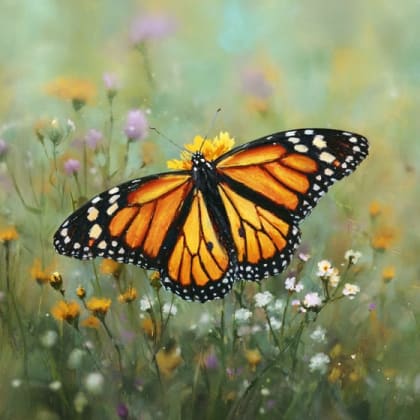
Monarch Butterfly
Danaus plexippus
The Monarch Butterfly is a beautiful orange and black butterfly. It is famous for its long migration to warmer places every year!
Habitat: Fields, gardens, and meadows
The Monarch Butterfly has striking orange wings edged and veined with bold black lines, featuring small white spots along the margins. Its body is black with white markings. These distinct patterns help differentiate it from the similar but smaller Viceroy butterfly.
Category
InsectsRarity
Common
Danger
2/5 · Low
Snaps
706
A Monarch caterpillar eats so much it grows over 2,000 times its original size!
The migratory generation lives up to eight months, much longer than summer Monarchs!
Their chrysalis is not a cocoon; it's a smooth, jeweled green case!
They "taste" with their feet to find the perfect milkweed for their eggs!
Monarch Butterflies can fly thousands of miles to warmer climates, a super endurance feat that helps them survive winter.
Monarch Butterflies have a bitter taste from milkweed they eat as caterpillars, which helps them avoid becoming a predator's snack.
Monarch Butterflies can navigate using the Earth's magnetic field and sun position, which helps them find their way during long migrations.
Monarch Butterflies transform inside a jade-green chrysalis that blends into foliage, helping them stay hidden from hungry birds.
Adult Monarchs sip sweet flower nectar, while caterpillars munch on milkweed leaves!
Age differences: Caterpillars exclusively eat milkweed leaves; adults drink flower nectar.
Asclepias syriaca
Caterpillars exclusively eat its leaves to grow and become toxic.
Solidago canadensis
Adult butterflies feed on its nectar, helping to spread its pollen.
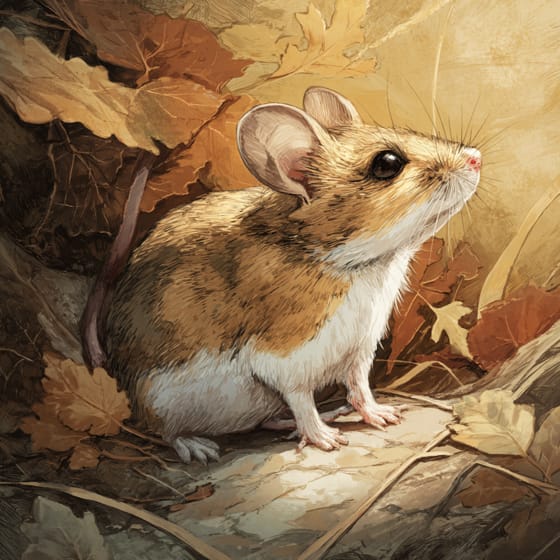
Peromyscus maniculatus
Mice sometimes eat overwintering butterflies at their roosting sites.
Symphyotrichum novae-angliae
A favorite late-season nectar source for migrating adult Monarchs.
Wildlife encompasses all undomesticated animal and plant life existing in their natural habitats.
Colorful describes organisms or objects displaying a wide range of bright and distinct colors.
This trait characterizes organisms whose diet consists entirely or primarily of plant material.
Migratory animals undertake seasonal movements from one region to another, typically in response to changes in climate or food availability.

Threatened status denotes a species likely to become endangered in the foreseeable future without effective conservation interventions.

Describes organisms that transfer pollen, enabling the fertilization and reproduction of plants.
No aliases listed yet.
Danger
2/5 · Low
Do not touch or pick up. Some insects sting or bite. Ask an adult for help.
89-102 mm
50-70 mm
14-240 days
12-40 km/h
Adult Monarchs sip sweet flower nectar, while caterpillars munch on milkweed leaves!
Fields, gardens, and meadows
Foraging
6
Zoom in to split clusters and explore where this object has been snapped.

Louisiana, US
You might spot Linnaeus's Two-Toed Sloth and Corn Snake.
View guide →

Maryland, US
You might spot Great Blue Heron, Eastern Bluebird, and White-Tailed Deer.
View guide →
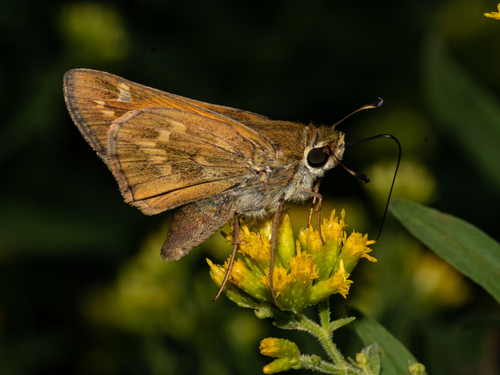
New Jersey, US
You might spot Huron Skipper, Great Blue Heron, and American Robin.
View guide →

North Dakota, US
You might spot Red Fox, Gray Wolf, and Equus Africanus Asinus.
View guide →

Quebec, CA
You might spot Groundhog, Ring-Billed Gull, and Eastern Gray Squirrel.
View guide →

Louisiana, US
You might spot African Lion, Giraffes, and Equus Africanus Asinus.
View guide →