






Tuna
Thunnus
Tunas are fast-swimming fish found in oceans around the world. They have sleek bodies and are known for their speed and agility in the water.
Habitat: Marine
The Tuna has a sleek, torpedo-shaped body with metallic blue-black on its back and silvery-white sides. Its distinctive crescent-shaped tail fin, along with small finlets trailing its dorsal fin, are key for fast, efficient movement through water.
Category
FishRarity
Common
Danger
2/5 · Low
Snaps
Be the first to snap!
Some tuna can dive deeper than a skyscraper is tall!
Tuna hatch from tiny eggs so small you can barely see them!
Tuna migrate across entire oceans, making them true global travelers!
Tunas never stop swimming, even when they are sleeping!
Tuna can keep their body warm because of special blood vessels that help them hunt in cold ocean depths.
Tuna has a sleek, torpedo-shaped body that helps them slice through water incredibly fast to chase down prey.
Tuna can migrate thousands of miles because of their efficient oxygen use and constant swimming motion.
Tunas are swift hunters that eat smaller fish, squid, and crustaceans in the open ocean.
Age differences: Young tuna eat smaller plankton and tiny fish, switching to larger prey as they grow.
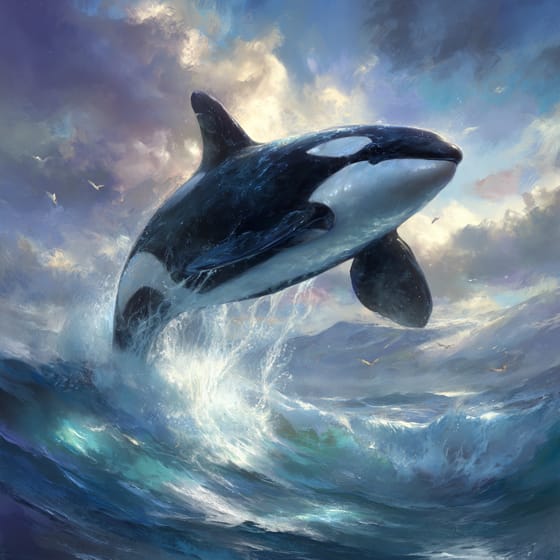
Orcinus orca
Large orcas hunt adult tuna.
Scomber scombrus
Tuna are important predators of mackerel schools.
Homo sapiens
Humans fish tuna globally for food.
Calanus finmarchicus
Young tuna feed on copepods and other zooplankton.
Wildlife encompasses all undomesticated animal and plant life existing in their natural habitats.
Piscivorous organisms are animals that primarily subsist on a diet of fish.
Thermoregulating organisms maintain a stable internal body temperature despite fluctuations in the external environment.
This trait identifies organisms whose diet consists entirely or primarily of animal tissue.

This trait identifies organisms that exhibit exceptional swiftness in movement for hunting, escape, or travel.

Aquatic habitats encompass environments where organisms live predominantly in water, including oceans, rivers, lakes, and wetlands.

Marine habitats encompass all saltwater environments of the Earth's oceans, supporting an immense diversity of aquatic life.
Danger
2/5 · Low
When near tunas, always observe from a safe distance and avoid touching them.
50-350 cm
10-680 kg
15-40 years
Tunas are swift hunters that eat smaller fish, squid, and crustaceans in the open ocean.
70 km/h
Marine
Pursuit
500 m
Zoom in to split clusters and explore where this object has been snapped.
Recent snaps will appear here as new observations are added.
















