
Hatchetfish
Argyropelecus
Hatchetfish are unique fish with shiny, silvery bodies that look like tiny hatchets. They live in the dark depths of the ocean and have special glowing spots to light their way.
Habitat: Deep Sea
The Hatchetfish has a strikingly deep, silvery, and highly compressed body, giving it a unique axe-head shape. It features large, tubular, upward-facing eyes and a belly lined with numerous light-emitting organs called photophores.
Category
FishRarity
Common
Danger
1/5 · Very low
Snaps
Be the first to snap!
Imagine living hundreds of meters deep where it's always dark!
Some hatchetfish have eyes like binoculars to see tiny snacks.
They are so delicate, many deep-sea cameras scare them away!
They spend their days in the deep and swim up at night to hunt.
Hatchetfish can produce light from their belly photophores that helps them disappear against the faint sunlight from above.
Hatchetfish has large, tubular, upward-pointing eyes that help them spot faint silhouettes of prey against the surface light.
Hatchetfish has a uniquely thin, deep body that helps them quickly dart through water to escape predators.
Hatchetfish are hunters of the deep, feeding on tiny drifting ocean creatures.
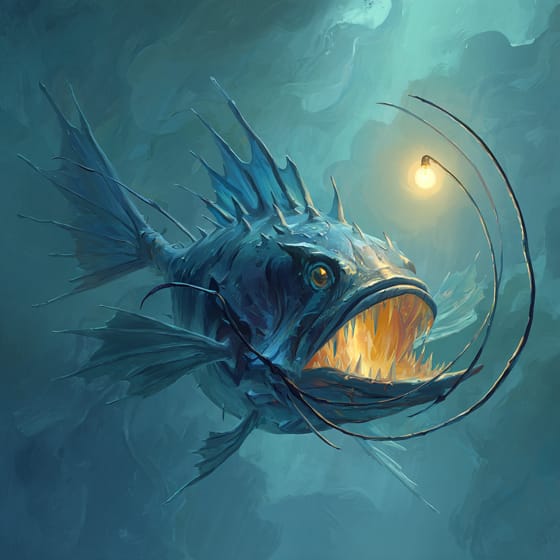
Chauliodus sloani
A fierce deep-sea hunter that preys on smaller fish.
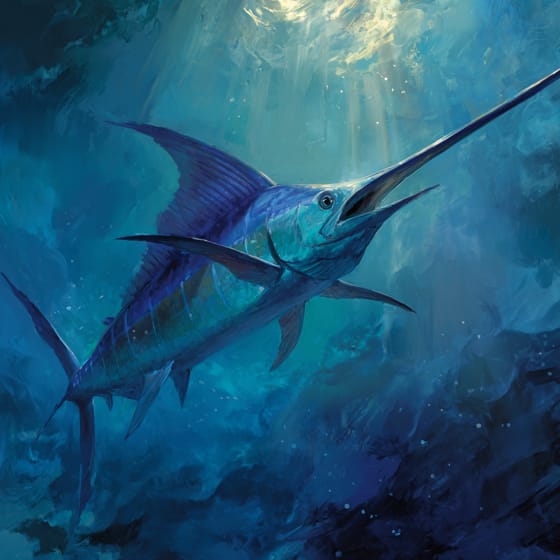
Xiphias gladius
Large ocean predators that consume hatchetfish during migrations.
Calanus finmarchicus
Tiny crustaceans that hatchetfish snatch from the water.
Social animals live in organized groups, cooperating for survival benefits such as foraging, defense, and raising offspring.
Camouflaged describes organisms that possess coloring or patterns that allow them to blend into their environment.
Piscivorous organisms are animals that primarily subsist on a diet of fish.
Thermoregulating organisms maintain a stable internal body temperature despite fluctuations in the external environment.

Deep sea habitats are characterized by extreme pressure, darkness, and cold temperatures, supporting unique life forms below the sunlit zone.

Aquatic habitats encompass environments where organisms live predominantly in water, including oceans, rivers, lakes, and wetlands.

Pertaining to organisms that emit light through bioluminescence or fluorescence.

Nocturnal animals are primarily active during the nighttime hours, typically resting or sleeping during the day.
Danger
1/5 · Very low
Hatchetfish are not dangerous to humans but should be admired from a distance to protect their habitat.
2-12 cm
0.001-0.02 kg
2-5 years
Hatchetfish are hunters of the deep, feeding on tiny drifting ocean creatures.
5 km/h
Deep Sea
Foraging
1000 m
Zoom in to split clusters and explore where this object has been snapped.
Recent snaps will appear here as new observations are added.