
Look for a striped tail in the Affenwald, then watch how its owner moves between ground and branches. Stay still if a lemur approaches.
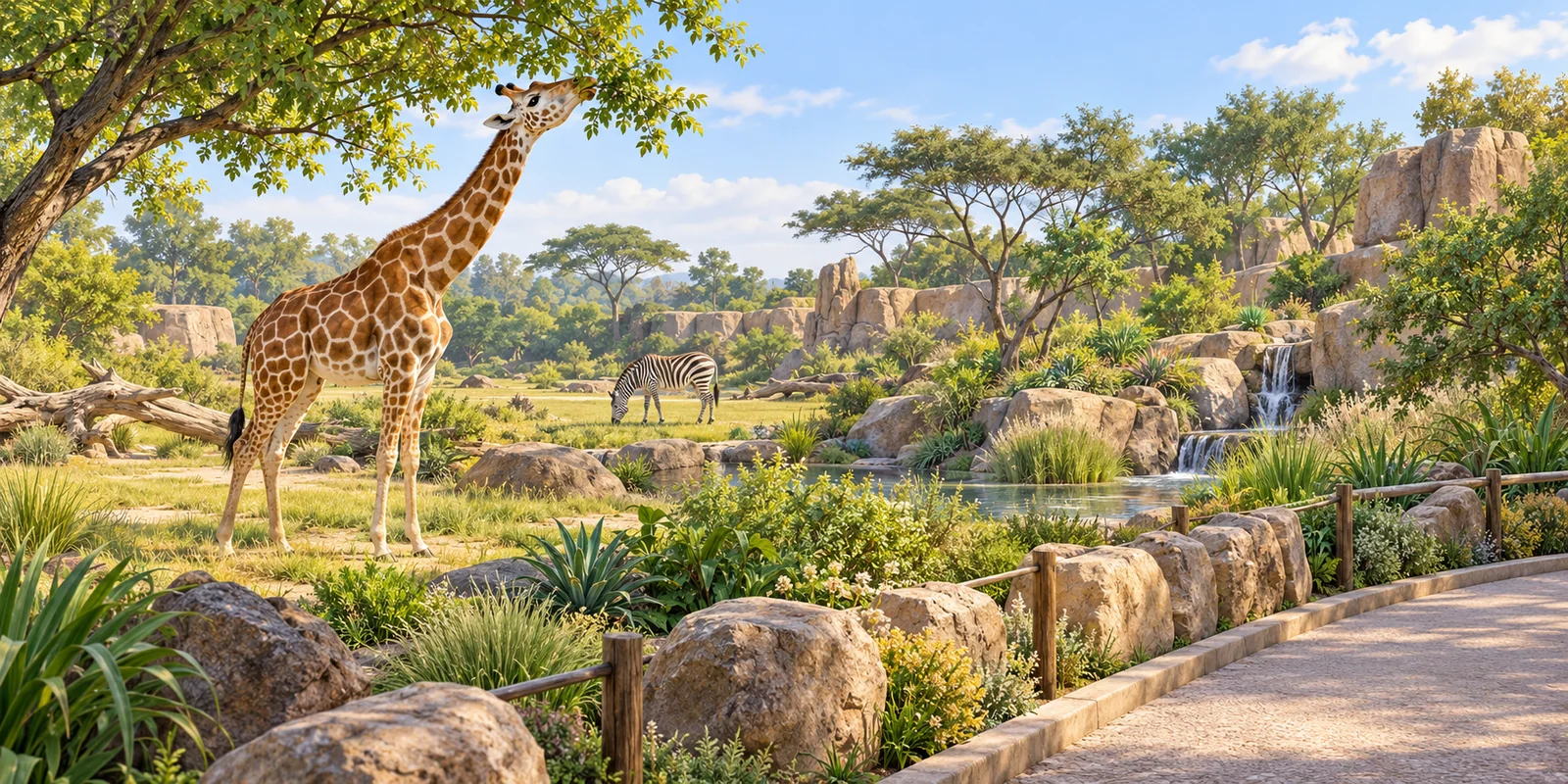 Illustration
ZooMecklenburg-Vorpommern, Germany
Tierpark Wolgast
Visit Tierpark Wolgast for a gentle woodland outing where lemurs, wallabies and deer share the day with playground breaks.
About
Visit Tierpark Wolgast for a gentle woodland outing where lemurs, wallabies and deer share the day with playground breaks. In Wolgast’s Tannenkamp woods, mature trees shade the paths and there is room to pause between enclosures. Start at the entrance map and check which walk-through areas are open before choosing your first animals.
The Affenwald, or lemur wood, is a particularly good stop. Look for the ring-tailed lemurs, then let the children compare their movements with the Bennett’s wallabies elsewhere in the park. These are captive animals, including those in enclosures visitors may enter. Stay on the visitor paths and give them space to move away.
There is also a quieter side to the visit: ponds and the herb garden provide changes of scene between mammal enclosures. At the Peenestrom-Aquarium, look into tanks arranged around a circular structure to explore fish habitats from the Peene region. Keep some time for the animals that interest your family most, rather than treating every enclosure as another box to tick. Be ready to snap and learn! Get the Snappit app to identify any nature species you find here.
Local volunteers and businesses helped create the Heimattiergarten, which opened on 1 May 1961. The Bärenburg recalls the park’s bear-keeping past: completed in 1969, it now serves as an events stage. The last brown bear left in 2014 because suitable conditions could no longer be provided. A charitable association has run the park since 1994.
What to do here
Use the park map to link the Affenwald, deer and wallabies with a stop at the meerkats. For a shorter outing, choose two animal areas and one playground; for a fuller visit, add the aquarium, smaller mammals and a picnic. Adapt the order to the day’s open paths and your children’s favourite animals.
Try a simple family challenge: each person watches one animal for a minute and describes something it actually did. Was it resting, looking around, eating or moving? The goat-and-sheep petting area, climbing equipment and scooter track break up the watching. From May to September, check the day’s keeper-feeding programme on arrival and build your walk around one talk instead of racing between all of them.
Seasonal info
The park is closed from 2 to 27 November 2026, and on 24 and 31 December 2026. In October, admission runs 9:30–16:00 and the park closes at 16:30. May–September hours are 9:00–18:00, with last admission at 17:00; winter days are shorter. Check the official opening notice before travelling, especially around November and public holidays.
Accessibility
The park is largely accessible, with accessible toilets and a baby-changing room. If you use a wheelchair or need an easy pushchair route, call 03836 203713 before travelling to discuss path surfaces, slopes and walk-through gates. Access can differ between enclosures, so ask which areas will suit your needs.
Don't miss
1
Walk-through areas for lemurs, wallabies and deer
2
Mature woodland, ponds and a herb garden between the enclosures
3
Seasonal keeper feeds and a chance to see the show feed kitchen
4
A goat-and-sheep petting area, climbing play and scooter track
Wildlife and habitats
At the Bennett’s wallabies, compare a resting animal with one moving around. Leave the animals a clear route past you in the walk-through area.
Watch the whole group before choosing a photograph. See whether different individuals are resting, exploring or looking around; the keeper talk can help explain what you notice.
Pause at a comfortable distance and watch the alpacas’ faces and ears. Use the enclosure’s feeding sign, not the animal’s interest in your bag, as your guide.
Look across the enclosure before entering and choose a quiet place to watch the deer. Keep feed bags out of sight and never follow an animal that moves away.
Compare the emu’s long-legged shape with the smaller birds you have seen. Watch from the public path without trying to attract its attention.
Look carefully around resting places as well as the ground. If the raccoons are hidden, revisit later rather than calling or tapping to wake them.
Scan the water and its edges slowly. If a coypu swims into view, follow it with your eyes and watch where it chooses to climb out.
Sources and useful links
- Startseite
- Über uns
- Kontakt & Anreise
- Fütterung
- Füttern im Tierpark: Futterampel
- Wegweiser Tierpark
- Tierpark Wolgast: German visitor flyer
- Downloads
- Bistro
- Peene-Aquarium eröffnet
- Zooschule
- Eintrittspreise und Öffnungszeiten
- Familientierpark Wolgast
- Fahrpläne in PDF
- Linie 274: Freest–Lubmin–Wolgast / Wolgast–Freest–Lubmin
- Baustelleninformationen
Wildlife you might spot
8Each card links to a full Explore page with photos, traits, and fun facts.


















Snap map for this place
Start with the big picture, then zoom in to explore individual wildlife observations around this place.
Loading map…
Good to know before you go
Feeding
Follow the traffic-light signs. Green permits food bought at the ticket desk; yellow permits only the food provided at that enclosure; red means keepers only. An empty food container means stop. Never substitute your own food.
With children
Supervise any permitted feeding closely and keep feed bags concealed around goats and deer. The park may suspend feed sales for animal health.
Picnic break
Use the marked picnic areas. Keep your own snacks packed away while watching animals or entering walk-through enclosures.
Lunch
The entrance bistro has sheltered seating and a heated indoor room. Its hours vary and can be shorter than the park’s; check before leaving lunch until late.
Tickets and extras
Admission is paid. Bring proof for concessions; rental handcarts are available. Some advertised prices include a voluntary conservation contribution, which you can decline before paying.
Frequently asked questions
- Use Am Tierpark 1–2, 17438 Wolgast. Free parking is provided before the entrance to the woodland, and there are bicycle stands. If Tannenkampweg is closed, approach via the L262 as directed by the park; follow current road signs.
- VVG bus 274 connects Wolgast Bahnhof with Wolgast Am Tierpark on Monday–Friday. Services differ between school and holiday days, and not every journey serves the stop. Check both outward and return connections in the current VVG timetable; do not assume a weekend bus.
- Keep the animal walk short and take a bistro break when it is open. The bistro’s indoor room provides a pause from the weather, but most of the visit is outdoors. Bring waterproof layers rather than planning a full indoor day.
- The Zooschule offers sessions from kindergarten through upper secondary level. Ask about an age-appropriate programme and register at least seven days ahead where possible; a normal admission ticket does not book a group session.
Recent snaps at this place
Recent snaps will appear here as new observations are added.
More zoo guides
View all ›
Photo coming soon
Zoo48 sightings50 species
North Carolina, US
Coker Arboretum
You might spot American Robin and Eastern Gray Squirrel.
View guide →

Photo coming soon
Zoo47 sightings50 species
Florida, US
Silver Springs
You might spot Anhinga, American Alligator, and Wood Duck.
View guide →

Photo coming soon
Zoo46 sightings50 species
New Mexico, US
Rio Grande Botanic Garden
You might spot Wood Duck, Duck, and Canada Goose.
View guide →

Photo coming soon
Zoo27 sightings22 species
Michigan, US
John Ball Zoo
You might spot African Lion, Komodo Dragon, and Brown Bear.
View guide →
Take the discovery with you
Exploring Tierpark Wolgast?
Identify the wildlife you spot, learn as you go, and keep a collection of the adventure.
- 1Spot it
- 2Snap it
- 3Keep the discovery