





Baltimore Oriole
Icterus galbula
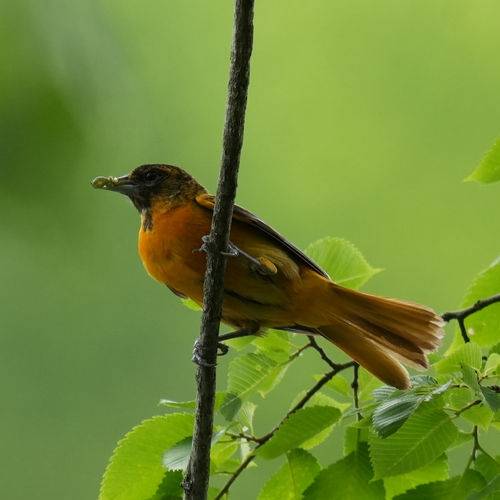
The Baltimore Oriole is a beautiful bird with bright orange and black feathers. They love to eat fruits and nectar from flowers.
Habitat: Woodlands and gardens
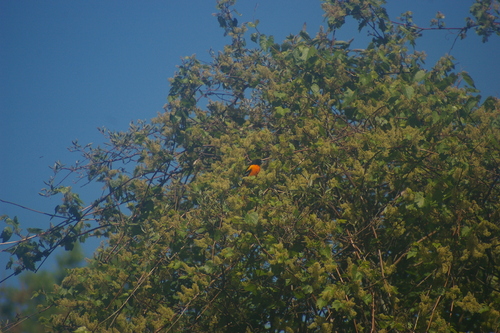
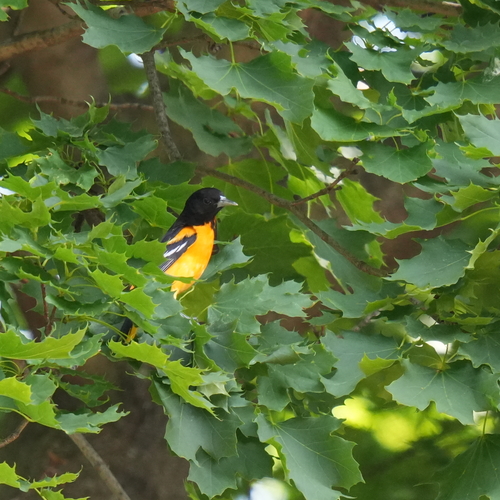
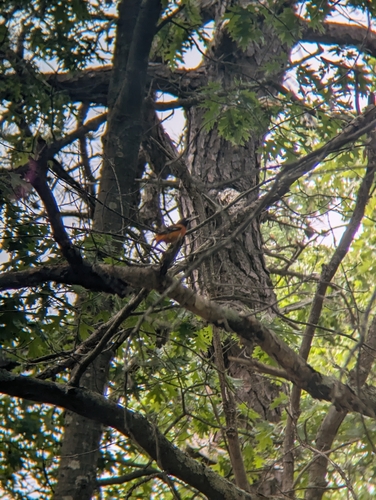
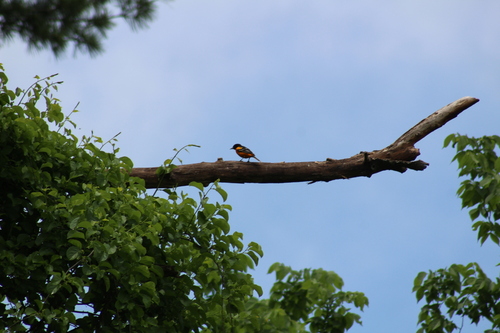
The Baltimore Oriole has striking bright orange plumage on its belly, shoulders, and tail, contrasting sharply with its black head, back, and wings. Males also feature a black bib and distinct white wing bars, making them easily identifiable among deciduous trees.
Category
BirdsRarity
Common
Danger
1/5 · Very low
Snaps
105
Males sing a clear, flute-like song to attract mates and mark their territory.
Orioles can hang upside down like acrobats to snatch insects from leaves.
Their woven nests are so strong they can last through winter storms!
They were named for the bright orange and black colors of a Lord Baltimore's coat!
Baltimore Orioles can weave intricate, hanging pouch-like nests that help protect their eggs and young from predators.
Baltimore Orioles can eat hairy caterpillars, which many birds avoid, helping them find food others leave behind.
Baltimore Orioles can sip nectar from flowers and feeders using their pointed bills, giving them quick energy.
Baltimore Orioles enjoy a tasty mix of insects, fruit, and flower nectar throughout the year.
Malacosoma americanum
eats larvae
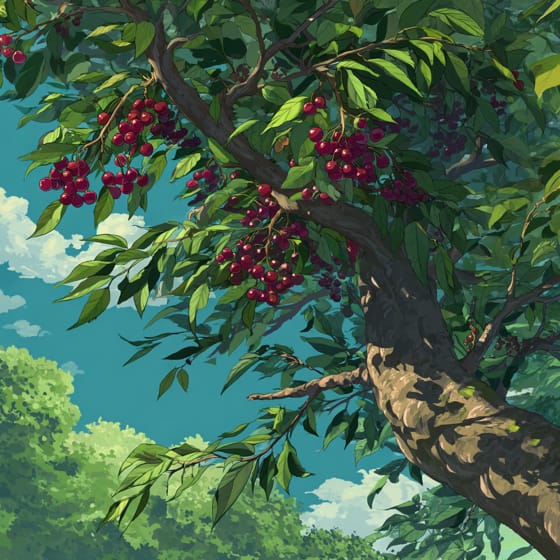
Prunus serotina
eats ripe fruit

Acer saccharum
nests in branches
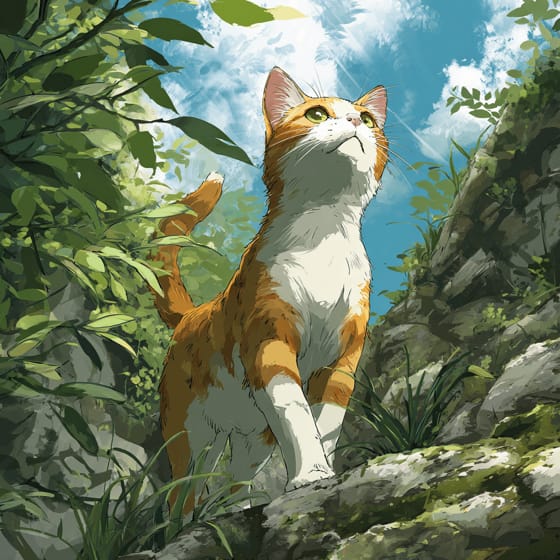
Felis catus
preys on young
Wildlife encompasses all undomesticated animal and plant life existing in their natural habitats.
Feathered describes animals, primarily birds, possessing a covering of feathers.
This trait identifies organisms whose diet includes both plant and animal matter.
Singing animals produce complex vocalizations, often for purposes of attracting mates, defending territory, or communicating within their species.

Colorful describes organisms or objects displaying a wide range of bright and distinct colors.

Forest habitats are terrestrial environments dominated by dense tree cover, supporting a high diversity of plant and animal life.

Migratory animals undertake seasonal movements from one region to another, typically in response to changes in climate or food availability.
Danger
1/5 · Very low
Baltimore Orioles are friendly and not dangerous. Just enjoy watching them from a distance!
The easiest way to identify Baltimore Oriole is to use the Snappit nature identifier app.
17-22 cm
23-30 cm
0.03-0.04 kg
4-12 years
40 km/h
Baltimore Orioles enjoy a tasty mix of insects, fruit, and flower nectar throughout the year.
Woodlands and gardens
Zoom in to split clusters and explore where this object has been snapped.
Jun 6, 2026
Reeves-Reed ArboretumPhoto attribution
(c) foxsu, some rights reserved (CC BY)
License: CC BY 4.0 ↗
Image may be shown cropped inside the card frame.
Jun 3, 2026
Lake Erie ArboretumPhoto attribution
no rights reserved
License: CC0 1.0 ↗
Image may be shown cropped inside the card frame.
May 31, 2026
Albemarle-Kenmore Terraces Historic DistrictPhoto attribution
(c) foxsu, some rights reserved (CC BY)
License: CC BY 4.0 ↗
Image may be shown cropped inside the card frame.
May 28, 2026
Connetquot River State Park PreservePhoto attribution
no rights reserved
License: CC0 1.0 ↗
Image may be shown cropped inside the card frame.
May 25, 2026
Broadmoor Wildlife SanctuaryPhoto attribution
(c) Lythronax246, some rights reserved (CC BY)
License: CC BY 4.0 ↗
Image may be shown cropped inside the card frame.

Ohio, US
You might spot Eastern Fox Squirrel and Spotted Lanternfly.
View guide →

Massachusetts, US
You might spot Eastern Cottontail and American Robin.
View guide →

Connecticut, US
You might spot Striped Wintergreen and Common Eastern Bumble Bee.
View guide →

Illinois, US
You might spot Brown-Belted Bumble Bee and Eastern Gray Squirrel.
View guide →

Illinois, US
You might spot Carolina Mantis and Goldenrod Soldier Beetle.
View guide →
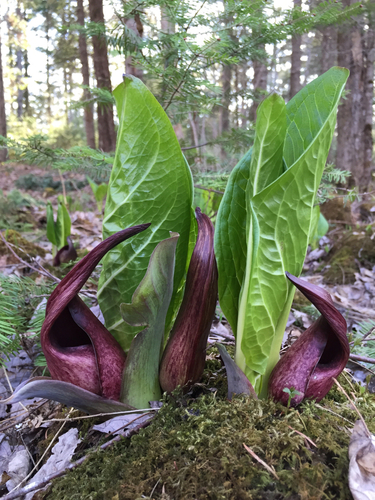
Connecticut, US
You might spot Eastern Skunk Cabbage and Eastern White Pine.
View guide →
Take the discovery with you
Snap it with Snappit to identify it, learn what makes it special, and add the discovery to your collection.




.jpg&width=800)







