





Northern Cardinal
Cardinalis cardinalis
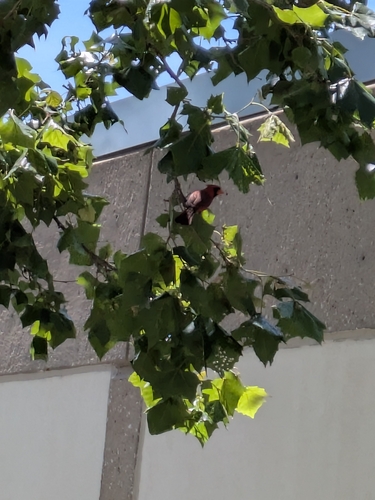
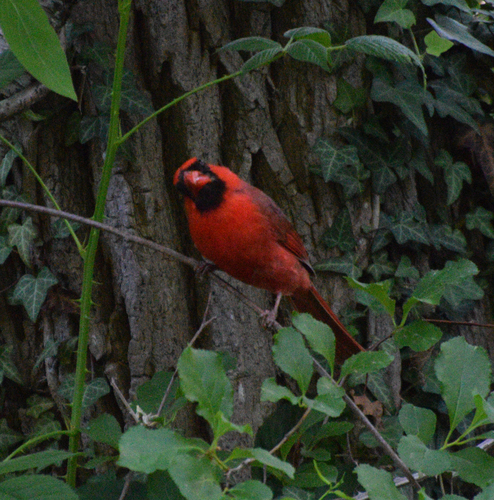
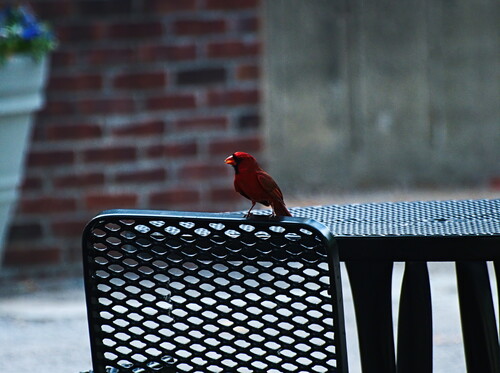
The Northern Cardinal is a bright red bird with a cheerful song. They love to sing and can often be spotted in gardens and parks.
Habitat: Wooded areas, gardens, and parks
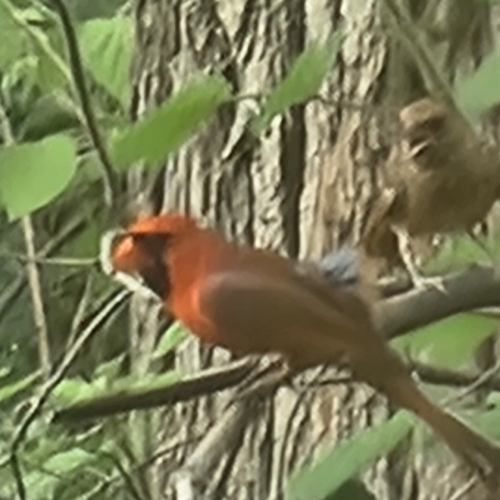
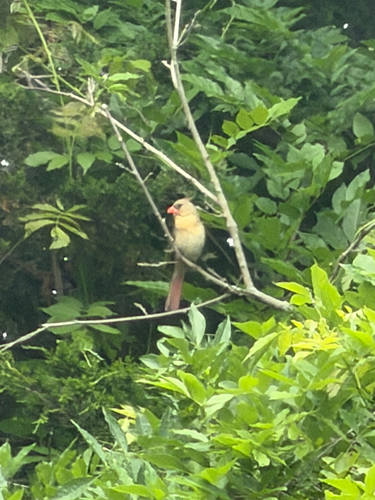
The Northern Cardinal is a medium-sized songbird with a distinctive crest. Males are brilliant, deep red all over, while females are a duller reddish-brown with red highlights. Both sexes have a thick, conical, orange-red bill and a black mask around the eyes.
Category
BirdsRarity
Common
Danger
1/5 · Very low
Snaps
876
Both male and female cardinals sing, a rare trait among songbirds!
Cardinals consume snow for hydration when water sources are frozen in winter.
Male cardinals often feed their mates during courtship, a sweet romantic gesture.
Their vibrant red color comes from carotenoid pigments found in their diet.
Northern Cardinals can sing complex songs year-round to attract mates and defend territory, even in winter.
Northern Cardinals have a powerful, cone-shaped beak that helps them efficiently crack open tough seeds with ease.
Northern Cardinals can sometimes sing at night, especially near artificial light, helping them communicate.
A versatile omnivore, they mostly eat seeds and fruits, but also enjoy insects.

Prunus serotina
Consumes fruit and seeds.

Ambrosia artemisiifolia
Feeds on its seeds.
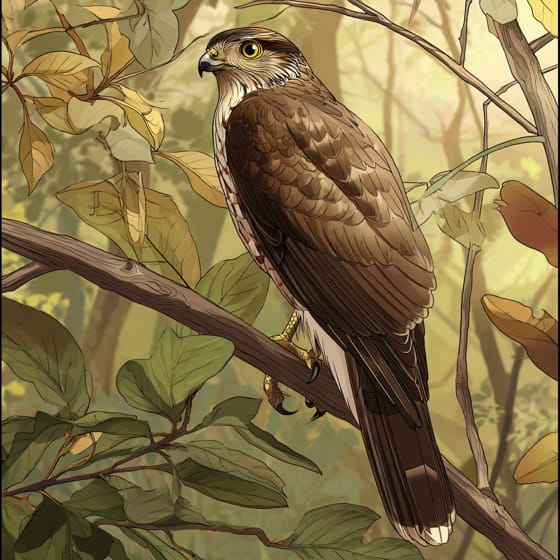
Accipiter cooperii
A common avian predator.
Thamnophis sirtalis
Preys on eggs and nestlings.

Juniperus virginiana
Provides dense nesting and roosting sites.
Feathered describes animals, primarily birds, possessing a covering of feathers.
Crested describes animals possessing a prominent tuft of feathers, hair, or skin on their head.
Social animals live in organized groups, cooperating for survival benefits such as foraging, defense, and raising offspring.
This trait identifies organisms whose diet includes both plant and animal matter.

Singing animals produce complex vocalizations, often for purposes of attracting mates, defending territory, or communicating within their species.

Colorful describes organisms or objects displaying a wide range of bright and distinct colors.

Forest habitats are terrestrial environments dominated by dense tree cover, supporting a high diversity of plant and animal life.

Diurnal animals are primarily active during daylight hours, typically resting or sleeping at night.
Danger
1/5 · Very low
Cardinals are friendly birds and safe to watch from a distance. Enjoy their beauty without trying to touch them.
The easiest way to identify Northern Cardinal is to use the Snappit nature identifier app.
21-23 cm
25-31 cm
0.04-0.048 kg
3-15 years
48 km/h
A versatile omnivore, they mostly eat seeds and fruits, but also enjoy insects.
Wooded areas, gardens, and parks
Zoom in to split clusters and explore where this object has been snapped.
Jun 19, 2026
Haskell-Baker WetlandsPhoto attribution
(c) Lydia Dexter, some rights reserved (CC BY)
License: CC BY 4.0 ↗
Image may be shown cropped inside the card frame.
Jun 13, 2026
Wellfleet Bay Wildlife SanctuaryPhoto attribution
(c) Natasha Haggard, some rights reserved (CC BY)
License: CC BY 4.0 ↗
Image may be shown cropped inside the card frame.
Jun 11, 2026
Four CornersPhoto attribution
(c) Yoatzin Peñaflor, some rights reserved (CC BY)
License: CC BY 4.0 ↗
Image may be shown cropped inside the card frame.
Jun 11, 2026
Haym Salomon Memorial ParkPhoto attribution
(c) i_da_naturalist, some rights reserved (CC BY)
License: CC BY 4.0 ↗
Image may be shown cropped inside the card frame.
Jun 7, 2026
Bean Hill Historic DistrictPhoto attribution
(c) Sawyer Baran, some rights reserved (CC BY)
License: CC BY 4.0 ↗
Image may be shown cropped inside the card frame.

Alabama, US
You might spot Elf Orpine, Canada Goose, and Leatherleaf Mahonia.
View guide →

Virginia, US
You might spot Cope's Gray Tree Frog and Basilica Orbweaver.
View guide →

Florida, US
You might spot Anole, Eastern Box Turtle, and Golden Silk Spider.
View guide →

South Carolina, US
You might spot Anole, Green Treefrog, and Eastern Gray Squirrel.
View guide →

Michigan, US
You might spot Eastern Gray Squirrel, Tree-Of-Heaven, and House Sparrow.
View guide →

Massachusetts, US
You might spot Eastern Cottontail and American Robin.
View guide →
Take the discovery with you
Snap it with Snappit to identify it, learn what makes it special, and add the discovery to your collection.




.jpg&width=800)







