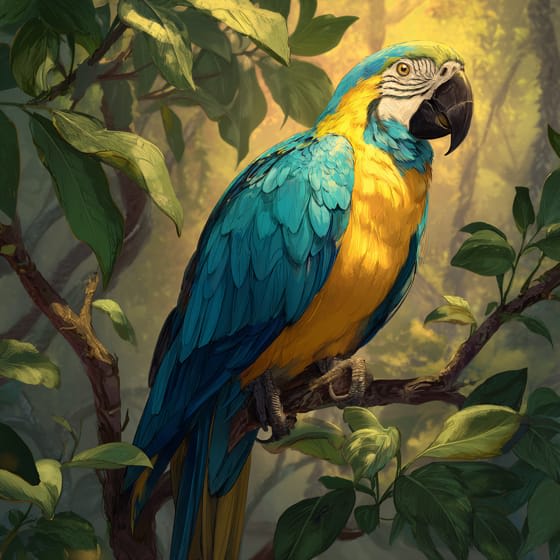





Blue-and-yellow Macaw
Ara ararauna
The Blue-and-yellow Macaw is a stunning parrot with bright blue wings and a golden-yellow belly. It's very playful and loves to hang out with friends!
Habitat: Tropical rainforests
The Blue-and-yellow Macaw has a striking appearance with brilliant azure-blue feathers covering its back, wings, and long tail, contrasting sharply with its golden-yellow underside. Its face features bare white patches lined with small black feathers, distinguishing it from other large parrots.
Category
BirdsRarity
Rare
Danger
2/5 · Low
Snaps
2
Blue-and-yellow Macaws typically choose one partner and stay together for their entire lives!
Macaws often fly in pairs or small family groups, but gather in huge noisy flocks to sleep!
Their super-strong beaks can even crush a brazil nut like it's a peanut!
They visit clay licks in the Amazon to eat special soil that helps them digest poisonous foods.
Blue-and-yellow Macaw has an incredibly powerful hooked beak that helps them crack open the toughest nuts and seeds.
Blue-and-yellow Macaw can use its strong zygodactyl feet to expertly grip branches and climb through dense forest canopies.
Blue-and-yellow Macaw can produce extremely loud squawks that help them communicate with other macaws over long distances.
These vibrant birds enjoy a diet rich in fruits, nuts, and seeds from various rainforest plants.
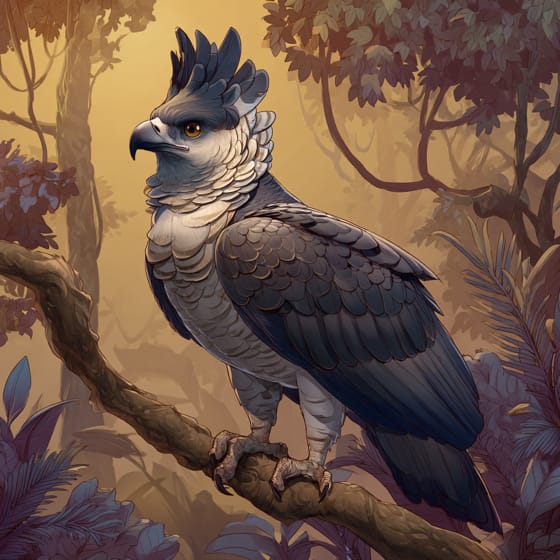
Harpia harpyja
A powerful raptor that preys on large birds and mammals.
Bertholletia excelsa
Cracks open the hard shells of its large, nutritious seeds.
Ceiba pentandra
Uses large tree hollows for nesting and roosting safely.
Ficus insipida
Feeds on the sweet, fleshy fruits found in its forest habitat.
Wildlife encompasses all undomesticated animal and plant life existing in their natural habitats.
Feathered describes animals, primarily birds, possessing a covering of feathers.
Climbing or vine plants are characterized by a growth habit that allows them to ascend upwards by twining, tendrils, or adhesive roots.
Social animals live in organized groups, cooperating for survival benefits such as foraging, defense, and raising offspring.

This trait identifies organisms whose diet includes both plant and animal matter.

This trait characterizes organisms with an exceptionally long lifespan compared to others of their kind.

This habitat trait refers to species found in tropical rainforests, characterized by high annual rainfall, high biodiversity, and dense tree cover.
Danger
2/5 · Low
Watch quietly from a distance and never try to feed or chase wild animals.
The easiest way to identify Blue-and-yellow Macaw is to use the Snappit nature identifier app.
76-86 cm
104-114 cm
0.9-1.5 kg
30-50 years
56 km/h
These vibrant birds enjoy a diet rich in fruits, nuts, and seeds from various rainforest plants.
Tropical rainforests
Zoom in to split clusters and explore where this object has been snapped.

Florida, US
You might spot Crested Anole, Brown Anole, and Peters's Rock Agama.
View guide →

Florida, US
You might spot Crested Anole, Brown Anole, and Peters's Rock Agama.
View guide →

US
You might spot Crested Anole, Brown Anole, and Peters's Rock Agama.
View guide →
Take the discovery with you
Snap it with Snappit to identify it, learn what makes it special, and add the discovery to your collection.





.jpg&width=800)










