





Herring Gull
Larus argentatus
The Herring Gull is a big, gray-and-white bird often seen near the ocean. It has a loud call and loves to scavenge for food!
Habitat: Coastal areas, beaches, and urban locations
The Herring Gull is a large gull with a pale grey back and white head and underparts. It has a robust yellow bill with a distinctive red spot near the tip, and pink legs. Its slightly darker grey wings and larger size help differentiate it from some smaller, paler gull species.
Category
BirdsRarity
Common
Danger
2/5 · Low
Snaps
12
Herring Gulls can drink both fresh and saltwater thanks to special glands.
The red spot on their bill helps chicks know where to peck for food.
These smart birds often follow fishing boats, knowing where to find easy meals.
They sometimes "foot-patter" on the ground to trick worms into surfacing!
Herring Gulls can drop hard-shelled prey from heights to crack them open, helping them access tricky meals.
Herring Gulls have an incredibly varied diet, allowing them to thrive by eating almost anything they find.
Herring Gulls have powerful, efficient wings that help them fly long distances along coastlines and over water.
These opportunistic eaters munch on almost anything they can find, from fish to discarded snacks!
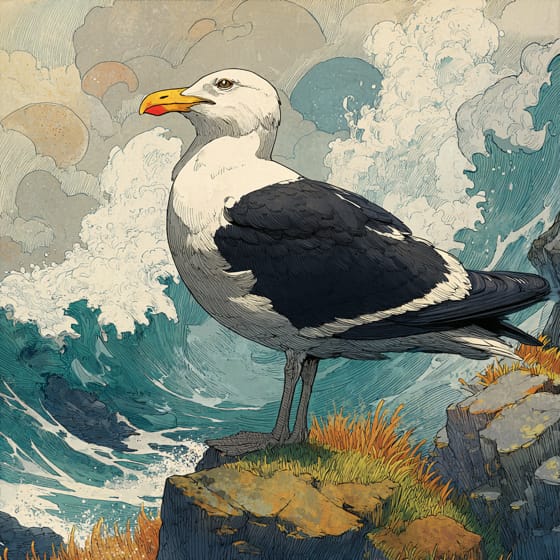
Larus marinus
Preys on Herring Gull eggs and chicks.

Mytilus edulis
Gulls drop mussels to crack their shells open.
Arenicola marina
Forages for these worms on sandy beaches.
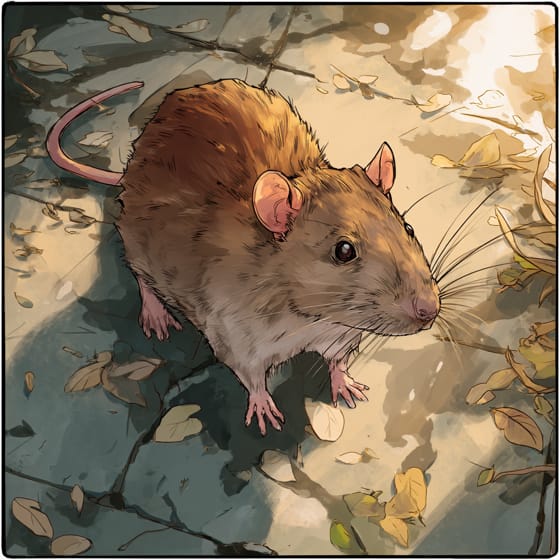
Rattus norvegicus
May prey on young rats or scavenge carrion.
Feathered describes animals, primarily birds, possessing a covering of feathers.
Social animals live in organized groups, cooperating for survival benefits such as foraging, defense, and raising offspring.
Aerial creatures spend a significant portion of their lives airborne, utilizing flight for various activities such as hunting, migration, or nesting.
This trait identifies organisms whose diet includes both plant and animal matter.
Scavengers consume dead organic matter, helping to decompose carcasses and other waste in the ecosystem.

This trait characterizes organisms with an exceptionally long lifespan compared to others of their kind.

Coastal habitats are dynamic environments located along the interface between land and sea, influenced by tides, waves, and saltwater.

Aquatic habitats encompass environments where organisms live predominantly in water, including oceans, rivers, lakes, and wetlands.

Migratory animals undertake seasonal movements from one region to another, typically in response to changes in climate or food availability.

This habitat trait indicates species that can coexist with humans in urban and suburban environments, utilizing man-made structures and green spaces.
Danger
2/5 · Low
Watch quietly from a distance and never try to feed or chase wild animals.
The easiest way to identify Herring Gull is to use the Snappit nature identifier app.
55-67 cm
130-150 cm
0.75-1.5 kg
15-30 years
64 km/h
These opportunistic eaters munch on almost anything they can find, from fish to discarded snacks!
Coastal areas, beaches, and urban locations
Zoom in to split clusters and explore where this object has been snapped.
.jpg)
Municipal District of Cobh, IE
You might spot Ring-Tailed Lemur, Giraffes, and Cheetahs.
View guide →

Northern Ireland, UK
You might spot Giraffes, Spectacled Bear, and Goodfellow's Tree-Kangaroo.
View guide →

South Holland, NL
You might spot Polar Bear, Gorilla, and Asiatic Lion.
View guide →

England, UK
You might spot African Elephant, Gorilla, and Tiger.
View guide →

Bremen, DE
You might spot Polar Bear, Humboldt Penguin, and Harbor Seal.
View guide →
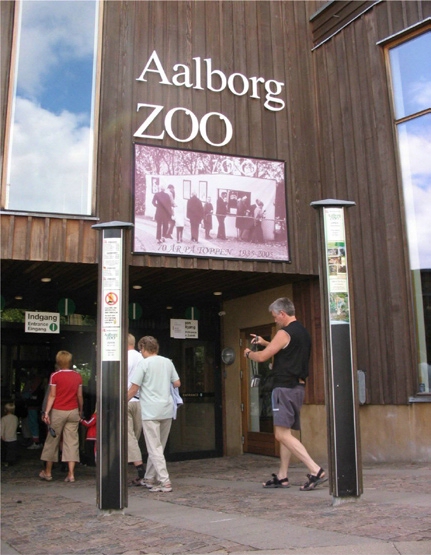
North Denmark Region, DK
You might spot Polar Bear, Orangutans, and Tiger.
View guide →
Take the discovery with you
Snap it with Snappit to identify it, learn what makes it special, and add the discovery to your collection.





.jpg&width=800)









