



Blue Pinkgill
Entoloma hochstetteri
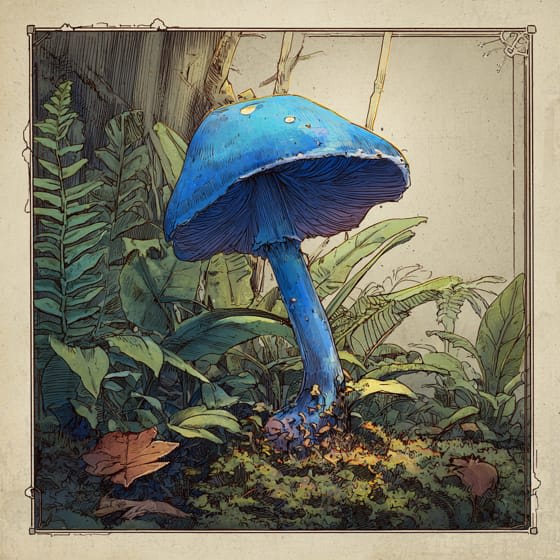
The Blue Pinkgill is a small mushroom with a bright blue to pink color. It’s a treasure for mushroom hunters who explore the woods!
Habitat: Grasslands and meadows
The Blue Pinkgill is easily recognized by its vibrant indigo-blue cap, which can fade slightly with age, and its distinctive pink gills. Its slender blue stem, sometimes tinged white, supports the striking cap. This brilliant coloration makes it stand out vividly against the forest floor.
Category
FungiRarity
Rare
Danger
1/5 · Very low
Snaps
Be the first to snap!
Even the tiny spores are pink, which gives its gills their characteristic rosy hue.
It's the national fungus of New Zealand and even appeared on a postage stamp!
Its striking blue color comes from special pigments called azulenes, rare in fungi.
The scientific name honors a German geologist who explored New Zealand.
Blue Pinkgill has unique azulene pigments that give it its vibrant blue hue, making it an eye-catching forest inhabitant.
Blue Pinkgill can release thousands of tiny pink spores from its gills, carried by wind to new locations to grow.
Blue Pinkgill can break down dead leaves and wood, returning vital nutrients to the soil for other plants to use.
Nothofagus solandri
Decomposes its fallen leaves and wood for nutrients.
Beilschmiedia tawa
Breaks down leaf litter and woody debris from this tree.
Athoracophorus bitentaculatus
Provides a potential food source for native fungivorous slugs.
Spore-producing organisms reproduce by releasing small, often single-celled, reproductive units called spores.
Colorful describes organisms or objects displaying a wide range of bright and distinct colors.
Grassland habitats are terrestrial biomes dominated by grasses and herbaceous plants, supporting a variety of grazing animals.
Danger
1/5 · Very low
Do not pick or eat anything you find. Some plants and mushrooms can be harmful.
The easiest way to identify Blue Pinkgill is to use the Snappit nature identifier app.
5-10 cm
poisonous
2-8 cm
Grasslands and meadows
soil
Summer, fall
Pink
Zoom in to split clusters and explore where this object has been snapped.
Recent snaps will appear here as new observations are added.
Take the discovery with you
Snap it with Snappit to identify it, learn what makes it special, and add the discovery to your collection.