





Brown Bear
Ursus arctos
Brown bears are large, strong animals found in forests and mountains. They are powerful hunters and foragers.
Habitat: Forests, mountains, and tundra.
The Brown Bear has thick, shaggy fur that varies in color from light blonde to dark brown, often with lighter tips giving a 'grizzled' appearance. It possesses a distinctive muscular shoulder hump and long, non-retractable claws. These features help differentiate it from similar bear species.
Category
MammalsRarity
Common
Danger
5/5 · Extreme
Snaps
48
A bear's 'roar' can be heard up to a mile away in the forest!
Brown bears can stand on two legs, sometimes reaching over 8 feet tall!
Mother bears teach their cubs how to fish and forage for up to 3 years.
They can eat up to 90 pounds of food a day to get ready for winter!
Brown Bear can find food miles away because of its incredibly powerful sense of smell, 7 times better than a bloodhound!
Brown Bear has strong claws that help them dig for roots, grubs, or create dens, even catching speedy ground squirrels.
Brown Bear can survive cold winters by hibernating, slowing its heart rate and body functions to save energy.
Brown Bear has an excellent memory that helps them remember where to find the best berries and fishing spots each year.
Brown bears eat almost anything, from plants and berries to fish and small animals!
Age differences: Cubs learn foraging and hunting techniques from their mother, gradually diversifying their diet.
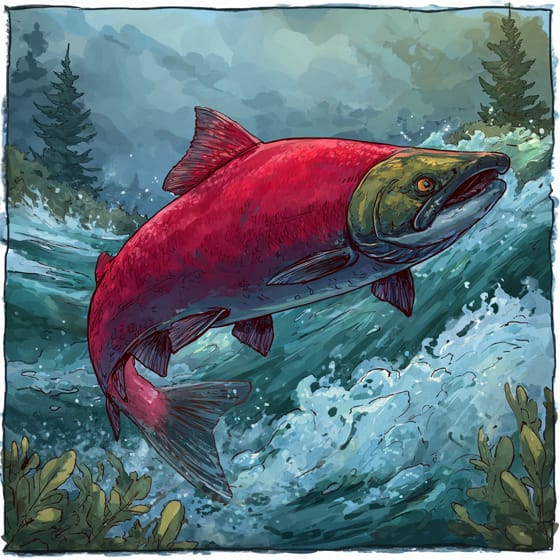
Oncorhynchus nerka
A crucial food source, especially before hibernation.
Vaccinium myrtillus
A significant seasonal food, particularly in late summer.
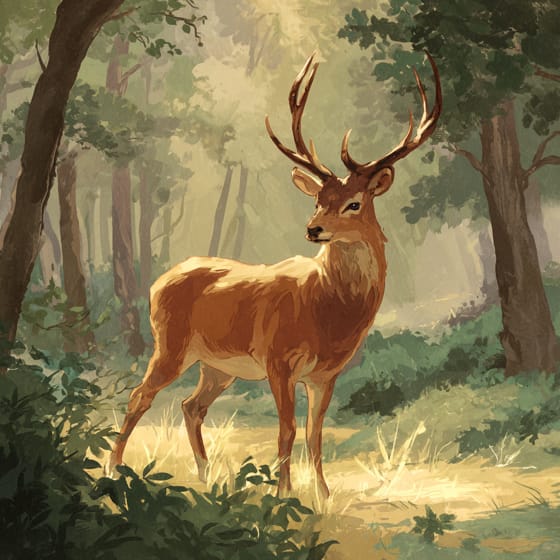
Cervus elaphus
Preys on young or sick individuals, especially calves.
.jpg&width=800)
Pinus albicaulis
Its energy-rich seeds are a vital food source.
Wildlife encompasses all undomesticated animal and plant life existing in their natural habitats.
Furry describes animals possessing a dense covering of soft hair or fur.
Solitary animals live alone for most of their lives, only interacting with others for mating or parental care.
This trait identifies organisms whose diet includes both plant and animal matter.

This habitat trait identifies species found in mountainous regions, characterized by high elevation, steep slopes, and varying climate zones.

Forest habitats are terrestrial environments dominated by dense tree cover, supporting a high diversity of plant and animal life.
Hibernating animals enter a state of metabolic depression during cold periods or when food is scarce, characterized by reduced body temperature and activity.

Describes a species whose presence and role have a disproportionately large effect on its environment.
Danger
5/5 · Extreme
Very dangerous — never approach a bear.
The easiest way to identify Brown Bear is to use the Snappit nature identifier app.
170-280 cm
80-600 kg
20-30 years
56 km/h
Brown bears eat almost anything, from plants and berries to fish and small animals!
Forests, mountains, and tundra.
Foraging
Zoom in to split clusters and explore where this object has been snapped.

Alaska, US
You might spot Brown Bear, Common Merganser, and Sockeye Salmon.
View guide →

Montana, US
You might spot Sticky Geranium, White-Tailed Deer, and Common Toadflax.
View guide →

Montana, US
You might spot Black Bear, Brown Bear, and Moose.
View guide →

US
You might spot Variable Carpet Moth, Bald Eagle, and Red Huckleberry.
View guide →

British Columbia, CA
You might spot White Twisted-Stalk and Western Skunk Cabbage.
View guide →

Michigan, US
You might spot African Lion, Komodo Dragon, and Brown Bear.
View guide →
Take the discovery with you
Snap it with Snappit to identify it, learn what makes it special, and add the discovery to your collection.





.jpg&width=800)


.JPG&width=800)



.jpg&width=800)
