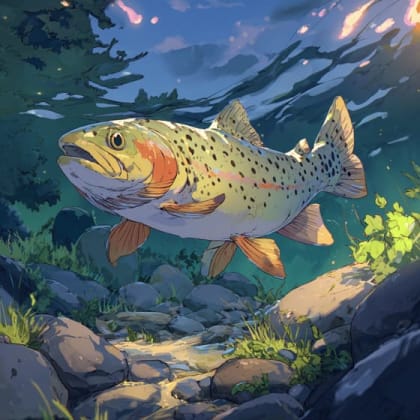
Sockeye Salmon
Oncorhynchus nerka
The Sockeye Salmon is famous for its bright red color! They are known for their amazing journey upstream to spawn.
Habitat: Ocean and freshwater rivers
The Sockeye Salmon has a streamlined body that turns a brilliant red with a green head when spawning. It has small, silvery scales in the ocean, becoming duller before its vibrant freshwater transformation. Unlike other salmon, it typically lacks large spots on its back or tail.
Category
FishRarity
Common
Danger
2/5 · Low
Snaps
34
Adult Sockeye Salmon stop eating entirely once they enter freshwater to spawn.
After spawning, all Sockeye Salmon die, enriching the river with nutrients.
Female Sockeye dig special nests, called 'redds,' with their tails to lay eggs.
Their stunning red color comes from eating tiny shrimp and krill in the ocean!
Sockeye Salmon can find their exact birth river using their incredible sense of smell, guiding their long migration.
Sockeye Salmon has special hormones that transform their skin to bright red for mating, helping them attract partners.
Sockeye Salmon can swim thousands of kilometers upstream to spawn, overcoming strong currents with powerful fins.
Tiny ocean critters and insects are this fish's favorite meal when growing up!
Age differences: Young salmon eat plankton and insects in lakes, then switch to larger crustaceans and small fish in the ocean. Adults stop eating during spawning migration.
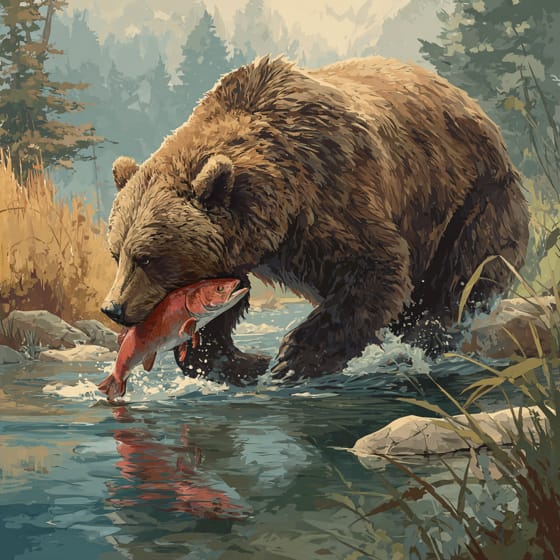
Ursus arctos
Bears feast on salmon during their upstream migration.

Haliaeetus leucocephalus
Eagles snatch salmon from rivers during spawning season.

Homo sapiens
Humans fish for Sockeye Salmon as an important food source.
Calanus pacificus
Young Sockeye feast on these tiny crustaceans in the ocean.
Wildlife encompasses all undomesticated animal and plant life existing in their natural habitats.
Colorful describes organisms or objects displaying a wide range of bright and distinct colors.
Piscivorous organisms are animals that primarily subsist on a diet of fish.
Freshwater habitats include non-saline aquatic environments such as rivers, lakes, ponds, and wetlands, vital for numerous species.

Aquatic habitats encompass environments where organisms live predominantly in water, including oceans, rivers, lakes, and wetlands.

Migratory animals undertake seasonal movements from one region to another, typically in response to changes in climate or food availability.
Danger
2/5 · Low
Watch quietly from a distance and never try to feed or chase wild animals.
The easiest way to identify Sockeye Salmon is to use the Snappit nature identifier app.
45-84 cm
2.3-7 kg
4-6 years
Tiny ocean critters and insects are this fish's favorite meal when growing up!
30 km/h
Ocean and freshwater rivers
Foraging
Zoom in to split clusters and explore where this object has been snapped.

Alaska, US
You might spot Brown Bear, Common Merganser, and Sockeye Salmon.
View guide →

Alaska, US
You might spot Canadian Bunchberry, Saskatoon, and Canadian Buffalo-Berry.
View guide →

British Columbia, CA
You might spot American Dipper, Sockeye Salmon, and Duck.
View guide →
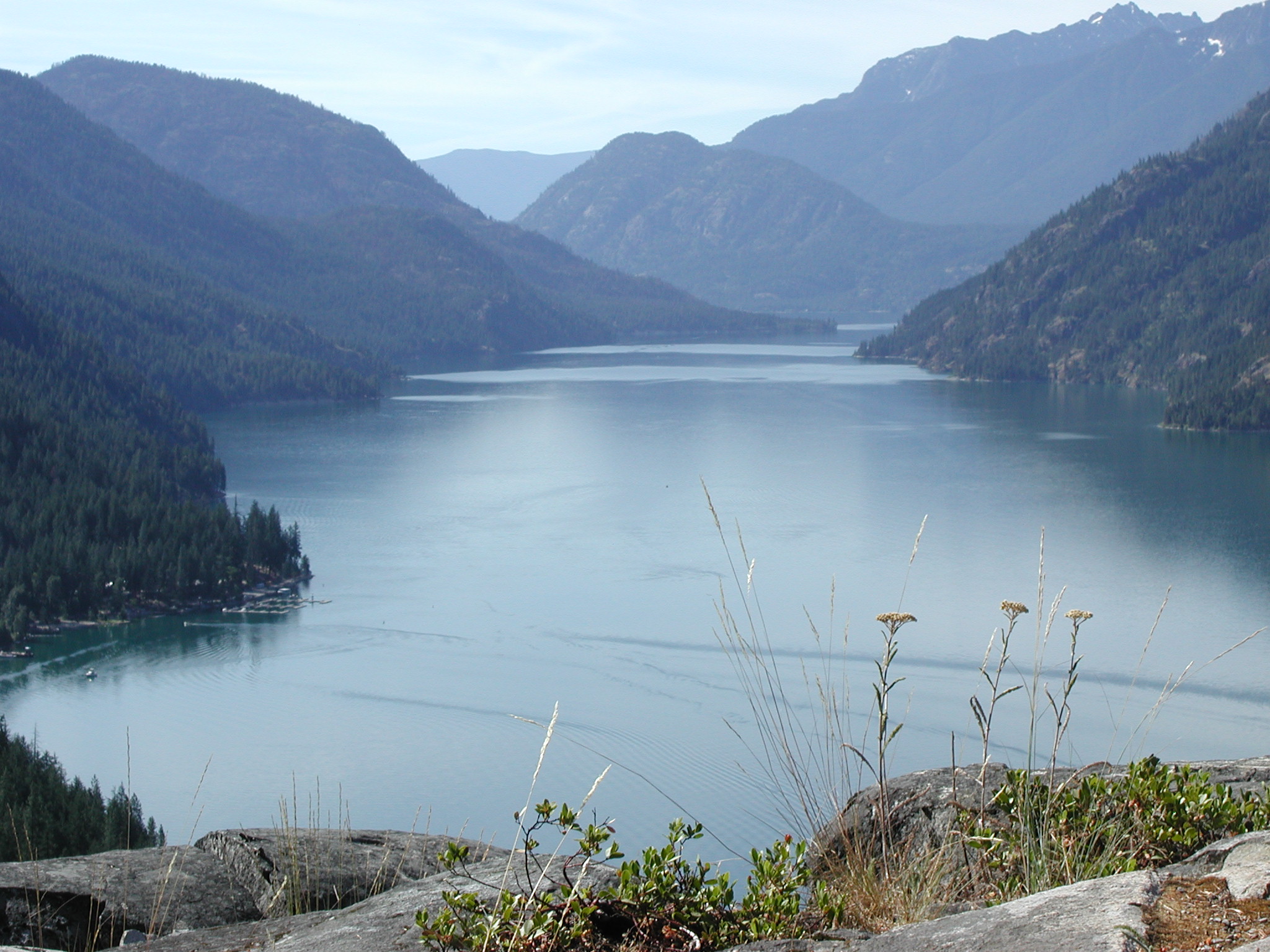
Washington, US
You might spot Western Fence Lizard and Mule Deer.
View guide →
Take the discovery with you
Snap it with Snappit to identify it, learn what makes it special, and add the discovery to your collection.