




Common European Yellowjacket
Vespula vulgaris
The Common European Yellowjacket is a buzzing insect known for its bright yellow and black stripes. They are social creatures that live in big groups and can be seen flying around flowers and food.
Habitat: Urban areas
The Common European Yellowjacket has a stout, hairless body marked with bright, distinct yellow and black bands. Its slender waist and two pairs of transparent wings differentiate it from similar-looking bees, which are usually fuzzier. Queens are noticeably larger than worker wasps.
Category
InsectsRarity
Common
Danger
3/5 · Moderate
Snaps
Be the first to snap!
A single yellowjacket colony can grow to include over 15,000 wasps in just one summer!
Only the queen yellowjacket survives winter, starting a brand new colony each spring!
These wasps are omnivores, eating both sugary foods and other insects for energy.
Yellowjackets chew wood fibers and mix them with saliva to create their amazing paper nests.
Common European Yellowjacket can sting multiple times because its stinger is smooth, helping them defend their nest effectively.
Common European Yellowjacket can build complex, paper-like nests by chewing wood fibers, helping them create sturdy shelters.
Common European Yellowjacket can hunt various insects like flies and caterpillars, helping them provide protein for their larvae.
Yellowjackets eat both sugary foods and protein from other insects.
Age differences: Larvae need protein; adults mostly consume sugars and liquids.
Musca domestica
Hunts flies to feed its hungry larvae.
Pieris rapae
Preys on caterpillars, helping protect garden plants.
Physocephala rufipes
Larvae of this fly parasitize adult yellowjackets.
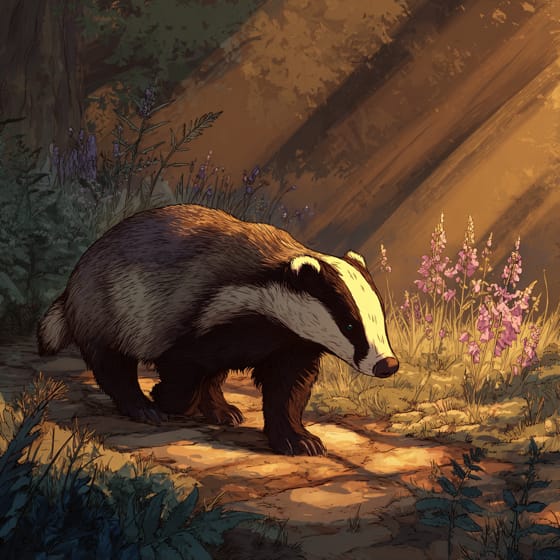
Meles meles
Badgers dig up nests for a tasty treat.
Marked with parallel bands or lines of color.
Social animals live in organized groups, cooperating for survival benefits such as foraging, defense, and raising offspring.
This trait identifies organisms whose diet includes both plant and animal matter.
Scavengers consume dead organic matter, helping to decompose carcasses and other waste in the ecosystem.

Colorful describes organisms or objects displaying a wide range of bright and distinct colors.

Diurnal animals are primarily active during daylight hours, typically resting or sleeping at night.

Describes a species whose presence and role have a disproportionately large effect on its environment.

This habitat trait indicates species that can coexist with humans in urban and suburban environments, utilizing man-made structures and green spaces.

Venomous organisms produce toxins that are injected into another animal, typically through a bite or sting.

Describes organisms that transfer pollen, enabling the fertilization and reproduction of plants.
Danger
3/5 · Moderate
If you see a yellowjacket, stay calm and don’t swat at it. Just walk away slowly.
The easiest way to identify Common European Yellowjacket is to use the Snappit nature identifier app.
20-30 mm
10-15 mm
15-30 days
20 km/h
Yellowjackets eat both sugary foods and protein from other insects.
Urban areas
Foraging
Zoom in to split clusters and explore where this object has been snapped.
Recent snaps will appear here as new observations are added.
Take the discovery with you
Snap it with Snappit to identify it, learn what makes it special, and add the discovery to your collection.








.jpg&width=800)


