





Cranesbill
Geranium maculatum
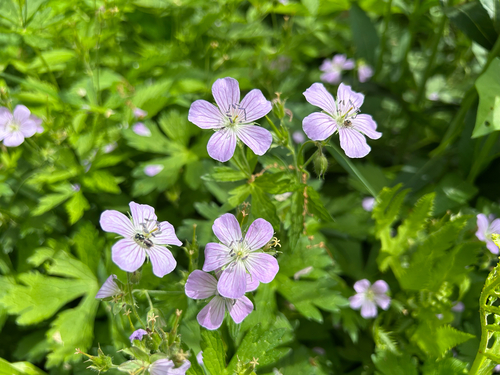
Cranesbill has pretty purple flowers with a unique shape! It's often found in woodlands and is great for attracting bees.
Habitat: Woodlands and meadows
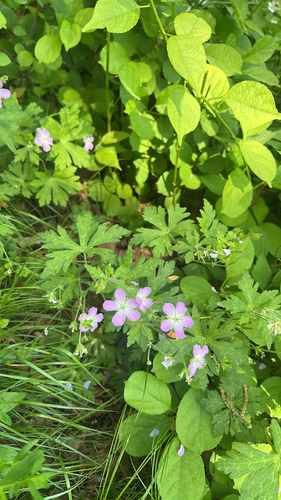
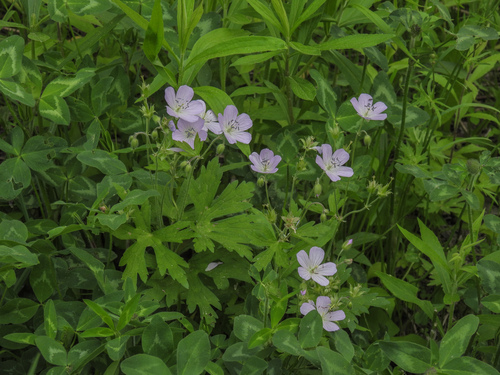
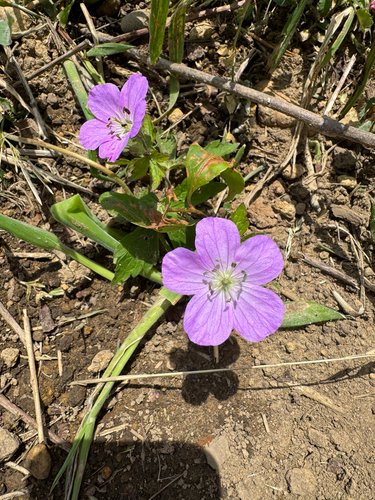
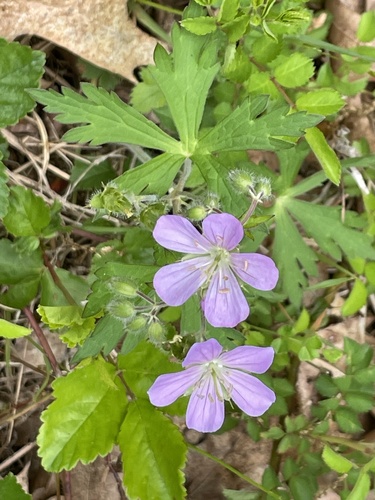
The Cranesbill has distinctive five-petaled flowers, often vibrant pink to purple, with prominent darker veins. Its broad, deeply cut leaves form a bushy clump, creating a lush green backdrop for its striking blooms.
Category
PlantsRarity
Common
Danger
1/5 · Very low
Snaps
129
Its five-petaled flowers often have subtle stripes guiding insects to nectar!
Native Americans used its roots to make a traditional brown dye for fabrics.
Some gardeners use it to prevent weeds because of its dense growth.
This tough plant can live for many years, returning bigger each spring!
Cranesbill can blast its seeds! Its unique seed pods act like tiny catapults, flinging seeds away to find new homes.
Cranesbill has broad leaves that expertly capture dappled light, helping it thrive and grow in shady woodland spots.
Cranesbill has natural astringent properties that Native Americans traditionally used to help soothe minor skin irritations.
Apis mellifera
gathers nectar and pollen
Bombus impatiens
gathers nectar and pollen
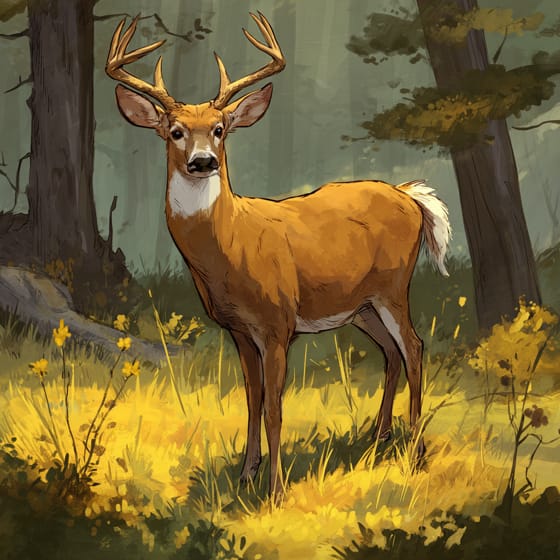
Odocoileus virginianus
occasionally browses its leaves
Spring blooming plants produce their flowers during the spring season, often signifying the end of winter and the start of new growth.
Fall color refers to the seasonal change in foliage pigmentation, primarily in deciduous plants, displaying vibrant hues.
Forest habitats are terrestrial environments dominated by dense tree cover, supporting a high diversity of plant and animal life.
Danger
1/5 · Very low
Explore with care and ask an adult if you’re unsure what to do.
The easiest way to identify Cranesbill is to use the Snappit nature identifier app.
30-60 cm
30-60 cm
2.5-4 cm
Spring-summer
No
None
Perennial
Zoom in to split clusters and explore where this object has been snapped.
Jun 5, 2026
Broadmoor Wildlife SanctuaryPhoto attribution
(c) Wyatt Sibilia, some rights reserved (CC BY)
License: CC BY 4.0 ↗
Image may be shown cropped inside the card frame.
Jun 2, 2026
Lyman School for BoysPhoto attribution
no rights reserved
License: CC0 1.0 ↗
Image may be shown cropped inside the card frame.
Jun 2, 2026
Cato Hill Historic DistrictPhoto attribution
(c) Branson Khounvichith, some rights reserved (CC BY-SA)
License: CC BY-SA 4.0 ↗
Image may be shown cropped inside the card frame.
May 27, 2026
Slocum's River ReservePhoto attribution
no rights reserved
License: CC0 1.0 ↗
Image may be shown cropped inside the card frame.
May 27, 2026
Hamburg Bridge Historic DistrictPhoto attribution
(c) Jim Arrigoni, some rights reserved (CC BY)
License: CC BY 4.0 ↗
Image may be shown cropped inside the card frame.

New York, US
You might spot Sundial Lupine, Spotted Horsemint, and New Jersey Tea.
View guide →

Illinois, US
You might spot Common Eastern Bumble Bee and Brown-Belted Bumble Bee.
View guide →

Rhode Island, US
You might spot Common Mugwort, Duck, and Azure Bluet.
View guide →

Connecticut, US
You might spot Bold Jumping Spider and American Tuliptree.
View guide →

Massachusetts, US
You might spot Common Eastern Bumble Bee and Eastern Skunk Cabbage.
View guide →
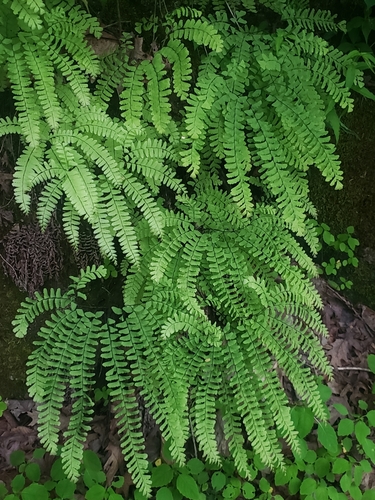
Iowa, US
You might spot Northern Maidenhair Fern and Wood Nettle.
View guide →
Take the discovery with you
Snap it with Snappit to identify it, learn what makes it special, and add the discovery to your collection.








.jpg&width=800)



_001.jpg&width=800)




