





Foxtail Barley
Hordeum jubatum
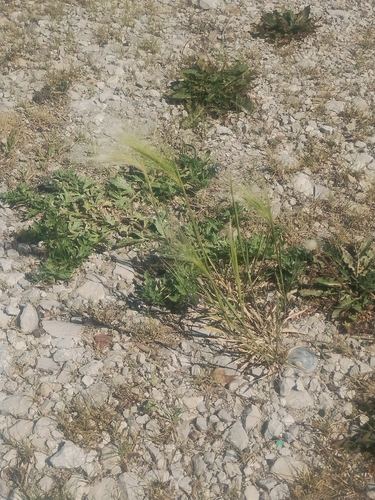
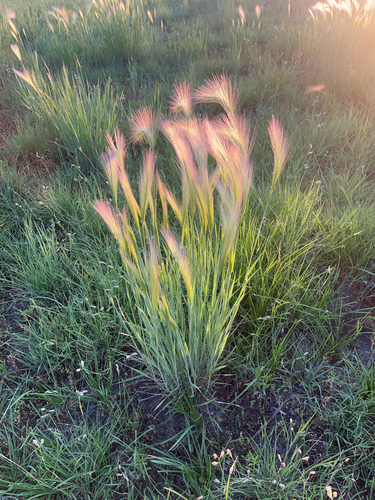
Foxtail Barley is a tall grass with fluffy seed heads that look like little tails! It grows in fields and along roadsides, waving gently in the breeze.
Habitat: Grasslands
The Foxtail Barley has soft, bristly seed heads that look like miniature fox tails, turning from green to beautiful shades of purple or reddish-brown as they mature. Its slender, upright stems make it stand out among other grasses, especially when its fluffy tops catch the light.
Category
PlantsRarity
Common
Danger
1/5 · Very low
Snaps
13
Animals can accidentally spread its seeds just by walking by!
Foxtail Barley makes beautiful waving fields when the wind blows!
Its fluffy seed heads look soft but hide tiny, sharp barbs!
These plants love to grow near roads where salt is often used!
Foxtail Barley can grow in salty soils where many other plants struggle, allowing it to thrive in tough coastal or roadside spots.
Foxtail Barley has rapid growth and produces many seeds, helping it quickly take over disturbed or bare patches of ground.

Bos taurus
Can eat young plants before seed heads develop.
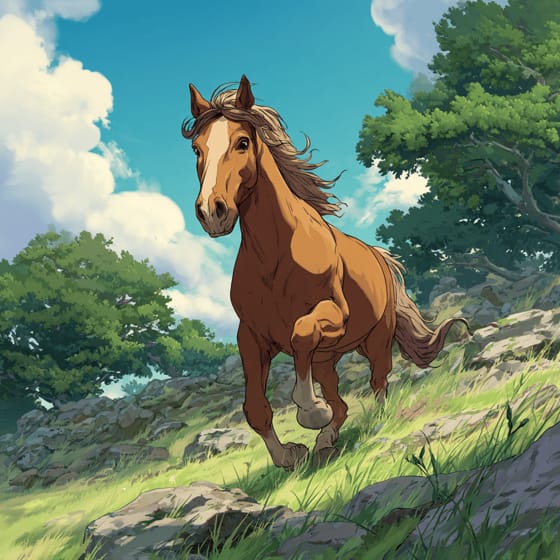
Equus caballus
May graze on early growth, but awns are harmful later.
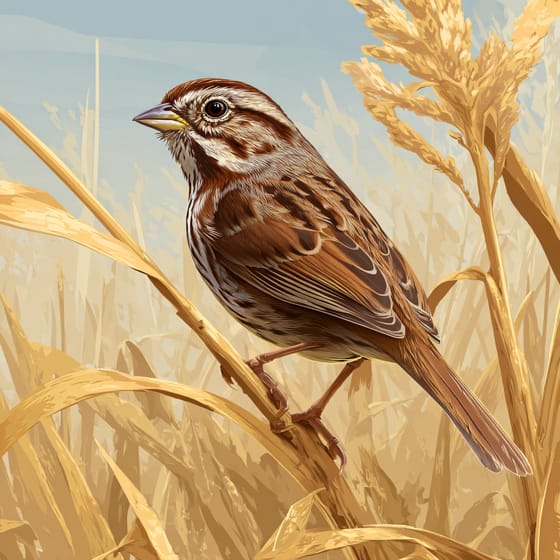
Melospiza melodia
Feeds on the developing seeds.
Microtus pennsylvanicus
Eats leaves and stems, especially new growth.
Flowering plants are any plants that produce flowers as part of their reproductive cycle.
Grass-like plants are herbaceous plants that visually resemble true grasses, typically having long, narrow leaves.
Drought-tolerant plants can survive and flourish in conditions with limited water availability.
Edible plants are those parts of a plant that are considered safe for human consumption.

Grassland habitats are terrestrial biomes dominated by grasses and herbaceous plants, supporting a variety of grazing animals.

Describes plants that are particularly attractive and beneficial to a wide range of pollinating organisms.

Rapid growing plants exhibit accelerated growth rates, quickly increasing in size and biomass within a short period.
Danger
1/5 · Very low
Be careful not to touch the sharp edges of the grass.
The easiest way to identify Foxtail Barley is to use the Snappit nature identifier app.
30-70 cm
15-30 cm
Summer
No
Mild
Perennial
Wind
Zoom in to split clusters and explore where this object has been snapped.
Jun 4, 2026
Lock and Dam No. 15Photo attribution
no rights reserved
License: CC0 1.0 ↗
Image may be shown cropped inside the card frame.
Jun 19, 2025
Box Butte County CourthousePhoto attribution
no rights reserved
License: CC0 1.0 ↗
Image may be shown cropped inside the card frame.

Illinois, US
You might spot Brown-Belted Bumble Bee and Eastern Gray Squirrel.
View guide →

Alaska, US
You might spot Cliff Swallow, Pretty Jacob's-Ladder, and Dwarf Fireweed.
View guide →

Colorado, US
You might spot Common Starlily and Wholeleaf Paintbrush.
View guide →

South Dakota, US
You might spot Duck, Canada Goose, and Thirteen-Lined Ground Squirrel.
View guide →

Wisconsin, US
You might spot American Cancer-Root and Eastern White Pine.
View guide →

Quebec, CA
You might spot Eastern Gray Squirrel, House Sparrow, and Rock Pigeon.
View guide →
Take the discovery with you
Snap it with Snappit to identify it, learn what makes it special, and add the discovery to your collection.










.jpg&width=800)



_001.jpg&width=800)



