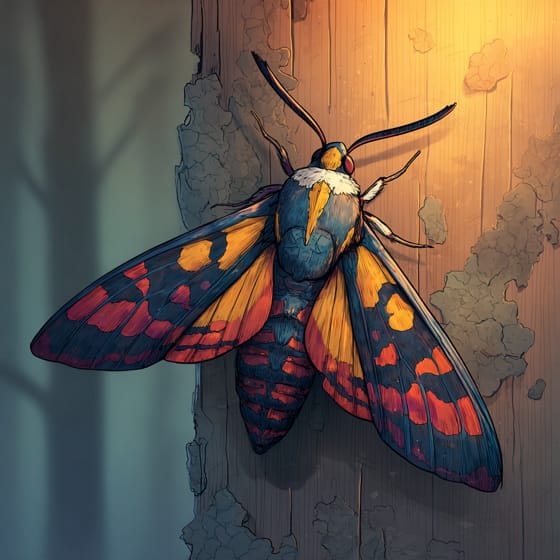





Death's-head Hawkmoth
Acherontia atropos
The Death's-head Hawkmoth is a large and unusual moth known for the skull pattern on its back. It has a mysterious look!
Habitat: Forests and gardens
The Death's-head Hawkmoth has a dark brown body with yellow and black striped underwings, but its most striking feature is a pale, skull-like pattern on its fuzzy thorax. Its abdomen is thick and yellow with black bands, giving it a wasp-like appearance from above.
Category
InsectsRarity
Rare
Danger
2/5 · Low
Snaps
2
Despite its spooky name, it is completely harmless to humans.
It can travel incredibly far, sometimes flying across entire continents!
The caterpillar can grow as big as a child's finger before it pupates!
This moth's scary skull-like mark made it famous in horror stories!
Death's-head Hawkmoth can make a loud squeaking sound by forcing air that helps them startle predators and even honeybees.
Death's-head Hawkmoth has a sturdy proboscis that helps them pierce beehive combs to steal honey without being stung.
Death's-head Hawkmoth has excellent night vision that helps them find flowers and navigate long distances after dark.
Adult moths sip nectar from flowers and sneak sips of honey from beehives.
Age differences: Larvae eat leaves of plants like potato and tomato, while adults feed on nectar and honey.
Apis mellifera
Steals stored honey from their hives.

Solanum tuberosum
Caterpillars munch on the leaves of this plant.
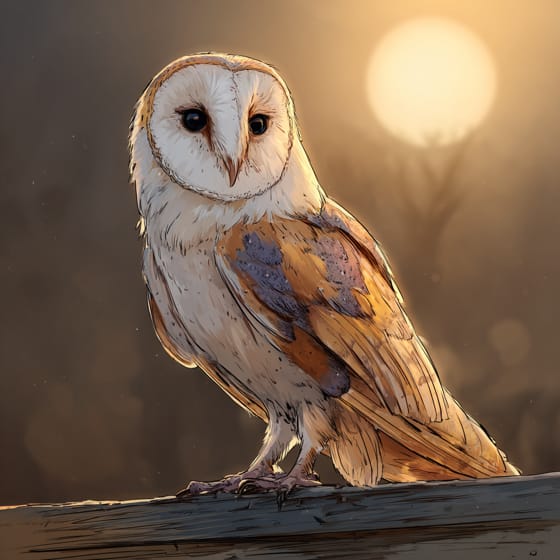
Tyto alba
Hunts moths during nocturnal flights.
Nicotiana alata
Visits night-blooming flowers for their sweet nectar.
Wildlife encompasses all undomesticated animal and plant life existing in their natural habitats.
This trait identifies organisms whose diet includes both plant and animal matter.
Singing animals produce complex vocalizations, often for purposes of attracting mates, defending territory, or communicating within their species.
Forest habitats are terrestrial environments dominated by dense tree cover, supporting a high diversity of plant and animal life.

Nocturnal animals are primarily active during the nighttime hours, typically resting or sleeping during the day.

Venomous organisms produce toxins that are injected into another animal, typically through a bite or sting.

Describes organisms that transfer pollen, enabling the fertilization and reproduction of plants.
Danger
2/5 · Low
Do not touch or pick up. Some insects sting or bite. Ask an adult for help.
The easiest way to identify Death's-head Hawkmoth is to use the Snappit nature identifier app.
90-130 mm
40-60 mm
14-30 days
40 km/h
Adult moths sip nectar from flowers and sneak sips of honey from beehives.
Forests and gardens
Foraging
Zoom in to split clusters and explore where this object has been snapped.
Take the discovery with you
Snap it with Snappit to identify it, learn what makes it special, and add the discovery to your collection.











.jpg&width=800)



