




Katydids
tettigoniidae
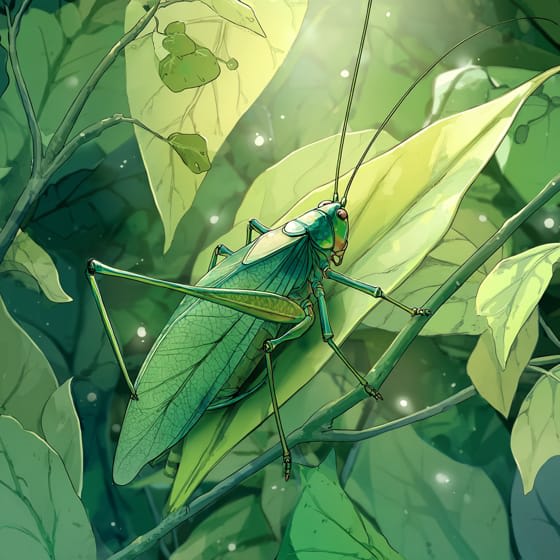
Katydids are fascinating insects that look like leaves, making them great at hiding! They produce beautiful sounds at night that can be heard in many gardens.
Habitat: Katydids can be found in gardens, forests, and grassy areas.
The Katydid typically has a vibrant green, leaf-like body, providing excellent camouflage among foliage. It possesses very long, thin antennae, often longer than its body, and powerful jumping hind legs. Its flat, broad wings distinctly mimic leaves, setting it apart visually from crickets.
Category
InsectsRarity
Common
Danger
0/5 · No known danger
Snaps
Be the first to snap!
Female Katydids can choose mates by feeling the male's wing vibrations.
Katydid eggs can lie dormant for years, only hatching when conditions are perfect.
Some Katydid species are so loud their songs can be heard over a mile away!
Some Katydids chew distinct holes in leaves to improve their camouflage!
Katydids can perfectly blend with leaves because of their leaf-shaped bodies and green colors, helping them hide from predators.
Katydids produce loud songs by rubbing their wings together, which helps them attract mates in the dense vegetation.
Katydids have sensitive 'ears' on their front legs that help them detect sounds from other katydids and avoid predators.
Katydids have powerful hind legs that allow them to jump quickly to escape danger or move between plants.
Mostly plant eaters, munching on leaves, flowers, and fruits, but some enjoy insects too!
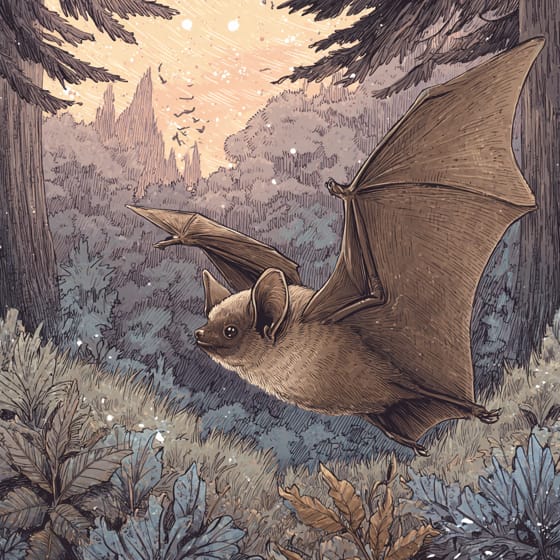
Myotis lucifugus
Hunted by bats using echolocation at night.

Mantis religiosa
A common prey item for hungry praying mantises.

Quercus alba
Feeds on the leaves of various oak species.
Aphis gossypii
Some species prey on small, soft-bodied insects like aphids.

Catharus ustulatus
Frequently consumed by insectivorous songbirds.
Social animals live in organized groups, cooperating for survival benefits such as foraging, defense, and raising offspring.
Arboreal animals live primarily in trees, utilizing them for shelter, food, and protection from predators.
Camouflaged describes organisms that possess coloring or patterns that allow them to blend into their environment.
This trait characterizes organisms whose diet consists entirely or primarily of plant material.

Nocturnal animals are primarily active during the nighttime hours, typically resting or sleeping during the day.
Danger
0/5 · No known danger
No special safety notes yet.
The easiest way to identify Katydids is to use the Snappit nature identifier app.
40-150 mm
20-70 mm
30-180 days
10 km/h
Mostly plant eaters, munching on leaves, flowers, and fruits, but some enjoy insects too!
Katydids can be found in gardens, forests, and grassy areas.
Foraging
Zoom in to split clusters and explore where this object has been snapped.
Recent snaps will appear here as new observations are added.
Take the discovery with you
Snap it with Snappit to identify it, learn what makes it special, and add the discovery to your collection.








.jpg&width=800)




