



Gneiss
Gneiss is a special type of rock that forms deep underground. It looks like it has layers of different colors and textures. People use gneiss to make beautiful countertops and sculptures.
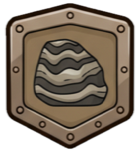
The Gneiss has distinctive light and dark bands, making it look striped. These layers usually consist of white or pink feldspar and quartz, alternating with dark minerals like biotite mica or hornblende. Its coarse-grained texture and strong banding differentiate it from less-layered rocks.
Category
MineralRarity
Rare
Danger
1/5 · Very low
Snaps
Be the first to snap!
Amazingly, some rare types of gneiss can even contain tiny diamonds inside them!
Gneiss forms when other rocks, like granite, are squeezed and baked deep underground!
Gneiss is found in the cores of ancient continents, some over 3.8 billion years old!
Huge mountain ranges, like parts of the Himalayas, are made of massive amounts of tough Gneiss!
Gneiss is incredibly tough and durable because of its interlocked minerals, making it a strong foundation for construction.
Formed under immense heat and pressure, Gneiss preserves clues about Earth's geological past within its complex layers.
Gneiss's distinctive bands come from minerals aligning under pressure, creating unique and decorative patterns for architects.
Metamorphic rocks are formed when existing rocks are changed by heat, pressure, or chemical alteration.
Ancient refers to organisms, objects, or geological formations that have existed for an extremely long period.
A fossil is the preserved remains or traces of an ancient organism embedded in rock or other geological deposits.
Natural refers to organisms, materials, or phenomena existing or produced by nature, not artificially created.
No aliases listed yet.
Danger
1/5 · Very low
Gneiss is safe to touch and explore, but be careful with sharp edges if you find it in nature.
The easiest way to identify Gneiss is to use the Snappit nature identifier app.
white, grey, pink, black, brown
6.5
variable, vitreous to dull
2.8
Zoom in to split clusters and explore where this object has been snapped.
Recent snaps will appear here as new observations are added.
Take the discovery with you
Snap it with Snappit to identify it, learn what makes it special, and add the discovery to your collection.