





House Martin
Delichon urbicum
The House Martin is a small bird that loves to fly. It has a sleek body and often builds its nests under the eaves of houses. You can see them swooping and diving to catch insects in the air!
Habitat: Nests near human homes, often in towns and villages.
The House Martin has glossy blue-black upperparts, including its head and back, contrasting sharply with its pure white underparts. It is easily recognized by a distinct, bright white rump patch and a short, forked tail. It looks stockier than similar swallows.
Category
BirdsRarity
Common
Danger
1/5 · Very low
Snaps
3
House Martins construct intricate mud nests using over 1,000 mud pellets!
House Martins often reuse their mud nests year after year, sometimes for generations!
These speedy birds spend almost all day flying, even when eating or drinking!
They journey thousands of kilometers from Europe all the way to Africa each autumn!
House Martins can construct incredibly strong, spherical nests from over a thousand mud pellets, protecting their chicks.
House Martins have incredibly agile flight and wide-gaping mouths that help them catch tiny flying insects mid-air.
House Martins often nest in large colonies on buildings, which helps them defend against predators and share information.
House Martins are insectivores, expertly catching small flying insects high in the air for their meals.
Falco tinnunculus
Kestrels sometimes hunt adult House Martins.
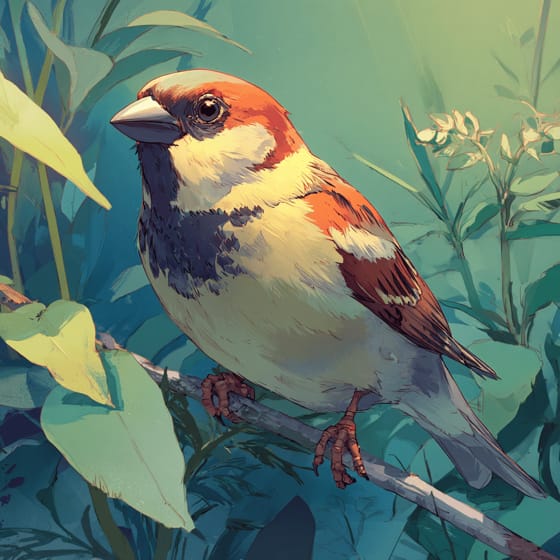
Passer domesticus
Sparrows often take over House Martin nests.
Musca domestica
House Martins eat countless flying insects like house flies.
Culicoides impunctatus
Midges are a tiny, important food source.
Oeciacus hirundinis
This bug feeds on House Martins and their young.
Wildlife encompasses all undomesticated animal and plant life existing in their natural habitats.
Feathered describes animals, primarily birds, possessing a covering of feathers.
Social animals live in organized groups, cooperating for survival benefits such as foraging, defense, and raising offspring.
Aerial creatures spend a significant portion of their lives airborne, utilizing flight for various activities such as hunting, migration, or nesting.

This trait identifies organisms whose diet primarily consists of insects and other small invertebrates.

Diurnal animals are primarily active during daylight hours, typically resting or sleeping at night.

Migratory animals undertake seasonal movements from one region to another, typically in response to changes in climate or food availability.

This habitat trait indicates species that can coexist with humans in urban and suburban environments, utilizing man-made structures and green spaces.
Danger
1/5 · Very low
House Martins are friendly and safe to watch from a distance. It's best to enjoy them without getting too close to their nests.
The easiest way to identify House Martin is to use the Snappit nature identifier app.
13-15 cm
26-29 cm
0.018-0.023 kg
3-5 years
70 km/h
House Martins are insectivores, expertly catching small flying insects high in the air for their meals.
Nests near human homes, often in towns and villages.
Zoom in to split clusters and explore where this object has been snapped.
Take the discovery with you
Snap it with Snappit to identify it, learn what makes it special, and add the discovery to your collection.






.jpg&width=800)








