





House Finch
Haemorhous mexicanus
House Finches are cheerful little birds with bright colors. They love to sing and can often be seen hopping around backyards and parks.
Habitat: Urban areas, gardens, and parks
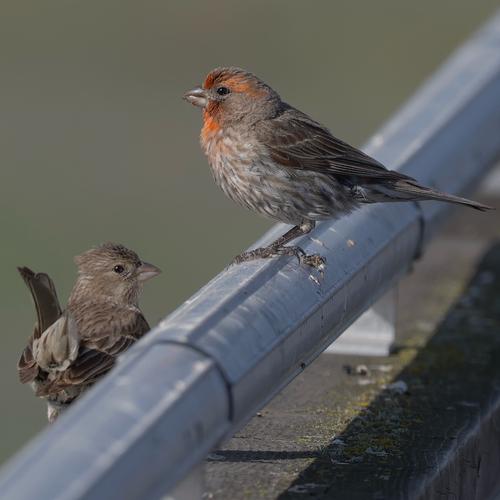
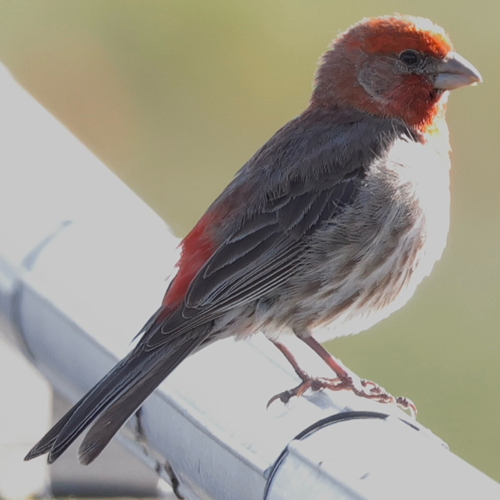
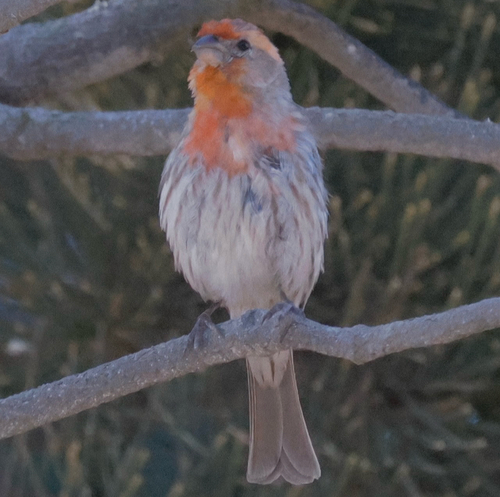
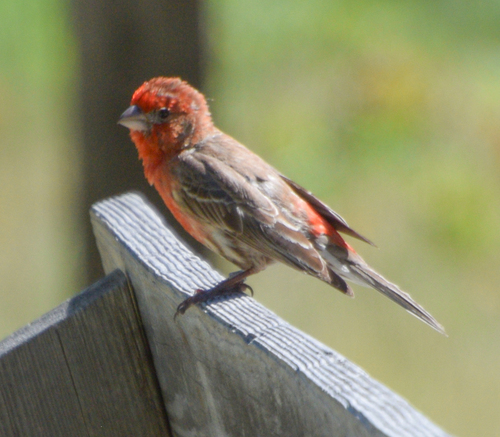
The House Finch is a small, streaky brown bird, with males distinguished by rosy red on their head, breast, and rump. Females lack the red, appearing uniformly streaky brown. They have a relatively short, conical beak and a notched tail.
Category
BirdsRarity
Common
Danger
1/5 · Very low
Snaps
340
House Finches often visit backyard bird feeders, showing little fear of people!
Males with the brightest red feathers are often considered the healthiest and best at finding food!
Originally from western North America, they were accidentally introduced to the East Coast in the 1940s!
They can mimic parts of other birds' songs, mixing them into their own cheerful tunes!
House Finch males can display bright red feathers by eating special pigments, which helps them attract a mate.
House Finch has a powerful, cone-shaped beak that helps them crack open even the toughest seeds with ease.
House Finches can build their nests in many surprising spots, helping them thrive in cities and suburbs.
These small birds primarily eat seeds, fruits, and buds, often found in gardens and wild areas.
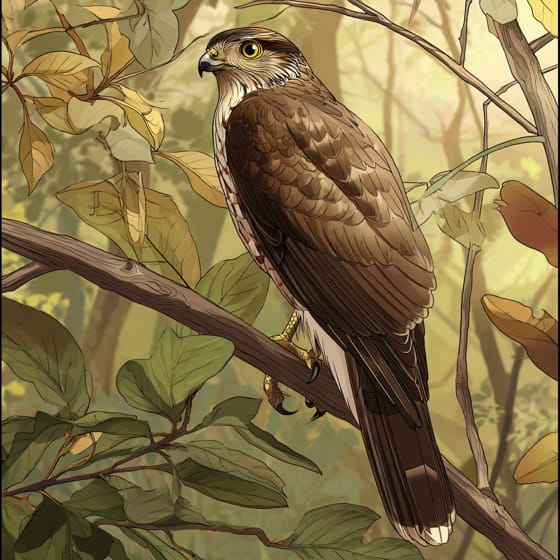
Accipiter cooperii
A common predator in suburban areas.
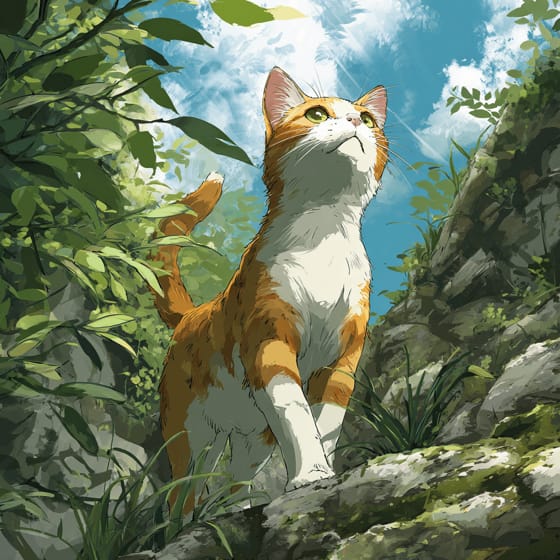
Felis catus
A significant threat to ground-foraging birds.
Helianthus annuus
Feeds on seeds, especially from bird feeders.
Juniperus virginiana
Uses dense foliage for nesting and roosting.
Wildlife encompasses all undomesticated animal and plant life existing in their natural habitats.
Feathered describes animals, primarily birds, possessing a covering of feathers.
Social animals live in organized groups, cooperating for survival benefits such as foraging, defense, and raising offspring.
This trait identifies organisms whose diet includes both plant and animal matter.

Singing animals produce complex vocalizations, often for purposes of attracting mates, defending territory, or communicating within their species.

Colorful describes organisms or objects displaying a wide range of bright and distinct colors.

This habitat trait indicates species that can coexist with humans in urban and suburban environments, utilizing man-made structures and green spaces.
Danger
1/5 · Very low
House Finches are friendly and not dangerous. Just enjoy watching them from a distance!
The easiest way to identify House Finch is to use the Snappit nature identifier app.
12.5-15 cm
20-25 cm
0.016-0.027 kg
2-7 years
40 km/h
These small birds primarily eat seeds, fruits, and buds, often found in gardens and wild areas.
Urban areas, gardens, and parks
Zoom in to split clusters and explore where this object has been snapped.
Jun 19, 2026
Palo Alto Baylands Nature PreservePhoto attribution
no rights reserved
License: CC0 1.0 ↗
Image may be shown cropped inside the card frame.
Jun 19, 2026
Palo Alto Baylands Nature PreservePhoto attribution
no rights reserved
License: CC0 1.0 ↗
Image may be shown cropped inside the card frame.
Jun 19, 2026
Palo Alto Baylands Nature PreservePhoto attribution
no rights reserved
License: CC0 1.0 ↗
Image may be shown cropped inside the card frame.
Jun 13, 2026
Wellfleet Bay Wildlife SanctuaryPhoto attribution
(c) Natasha Haggard, some rights reserved (CC BY)
License: CC BY 4.0 ↗
Image may be shown cropped inside the card frame.
Jun 6, 2026
Candler Park Historic DistrictPhoto attribution
no rights reserved
License: CC0 1.0 ↗
Image may be shown cropped inside the card frame.

Virginia, US
You might spot Eastern Box Turtle and White-Tailed Deer.
View guide →

Tennessee, US
You might spot House Sparrow, Northern Mockingbird, and Gulf Fritillary.
View guide →

Massachusetts, US
You might spot Eastern Cottontail and American Robin.
View guide →

Tennessee, US
You might spot Black Bear, Yellow Wakerobin, and Pipevine Swallowtail.
View guide →

California, US
You might spot Monarch, Canada Goose, and Western Gull.
View guide →

New Mexico, US
You might spot Tree Cholla, Colorado Pinyon, and House Finch.
View guide →
Take the discovery with you
Snap it with Snappit to identify it, learn what makes it special, and add the discovery to your collection.




.jpg&width=800)









