



Jade
Jade is a beautiful green mineral that people use to make jewelry and decorations. It feels smooth and cool to the touch, and some believe it brings good luck.
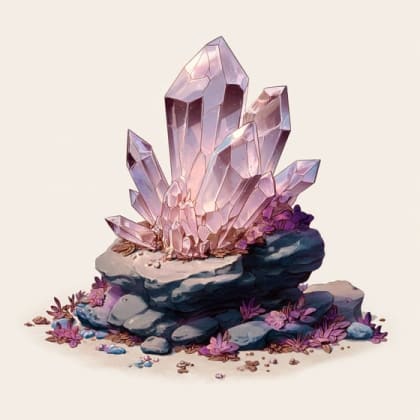
The Jade typically displays a smooth, often waxy or greasy surface, commonly in various shades of green, though white, lavender, and black varieties exist. Its fine-grained, interlocking structure gives it a characteristic translucent to opaque appearance, distinguishing it from simpler green stones.
Category
MineralRarity
Rare
Danger
1/5 · Very low
Snaps
Be the first to snap!
Ancient cultures used strong jade to create durable tools, weapons, and even sharp axe heads!
Jade isn't just one mineral, it's actually two different tough minerals: nephrite and jadeite!
Massive jade boulders, weighing several tons, have been discovered hidden deep within the Earth!
Some extremely rare jade can be more valuable per ounce than pure gold or diamonds!
Jade has an extremely tough, interlocking crystal structure that makes it very resistant to breaking or chipping.
Jade often feels cool to the touch due to its high density and thermal conductivity, making it refreshing to hold.
Its unique combination of toughness and moderate hardness allows skilled artisans to carve intricate designs without shattering.
Ancient refers to organisms, objects, or geological formations that have existed for an extremely long period.
A gemstone is a piece of mineral crystal which, when cut and polished, is used to make jewelry or other adornments.
Natural refers to organisms, materials, or phenomena existing or produced by nature, not artificially created.
Danger
1/5 · Very low
Jade is safe to touch and hold, but it's important to handle it carefully to avoid dropping and breaking it.
The easiest way to identify Jade is to use the Snappit nature identifier app.
green, white, lavender, yellow, black, red-orange
6.5
greasy to vitreous
3.3
monoclinic
Zoom in to split clusters and explore where this object has been snapped.
Recent snaps will appear here as new observations are added.
Take the discovery with you
Snap it with Snappit to identify it, learn what makes it special, and add the discovery to your collection.