





Kentucky Bluegrass
Poa pratensis
Kentucky Bluegrass is a soft and lush grass that grows in many lawns and parks! It’s perfect for playing games or having picnics.
Habitat: Fields and lawns
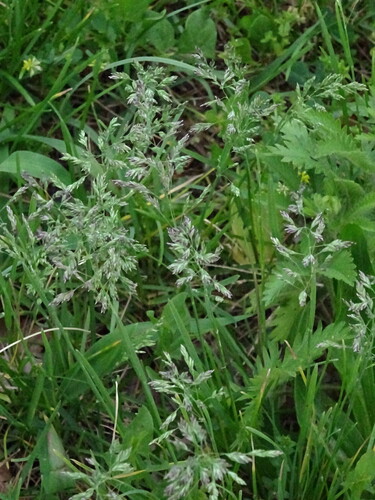
The Kentucky Bluegrass has slender, dark green blades often with a noticeable blue-green tint, especially in spring. Its leaves are boat-shaped at the tip, forming a dense, uniform carpet that stands out from coarser, lighter grasses.
Category
PlantsRarity
Common
Danger
1/5 · Very low
Snaps
2
Despite its name, it originally came from Europe and Asia!
It helps prevent soil erosion with its dense network of roots.
Its scientific name, Poa pratensis, means 'meadow grass' in Latin.
This grass is a key food for deer, elk, and many small mammals.
Kentucky Bluegrass can turn brown and go dormant in dry weather, only to spring back to life when rain returns!
Kentucky Bluegrass creates a very dense, tough mat of roots and stems, which helps it resist being pulled up and prevents weeds.
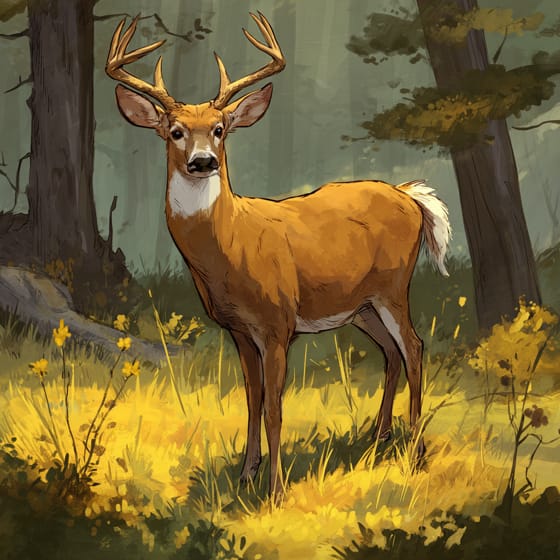
Odocoileus virginianus
A primary food source for this common North American deer.
.JPG&width=800)
Sylvilagus floridanus
Rabbits frequently graze on its tender blades.
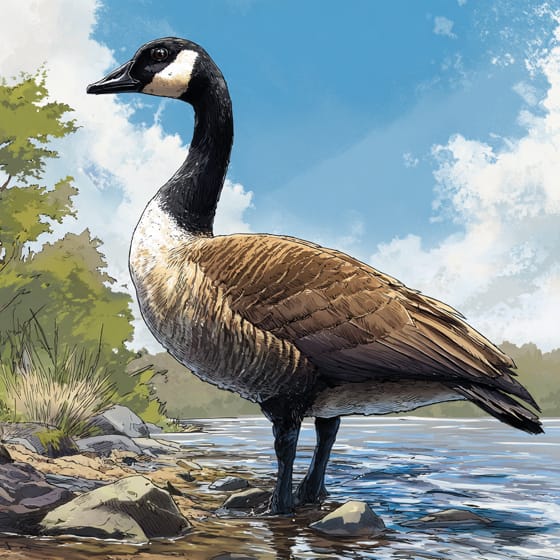
Branta canadensis
Geese often graze on lawns and pastures with this grass.
Microtus pennsylvanicus
Small voles find shelter and food within its dense growth.
Grass-like plants are herbaceous plants that visually resemble true grasses, typically having long, narrow leaves.
Shade tolerant plants are adapted to grow and thrive in areas with low light levels, requiring less direct sunlight.
Grassland habitats are terrestrial biomes dominated by grasses and herbaceous plants, supporting a variety of grazing animals.
Rapid growing plants exhibit accelerated growth rates, quickly increasing in size and biomass within a short period.
Danger
1/5 · Very low
Explore with care and ask an adult if you’re unsure what to do.
The easiest way to identify Kentucky Bluegrass is to use the Snappit nature identifier app.
15-60 cm
30-100 cm
0.3-0.5 cm
Spring to early summer
No
None
Perennial
Zoom in to split clusters and explore where this object has been snapped.
Apr 29, 2026
Chatham ArchPhoto attribution
(c) Y. Liu, some rights reserved (CC BY)
License: CC BY 4.0 ↗
Image may be shown cropped inside the card frame.

Indiana, US
You might spot Eastern Fox Squirrel, Duck, and Canada Goose.
View guide →

Indiana, US
You might spot Eastern Fox Squirrel, Duck, and Canada Goose.
View guide →
Montana, US
View guide →
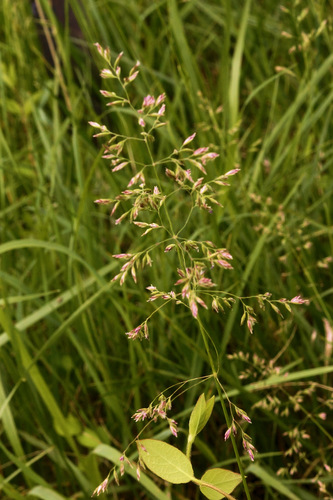
Montana, US
You might spot Smooth Meadow-Grass, Domestic Cat, and Northern Whitecedar.
View guide →
Take the discovery with you
Snap it with Snappit to identify it, learn what makes it special, and add the discovery to your collection.










.jpg&width=800)



_001.jpg&width=800)



