





Mourning Cloak
Nymphalis antiopa
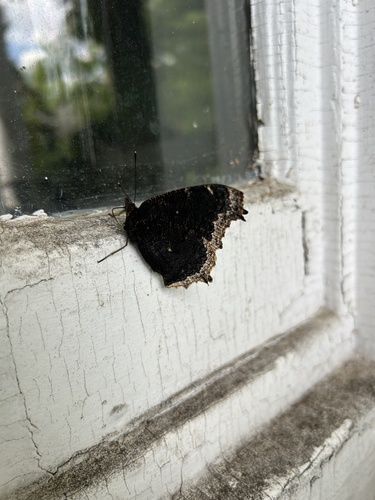
The Mourning Cloak is a striking butterfly that is dark brown with bright blue spots. It is one of the earliest butterflies to appear in spring!
Habitat: Woodlands and gardens
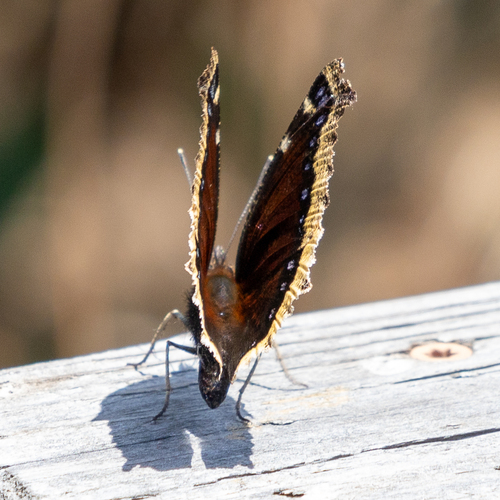
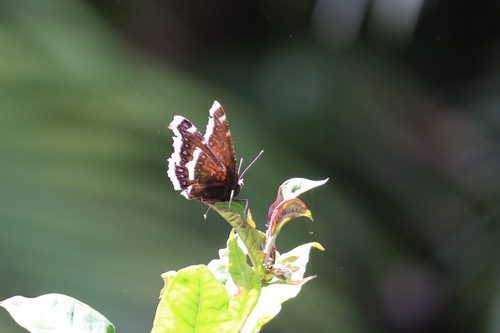
The Mourning Cloak has distinctive deep maroon or purple-brown wings, edged with a broad, irregular yellow or cream border. A row of iridescent blue spots separates the dark inner wing from the lighter margin, making it visually unique among common butterflies.
Category
InsectsRarity
Common
Danger
2/5 · Low
Snaps
164
Adult Mourning Cloaks hide perfectly by blending into tree bark when resting.
Mourning Cloak caterpillars are spiky black with red dots, living in large groups.
Their scientific name, 'antiopa', comes from an ancient Greek mythological queen.
They are often the first butterfly you'll spot fluttering after winter thaws!
Mourning Cloaks can survive winter as adults because they produce an antifreeze-like chemical in their blood.
Mourning Cloaks emerge very early in spring, often before other butterflies, by warming up in the sun.
This butterfly prefers fermenting tree sap and rotting fruit for energy, instead of only flower nectar.
Adults feast on tree sap and rotting fruit; caterpillars munch on various tree leaves.
Age differences: Adults feed on tree sap and fruit, while larvae (caterpillars) feed exclusively on the leaves of specific trees.
Salix alba
Caterpillars feed on leaves.
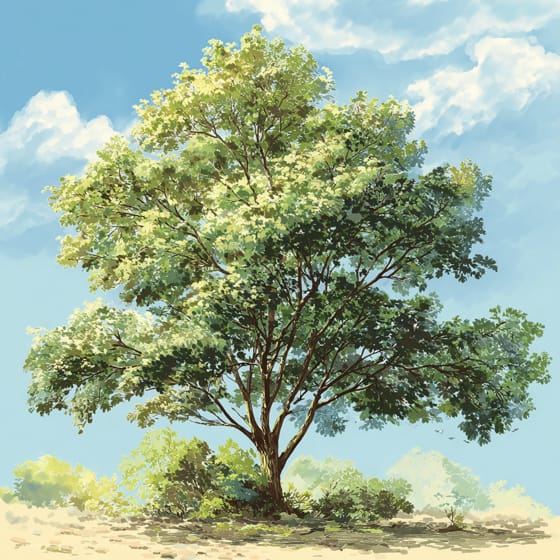
Ulmus americana
Caterpillars feed on leaves.
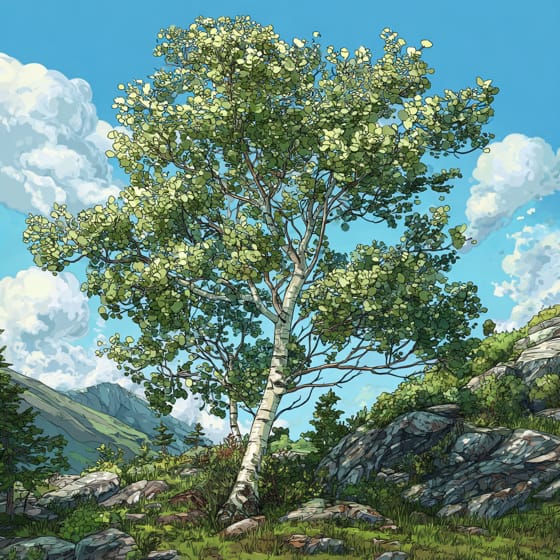
Populus tremuloides
Caterpillars feed on leaves.
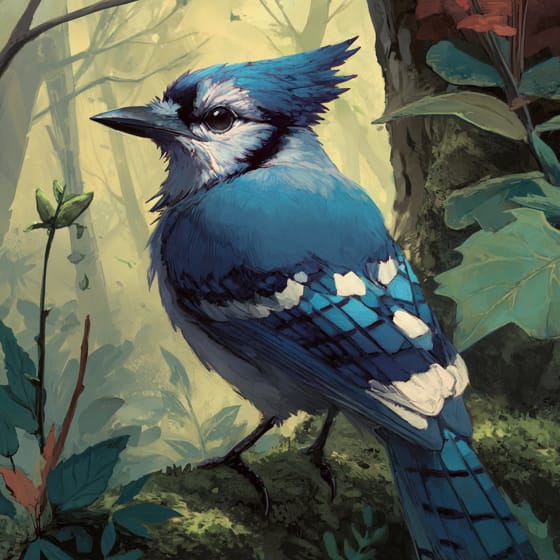
Cyanocitta cristata
Birds prey on caterpillars.
Wildlife encompasses all undomesticated animal and plant life existing in their natural habitats.
This trait characterizes organisms whose diet consists entirely or primarily of plant material.
This trait signifies organisms belonging to a very old evolutionary group with ancestors dating back millions of years.
Forest habitats are terrestrial environments dominated by dense tree cover, supporting a high diversity of plant and animal life.

Hibernating animals enter a state of metabolic depression during cold periods or when food is scarce, characterized by reduced body temperature and activity.

This trait characterizes organisms with an exceptionally long lifespan compared to others of their kind.

Diurnal animals are primarily active during daylight hours, typically resting or sleeping at night.
Danger
2/5 · Low
Do not touch or pick up. Some insects sting or bite. Ask an adult for help.
The easiest way to identify Mourning Cloak is to use the Snappit nature identifier app.
70-100 mm
70-100 mm
150-330 days
20 km/h
Adults feast on tree sap and rotting fruit; caterpillars munch on various tree leaves.
Woodlands and gardens
Foraging
Zoom in to split clusters and explore where this object has been snapped.
Jun 18, 2026
Willowwood ArboretumPhoto attribution
(c) Bonnie Semmling, some rights reserved (CC BY)
License: CC BY 4.0 ↗
Image may be shown cropped inside the card frame.
Jun 6, 2026
Venice Canal Historic DistrictPhoto attribution
(c) Roberto Daniel Avila, some rights reserved (CC BY)
License: CC BY 4.0 ↗
Image may be shown cropped inside the card frame.
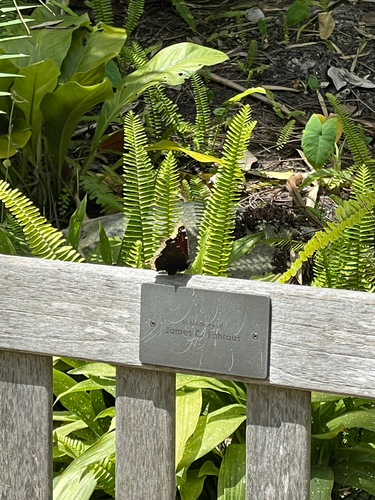
Jun 6, 2026
San Diego Botanic GardenPhoto attribution
(c) Rachel Lee Harper, some rights reserved (CC BY)
License: CC BY 4.0 ↗
Image may be shown cropped inside the card frame.
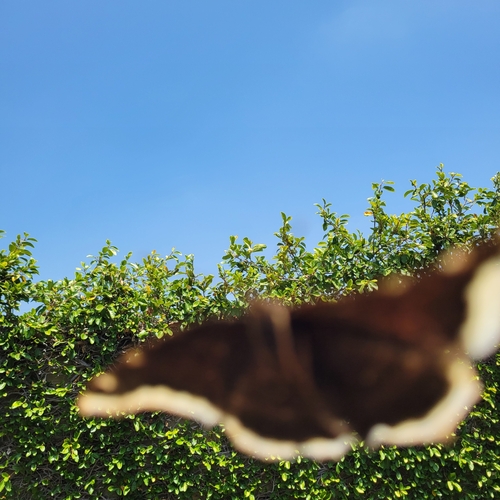
Jun 6, 2026
Self-Realization Fellowship Encinitas Hermitage and Meditation GardensPhoto attribution
(c) Mark Valen, some rights reserved (CC BY)
License: CC BY 4.0 ↗
Image may be shown cropped inside the card frame.
Jun 5, 2026
Alvarado Terrace Historic DistrictPhoto attribution
no rights reserved
License: CC0 1.0 ↗
Image may be shown cropped inside the card frame.

Ohio, US
You might spot Eastern Fox Squirrel and Spotted Lanternfly.
View guide →

California, US
You might spot Western Fence Lizard and California Brittlebush.
View guide →

New Mexico, US
You might spot Tree Cholla, Colorado Pinyon, and House Finch.
View guide →

Ohio, US
You might spot Large White Trillium, Fire Pink, and Christmas Fern.
View guide →

California, US
You might spot Monarch, Bee, and Anise Swallowtail.
View guide →

New York, US
You might spot Common Eastern Bumble Bee and American Robin.
View guide →
Take the discovery with you
Snap it with Snappit to identify it, learn what makes it special, and add the discovery to your collection.







.jpg&width=800)



