





Mute Swan
Cygnus olor
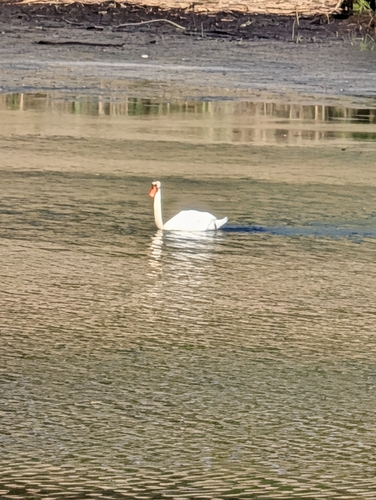
The Mute Swan is a large and elegant bird with a long neck! It often glides gracefully on the water and has beautiful white feathers.
Habitat: Lakes and rivers
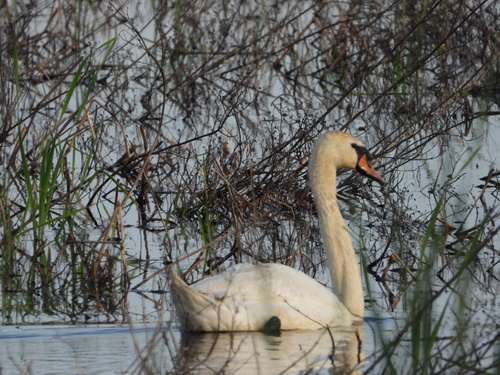
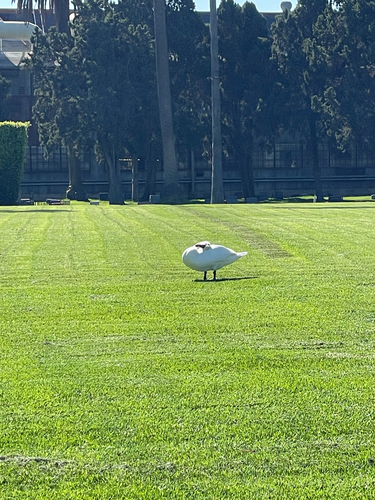
The Mute Swan is a large, elegant bird draped in pure white feathers. It has a striking orange bill adorned with a prominent black knob, especially noticeable on males. Its long neck is gracefully curved into an S-shape, setting it apart visually from other swan species.
Category
BirdsRarity
Common
Danger
2/5 · Low
Snaps
129
A group of swans on the water is wonderfully called a "bevy."
An adult swan's huge wingspan can be wider than a car!
Baby Mute Swans, called cygnets, are born grey or brown, not white!
Mute Swans often pair for life, sharing parenting duties for years.
Mute Swans can stretch their long necks to reach aquatic plants up to 90cm deep, helping them find food unavailable to other birds.
Mute Swans can use their strong wings for defense, delivering powerful blows that helps them fiercely protect their nests and cygnets.
Mute Swans can arch their wings and puff out their back feathers, which helps them look much bigger to warn off rivals or threats.
These graceful birds mostly munch on watery plants, but sometimes nibble small bugs too!
Age differences: Cygnets consume more invertebrates for protein growth; adults primarily eat plant matter.
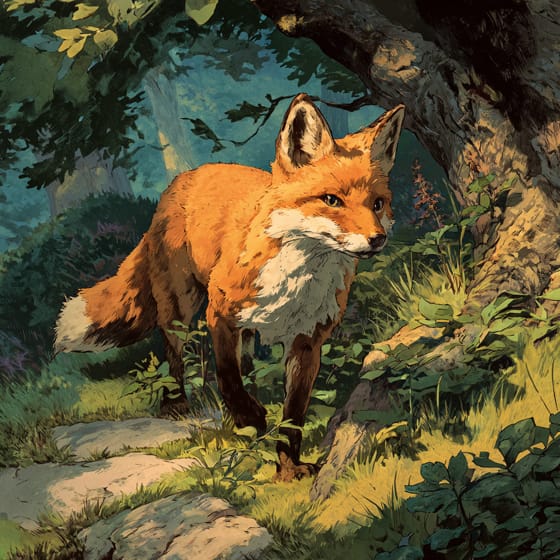
Vulpes vulpes
Preys on eggs and cygnets.
Potamogeton crispus
Primary aquatic food source.
Lymnaea stagnalis
Occasionally consumed by cygnets.

Haliaeetus albicilla
May predate vulnerable cygnets.
Feathered describes animals, primarily birds, possessing a covering of feathers.
Characterized by having toes connected by a membrane, typically aiding in swimming.
This trait characterizes organisms whose diet consists entirely or primarily of plant material.
This trait signifies organisms belonging to a very old evolutionary group with ancestors dating back millions of years.

This trait characterizes organisms with an exceptionally long lifespan compared to others of their kind.

This habitat trait identifies species found in wetlands, which are areas of land saturated with water, either permanently or seasonally, including marshes, swamps, and bogs.

Freshwater habitats include non-saline aquatic environments such as rivers, lakes, ponds, and wetlands, vital for numerous species.

Migratory animals undertake seasonal movements from one region to another, typically in response to changes in climate or food availability.
Danger
2/5 · Low
Watch quietly from a distance and never try to feed or chase wild animals.
The easiest way to identify Mute Swan is to use the Snappit nature identifier app.
125-170 cm
200-240 cm
9-14 kg
7-20 years
50 km/h
These graceful birds mostly munch on watery plants, but sometimes nibble small bugs too!
Lakes and rivers
Zoom in to split clusters and explore where this object has been snapped.
May 27, 2026
Seneca River Crossing Canals Historic DistrictPhoto attribution
(c) Craig K, some rights reserved (CC BY)
License: CC BY 4.0 ↗
Image may be shown cropped inside the card frame.
May 20, 2026
Hamburg Bridge Historic DistrictPhoto attribution
no rights reserved
License: CC0 1.0 ↗
Image may be shown cropped inside the card frame.
Feb 13, 2026
Hollywood Forever CemeteryPhoto attribution
(c) Max, some rights reserved (CC BY)
License: CC BY 4.0 ↗
Image may be shown cropped inside the card frame.
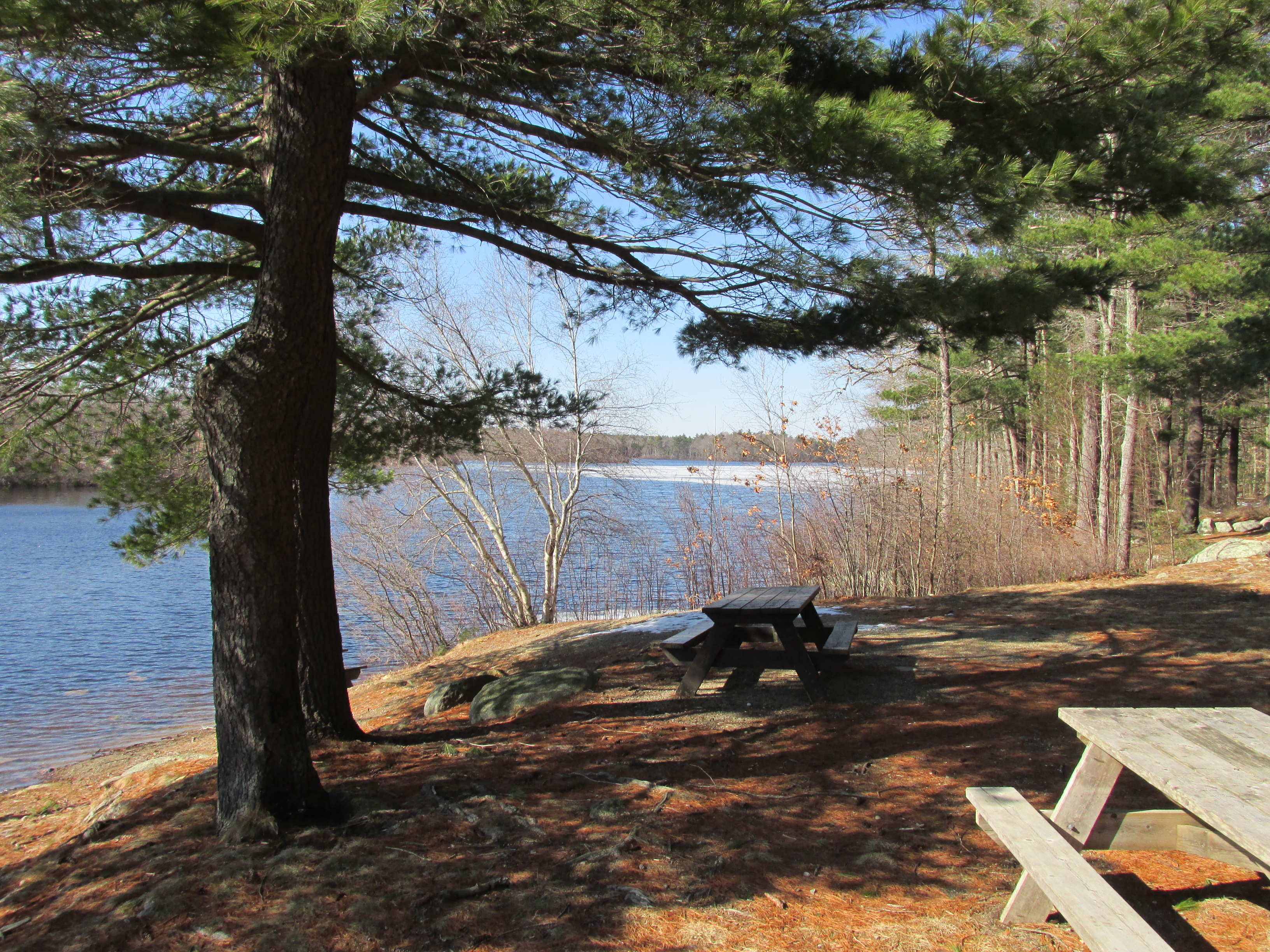
Massachusetts, US
You might spot Eastern White Pine and Common Eastern Bumble Bee.
View guide →

South Carolina, US
You might spot American Alligator, Anole, and Great Blue Heron.
View guide →

Rhode Island, US
You might spot Common Eastern Bumble Bee and Osprey.
View guide →

Rhode Island, US
You might spot Spotted Lanternfly, Duck, and American Robin.
View guide →

Michigan, US
You might spot Monarch, Canada Goose, and Eastern Gray Squirrel.
View guide →

Rhode Island, US
You might spot Spotted Lanternfly, Duck, and American Robin.
View guide →
Take the discovery with you
Snap it with Snappit to identify it, learn what makes it special, and add the discovery to your collection.





.jpg&width=800)








