


Native Copper
Native copper is a special mineral that can be found in nature. It has a shiny, reddish color and is often used to make beautiful jewelry and decorations.
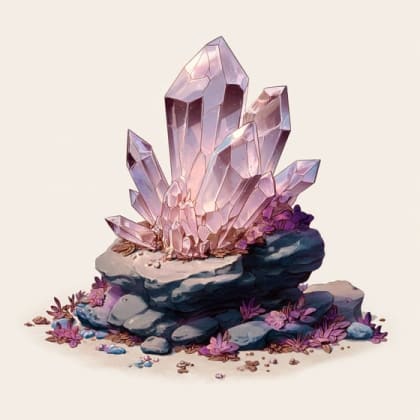
The Native Copper is a shiny, reddish-brown metal that can tarnish to dark brown or black. It often develops a distinctive green coating called a patina. Its unique metallic luster and color make it stand out from other minerals.
Category
MineralRarity
Rare
Danger
1/5 · Very low
Snaps
Be the first to snap!
It can develop a beautiful blue-green patina, like on the Statue of Liberty!
Native Copper feels cool to touch because it conducts heat away super fast!
Native Copper is one of few metals found naturally pure on Earth, ready to use!
Some Native Copper specimens are truly massive, weighing many tons underground. Wow!
Native Copper has excellent electrical and thermal conductivity that makes it perfect for wiring and electronics.
Native Copper is super malleable and ductile, meaning it can be easily shaped or stretched into wires.
A geode is a hollow, spherical rock formation lined with inward-growing crystals or concentric banding, often found in volcanic or sedimentary rocks.
Metallic refers to substances, materials, or objects possessing properties characteristic of metals, such as luster and conductivity.
Metallic luster describes a mineral's appearance when reflecting light, resembling polished metal, often opaque.
Ancient refers to organisms, objects, or geological formations that have existed for an extremely long period.

Crystalline describes a mineral or rock composed of crystals, often exhibiting a regular atomic structure and geometric external form.

Natural refers to organisms, materials, or phenomena existing or produced by nature, not artificially created.
Danger
1/5 · Very low
Native copper is generally safe to handle, but it's best to avoid putting it in your mouth or eyes.
The easiest way to identify Native Copper is to use the Snappit nature identifier app.
copper-red, brown, black, green
2.5
metallic
8.9
isometric
Zoom in to split clusters and explore where this object has been snapped.
Recent snaps will appear here as new observations are added.
Take the discovery with you
Snap it with Snappit to identify it, learn what makes it special, and add the discovery to your collection.