

Neolasioptera Triadenii
neolasioptera triadenii
Neolasioptera triadenii is a highly specialized species of gall midge within the family Cecidomyiidae. This minuscule insect is celebrated for its intricate, co-evolutionary relationship with Marsh St. John's-wort (Triadenum species). Female midges deposit their eggs inside the plant's stems, and the subsequent hatching larvae secrete biochemicals that mimic plant growth hormones. This manipulation forces the host plant to grow a distinctive, swollen protective structure called a stem gall. Within this customized organic nursery, the larvae feed safely on nutrient-rich tissue, shielded from predators and harsh weather. While the adult midges are tiny, delicate, and rarely observed due to their brief life cycles of only a few days, their presence is easily documented by identifying these characteristic stem galls. This species plays a fascinating role in wetland ecosystems, demonstrating the complexity of plant-insect interactions and serving as a localized indicator of healthy wetland plant communities.
Habitat: Found in wet meadows, freshwater marshes, bogs, and damp lakeside margins where its host plant, Marsh St. John's-wort, thrives.
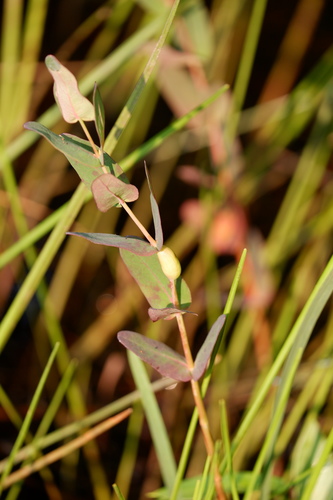
Adult Neolasioptera triadenii are incredibly minute flies, measuring just 1.5 to 2.5 millimeters in length with a delicate, dusky-gray to blackish body, clear wings with reduced venation, and long, bead-like antennae. Because of their tiny size, they are most reliably identified in the wild by their larval galls. These galls appear as distinct, spindle-shaped (fusiform) swellings on the stems of Marsh St. John's-wort. The galls are typically green to reddish-brown, blending with the host plant's natural coloring but noticeably disrupting its straight, cylindrical stem shape.
Category
InsectsRarity
Common
Danger
1/5 · Very low
Snaps
Be the first to snap!
Citizen scientists can easily spot and record these midges in the dead of winter, as the dried, swollen stem galls remain highly visible sticking up out of the snow.
Even though adult midges die within days of emerging, the larval stage spends nearly a full year safely overwintering inside the dead, dry stems of the host plant.
The gall induced by this midge acts like a modified, extra-somatic organ of the host plant, actively drawing nutrients from the rest of the plant to feed the invader.
Larvae secrete specialized compounds that hijack the host plant's cellular development, forcing it to grow a protective, food-rich swelling.
The woody walls of the induced stem gall protect the developing larvae from extreme temperatures, desiccation, and heavy rain.
Adult females possess highly sensitive chemical receptors that allow them to locate and oviposit exclusively on specific Triadenum wetland plants.
Larvae feed internally on the specialized, nutrient-rich plant tissues generated by their host plant inside the stem gall, while adults generally do not feed.
Triadenum virginicum
Provides the essential physical structure and nutrition required for the larval stage of the midge.
Platygaster
Parasitoid wasps target the larvae inside the galls, laying eggs inside them to consume them from within.
No trait badges are assigned for this object yet.
No aliases listed yet.
Collections for this object will appear here as more themes are added.
Danger
1/5 · Very low
No special safety notes yet.
Look for six legs, antennae, three body sections and the shape of the wings. Beetles have hardened front wings; flies have just one working pair. Tiny insects may need a close view before their group is clear. Insect Identifier: upload a photo and compare the visible details.
0+ cm
0+ cm
0+ kg
1+ years
2 km/h
Larvae feed internally on the specialized, nutrient-rich plant tissues generated by their host plant inside the stem gall, while adults generally do not feed.
Found in wet meadows, freshwater marshes, bogs, and damp lakeside margins where its host plant, Marsh St. John's-wort, thrives.
Zoom in to split clusters and explore where this object has been snapped.
Recent snaps will appear here as new observations are added.
Take the discovery with you
Snap it with Snappit to identify it, learn what makes it special, and add the discovery to your collection.