




Paradoxosomatinae
paradoxosomatinae
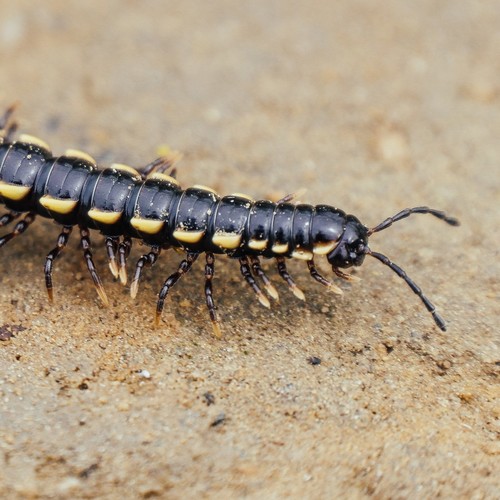
Paradoxosomatinae is a diverse and widespread subfamily of millipedes, belonging to the order Polydesmida. These fascinating arthropods are crucial decomposers in terrestrial ecosystems, playing a vital role in nutrient cycling by breaking down dead organic matter. Often overlooked due to their cryptic nature, they represent a significant component of soil invertebrate communities across various biomes. Their segmented bodies and often subtle colorations belie a complex life adapted to humid, dark environments, making them intriguing subjects for closer observation.
Habitat: Found predominantly in moist, dark environments rich in decaying organic matter, such as leaf litter, under logs, beneath stones, and within soil layers.
Paradoxosomatinae millipedes typically exhibit a flattened or sub-cylindrical body shape, characterized by numerous segments, usually ranging from 18 to 20. Their coloration commonly includes shades of brown, black, or reddish-brown, sometimes featuring contrasting lighter keels (lateral paranota) along the sides, which can be yellowish or orange. Sizes generally vary from 1 to 5 centimeters in length, with a smooth, often glossy exoskeleton. They lack wings and move with a characteristic wave-like motion of their many legs.
Category
AnimalRarity
Common
Danger
1/5 · Very low
Snaps
Be the first to snap!
Despite their name "millipede" (meaning "thousand feet"), no known species actually has 1,000 legs; Paradoxosomatinae typically have around 36-40 segments, each with two pairs of legs.
Some species within this subfamily can release a pungent, bitter-tasting liquid from glands along their body when disturbed, acting as an effective deterrent against predators.
Their segmented bodies are highly adapted for pushing through soil and leaf litter, with a strong, flexible exoskeleton providing protection.
They are critical "engineers" of the soil, helping to aerate it and break down organic matter into smaller particles, making nutrients available for plants.
Many species in this subfamily possess ozopores, glands along their sides that secrete defensive chemicals, often hydrogen cyanide or quinones, to deter predators.
They are highly efficient detritivores, breaking down dead plant material like leaves and wood, thus recycling nutrients back into the ecosystem.
Their flattened bodies allow them to easily burrow into soil, hide under debris, and navigate tight spaces, protecting them from predators and desiccation.
Paradoxosomatinae millipedes primarily feed on decaying plant material, fungi, and the associated microorganisms found in their habitat. They play a crucial role in breaking down organic matter.
Fungi
Consumes decaying organic matter, including fungal hyphae and spores.
Staphylinidae
Predators that feed on millipedes, often found in the same microhabitats.
Plant detritus
Relies on the availability of fallen leaves and other plant debris as both food source and shelter.
Various Passeriformes
These millipedes are preyed upon by various insectivorous birds.
Solitary animals live alone for most of their lives, only interacting with others for mating or parental care.
This trait characterizes organisms whose diet consists entirely or primarily of plant material.
Describes organisms that break down dead organic material, recycling nutrients back into the ecosystem.
Forest habitats are terrestrial environments dominated by dense tree cover, supporting a high diversity of plant and animal life.
Nocturnal animals are primarily active during the nighttime hours, typically resting or sleeping during the day.
Collections for this object will appear here as more themes are added.
Danger
1/5 · Very low
No special safety notes yet.
Start with body shape, legs or fins, fur, feathers or scales, and standout markings. Then weigh size, habitat and where you saw it. Young animals and seasonal coats can look very different from familiar adults. Animal Identifier: upload a photo and compare the visible details.
1-5 cm
0.001-0.005 kg
2-5 years
Paradoxosomatinae millipedes primarily feed on decaying plant material, fungi, and the associated microorganisms found in their habitat. They play a crucial role in breaking down organic matter.
Found predominantly in moist, dark environments rich in decaying organic matter, such as leaf litter, under logs, beneath stones, and within soil layers.
Foraging
20-100
Zoom in to split clusters and explore where this object has been snapped.
Recent snaps will appear here as new observations are added.
Take the discovery with you
Snap it with Snappit to identify it, learn what makes it special, and add the discovery to your collection.