



Planarian
Dugesia tigrina
Planarians are flatworms that live in water. They have a special power to regrow body parts if they get hurt. These creatures move gracefully through the water, exploring their underwater world.
Habitat: Freshwater
The Planarian has a flat, soft body, often brown, black, or gray, with a distinctive spade-shaped head. It has two prominent eyespots on its head, giving it a cross-eyed appearance. Its smooth, creeping motion makes it look like it's gliding.
Category
InvertebrateRarity
Common
Danger
1/5 · Very low
Snaps
Be the first to snap!
Planarians are hermaphrodites, meaning each worm has both male and female reproductive organs.
Some planarians can learn simple mazes, and even remember them after regrowing a new head!
They have an amazing feeding tube called a pharynx that extends from their belly like a proboscis!
When startled, planarians sometimes detach from surfaces and drift away to escape danger.
Planarian can regrow lost body parts, even a whole new body from a tiny piece, because of special stem cells called neoblasts.
Planarian can sense food from a distance using sensitive chemical receptors, helping them find their next meal in the water.
Planarian has two eyespots that detect light and dark, allowing them to navigate away from bright light or hide.
Planarian can glide smoothly over surfaces using tiny hair-like cilia and a layer of mucus, making them seem to float.
Planarians are tiny scavengers and predators that feast on dead things and even smaller creatures.
Tubifex tubifex
Planarians hunt these small aquatic worms.
Lymnaea stagnalis
Planarians ambush and consume small pond snails.
Gambusia affinis
Small fish sometimes prey on planarians.
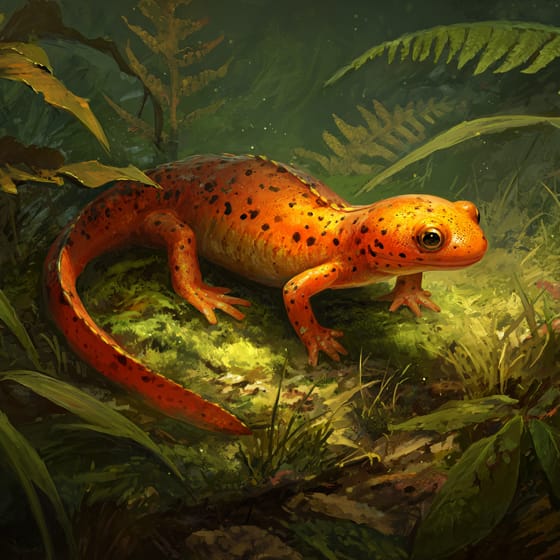
Notophthalmus viridescens
Newts are known predators of planarians.
Spore-producing organisms reproduce by releasing small, often single-celled, reproductive units called spores.
This trait signifies organisms belonging to a very old evolutionary group with ancestors dating back millions of years.
This trait identifies organisms whose diet consists entirely or primarily of animal tissue.
Freshwater habitats include non-saline aquatic environments such as rivers, lakes, ponds, and wetlands, vital for numerous species.

Regenerative organisms possess the ability to regrow lost or damaged body parts, tissues, or organs.

Nocturnal animals are primarily active during the nighttime hours, typically resting or sleeping during the day.

Venomous organisms produce toxins that are injected into another animal, typically through a bite or sting.
No aliases listed yet.
Danger
1/5 · Very low
If you find planarians in the water, observe them from a safe distance and avoid touching them to keep them safe.
The easiest way to identify Planarian is to use the Snappit nature identifier app.
1-25
1-2
Planarians are tiny scavengers and predators that feast on dead things and even smaller creatures.
Freshwater
Scavenging
1-5
Zoom in to split clusters and explore where this object has been snapped.
Recent snaps will appear here as new observations are added.
Take the discovery with you
Snap it with Snappit to identify it, learn what makes it special, and add the discovery to your collection.