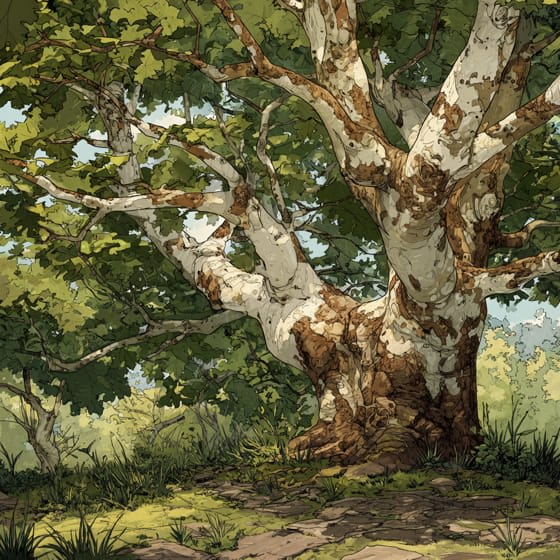





Plane Tree
Platanus
Plane trees, also known as sycamores, have unique mottled bark that peels off in patches. They provide shade with their large, hand-shaped leaves and are often found lining streets and parks.
Habitat: Urban areas
The Plane Tree has distinctive patchy bark, often grey, cream, and olive green, which peels off in flakes to reveal lighter colours underneath. Its large, five-lobed leaves resemble maple leaves, and it produces curious spherical seed balls that hang from branches.
Category
TreesRarity
Common
Danger
2/5 · Low
Snaps
Be the first to snap!
A famous Plane Tree in Greece is over 2,400 years old!
In North America, many Plane Trees are called Sycamores!
Plane Trees are often planted in cities because they are super tough!
Their fuzzy "buttonball" seeds can hang on the tree all winter long!
Plane Tree can shed its outer bark that helps it clean off pollution and grow without cracking.
Plane Tree has tough leaves and roots that help it thrive in polluted city environments.
Plane Tree can regrow quickly after heavy pruning that helps it recover from damage or shaping.
Corythucha ciliata
Feeds on sap from its leaves.

Lophocampa caryae
Larvae munch on its leaves.
%2C_Parc_de_Woluw%C3%A9%2C_Brussels_(13042792905).jpg&width=800)
Parus major
Nests in tree cavities and branches.
Apiognomonia veneta
Causes leaf spot and twig cankers.
Deciduous plants periodically shed all their leaves, typically during autumn or dry seasons.
Broadleaf trees are angiosperms characterized by flat, wide leaves that are typically shed annually in temperate climates.
This habitat trait indicates species that can coexist with humans in urban and suburban environments, utilizing man-made structures and green spaces.
Danger
2/5 · Low
Avoid climbing on trees without adult supervision to prevent accidents.
The easiest way to identify Plane Tree is to use the Snappit nature identifier app.
20-40 m
15-25 m
No
100-300 cm
200-500 years
Urban areas
Achenes clustered in spherical heads (buttonballs)
Zoom in to split clusters and explore where this object has been snapped.
Recent snaps will appear here as new observations are added.
Take the discovery with you
Snap it with Snappit to identify it, learn what makes it special, and add the discovery to your collection.










