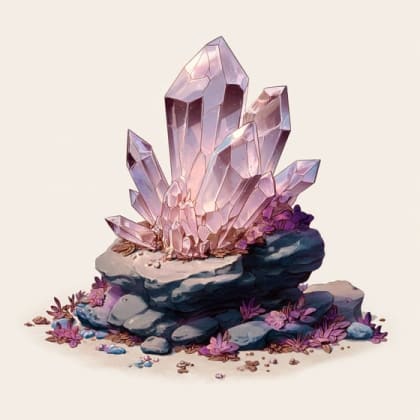




Shale
Shale is a type of rock that breaks easily into thin layers. It can be found in many colors like gray, black, and brown. People use shale to make bricks and tiles.
The Shale is a fine-grained sedimentary rock, often appearing in shades of gray, black, or reddish-brown. It distinctively breaks into thin, parallel layers or flakes, making it look like stacked sheets of paper.
Category
MineralRarity
Common
Danger
1/5 · Very low
Snaps
Be the first to snap!
Ancient artists sometimes used powdered shale to make pigments for their cave paintings!
Shale is the most common type of sedimentary rock found on Earth!
Some shale contains enough plant matter that it can actually burn like coal!
You can often find delicate fossil fern leaves beautifully pressed flat within shale layers!
Shale has a layered structure called fissility, allowing it to easily split into thin, flat sheets, useful for flagstones.
Shale's fine grains and quick deposition protect ancient organisms, preserving detailed fossils better than many other rocks.
Some shales can hold tiny droplets of oil and gas within their fine pores, acting like natural underground storage tanks.
Sedimentary rocks are formed from the accumulation and compaction of sediments, organic matter, or chemical precipitates.
Colorful describes organisms or objects displaying a wide range of bright and distinct colors.
A fossil is the preserved remains or traces of an ancient organism embedded in rock or other geological deposits.
Natural refers to organisms, materials, or phenomena existing or produced by nature, not artificially created.
No aliases listed yet.
Danger
1/5 · Very low
Shale is safe to touch but can be sharp if broken, so be careful when handling it.
The easiest way to identify Shale is to use the Snappit nature identifier app.
gray, black, green, red, brown
2.5
dull
2.5
Zoom in to split clusters and explore where this object has been snapped.
Recent snaps will appear here as new observations are added.
Take the discovery with you
Snap it with Snappit to identify it, learn what makes it special, and add the discovery to your collection.