





Eastern Tiger Swallowtail
Papilio glaucus
The Eastern Tiger Swallowtail is a large, beautiful butterfly with yellow and black stripes. It flutters gracefully among flowers!
Habitat: Wetlands and gardens
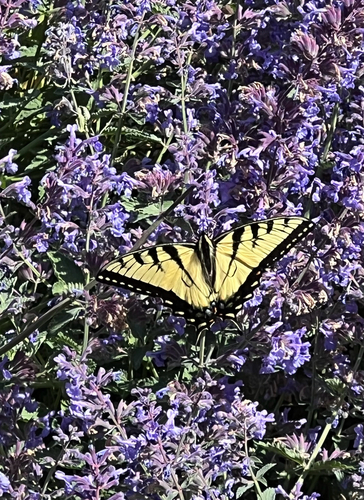
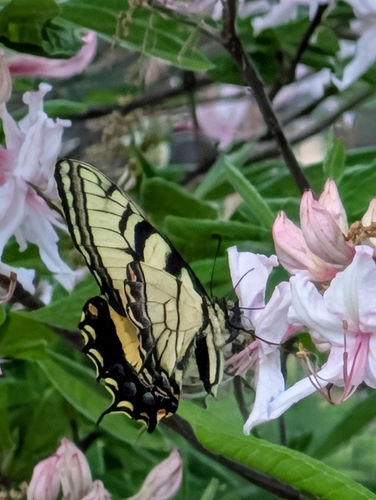
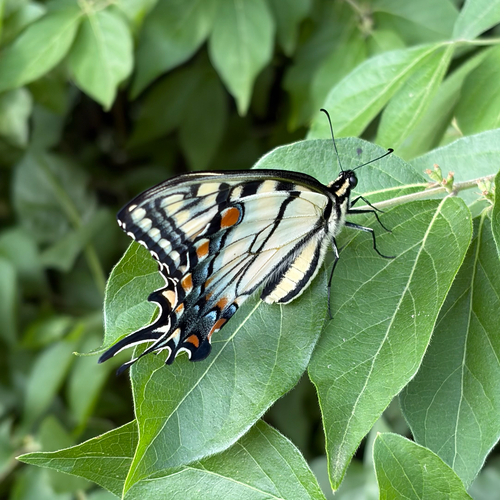
The Eastern Tiger Swallowtail is a large butterfly, typically bright yellow with striking black 'tiger' stripes on its wings. Some females are entirely dark black, mimicking toxic butterflies. Its hindwings often feature a row of blue spots and a splash of orange.
Category
InsectsRarity
Common
Danger
2/5 · Low
Snaps
565
Adult males have special scent scales on their wings to attract females.
Caterpillars build a silken mat on leaves to rest and hide.
Its tongue is like a long straw that unrolls to sip flower nectar!
These butterflies sometimes gather in 'puddling' groups to drink minerals from wet dirt!
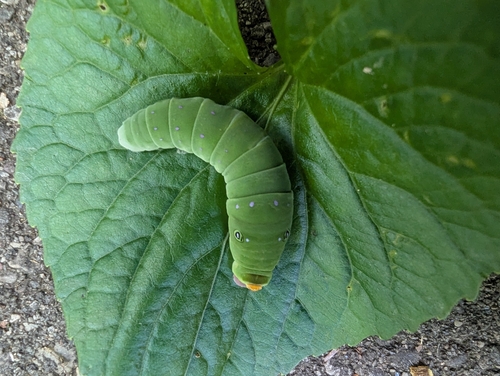
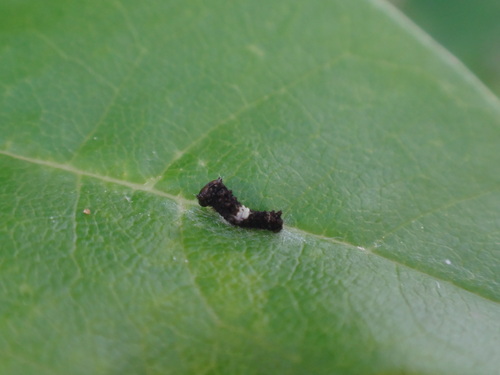
Eastern Tiger Swallowtail caterpillars can look like bird droppings when small, and later develop 'fake eyes' to resemble a snake's head to scare predators.
Some female Eastern Tiger Swallowtails have dark wings that mimic the poisonous Pipevine Swallowtail, helping them avoid hungry birds.
Eastern Tiger Swallowtails have a long, coiled proboscis that unrolls like a straw, helping them sip sweet nectar deep inside flowers.
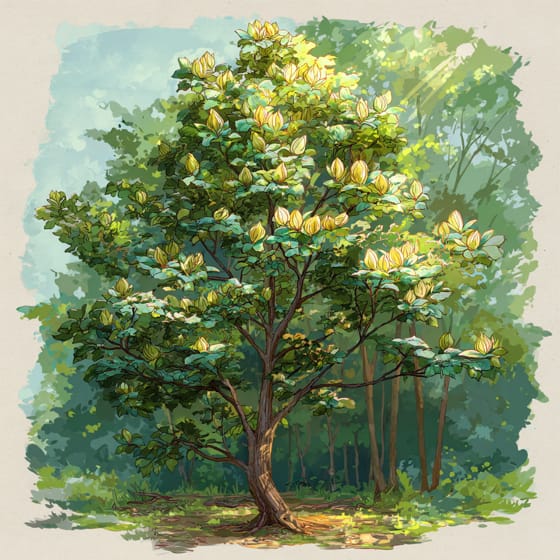
Adults sip sweet nectar from many flowers; caterpillars munch on tree leaves.
Age differences: Young caterpillars eat tree leaves, while adult butterflies drink nectar from flowers.
Wildlife encompasses all undomesticated animal and plant life existing in their natural habitats.
Colorful describes organisms or objects displaying a wide range of bright and distinct colors.
This trait characterizes organisms whose diet consists entirely or primarily of plant material.
This habitat trait identifies species found in wetlands, which are areas of land saturated with water, either permanently or seasonally, including marshes, swamps, and bogs.

Diurnal animals are primarily active during daylight hours, typically resting or sleeping at night.

Describes organisms that transfer pollen, enabling the fertilization and reproduction of plants.
Danger
2/5 · Low
Do not touch or pick up. Some insects sting or bite. Ask an adult for help.
The easiest way to identify Eastern Tiger Swallowtail is to use the Snappit nature identifier app.
76-150 mm
50-75 mm
7-14 days
25 km/h
Adults sip sweet nectar from many flowers; caterpillars munch on tree leaves.
Wetlands and gardens
Foraging
Zoom in to split clusters and explore where this object has been snapped.
Jun 5, 2026
Athens Lunatic AsylumPhoto attribution
(c) Anna Hess, some rights reserved (CC BY)
License: CC BY 4.0 ↗
Image may be shown cropped inside the card frame.
Jun 3, 2026
Naval Station Great LakesPhoto attribution
(c) Isaac Larkin, some rights reserved (CC BY-SA)
License: CC BY-SA 4.0 ↗
Image may be shown cropped inside the card frame.
May 30, 2026
PrallsvillePhoto attribution
(c) Alie / C.A. Kratzer, some rights reserved (CC BY-SA)
License: CC BY-SA 4.0 ↗
Image may be shown cropped inside the card frame.
May 20, 2026
Hamburg Bridge Historic DistrictPhoto attribution
no rights reserved
License: CC0 1.0 ↗
Image may be shown cropped inside the card frame.
May 20, 2026
Sugar Loaf MountainPhoto attribution
(c) Jacqueline Raiford, some rights reserved (CC BY)
License: CC BY 4.0 ↗
Image may be shown cropped inside the card frame.

New Jersey, US
You might spot Garlic Mustard, Sensitive Fern, and Common Mugwort.
View guide →

Virginia, US
You might spot Eastern Box Turtle and White-Tailed Deer.
View guide →

Tennessee, US
You might spot House Sparrow, Northern Mockingbird, and Gulf Fritillary.
View guide →

Rhode Island, US
You might spot Common Eastern Bumble Bee and Osprey.
View guide →

Maryland, US
You might spot Crane-Fly Orchid, Fragile Forktail, and Ebony Jewelwing.
View guide →

Connecticut, US
You might spot Bold Jumping Spider and American Tuliptree.
View guide →
Take the discovery with you
Snap it with Snappit to identify it, learn what makes it special, and add the discovery to your collection.





.jpg&width=800)



.jpg&width=800)



