




Sequoia
Sequoiadendron giganteum
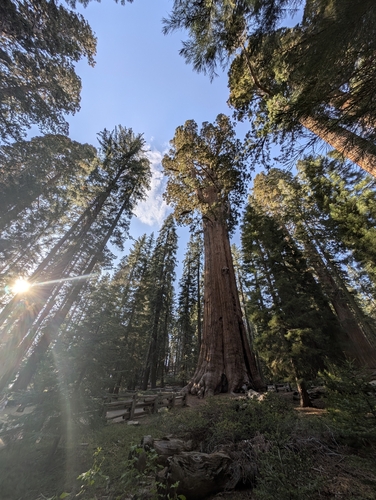
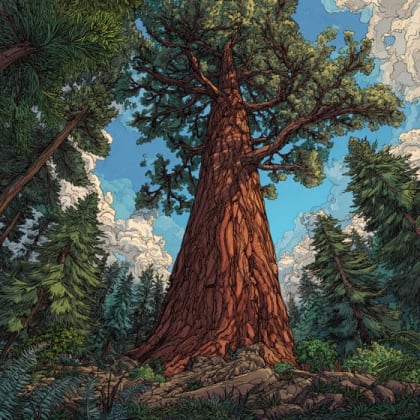
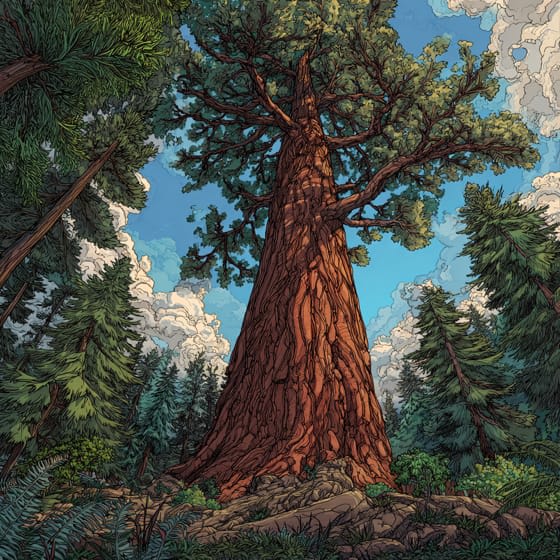
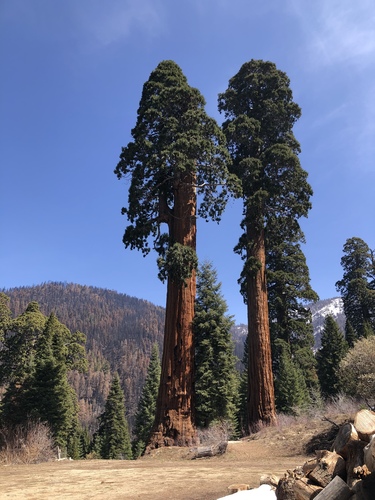
Sequoias are giant trees that can live for thousands of years. They have thick reddish bark and can grow as tall as a 26-story building!
Habitat: Mountain regions
The Sequoia is a towering giant, often sporting a reddish-brown, deeply furrowed bark that can be meters thick. Its canopy is conical, covered in tiny, scale-like, bluish-green leaves, making it visually distinct from most other conifers.
Category
TreesRarity
Rare
Danger
2/5 · Low
Snaps
30
Imagine driving your car through a tunnel carved inside a fallen Sequoia log!
Its reddish wood resists decay, making fallen logs last for many centuries.
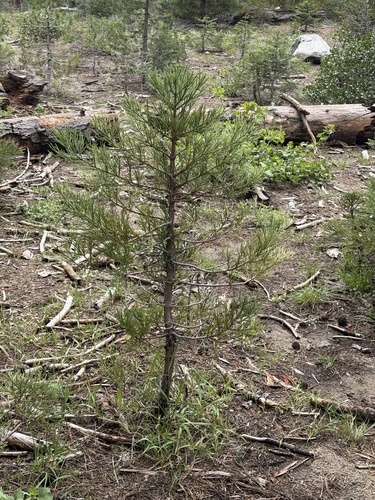
Sequoia seeds are as tiny as an oat flake, but grow into colossal trees.
The largest Sequoia, General Sherman, is the biggest living thing on Earth by volume!
Sequoia has incredibly thick, fibrous bark that helps it survive scorching wildfires, protecting its vital inner layers.
Sequoia can live for over 3,000 years, growing to immense sizes thanks to its robust structure and slow, steady growth.
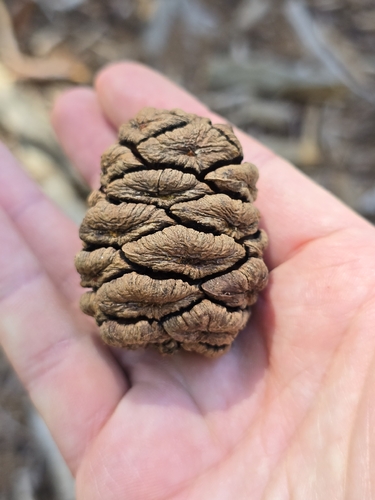
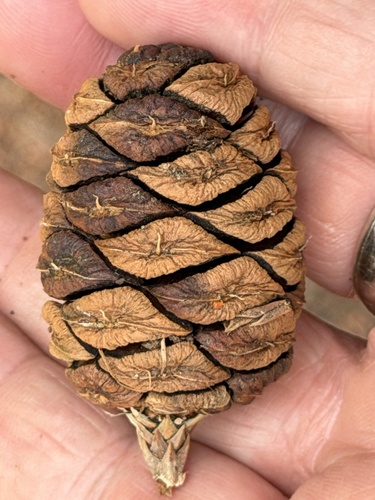
Sequoia's cones often need heat from fire to open and release their seeds, helping new trees sprout after a blaze.
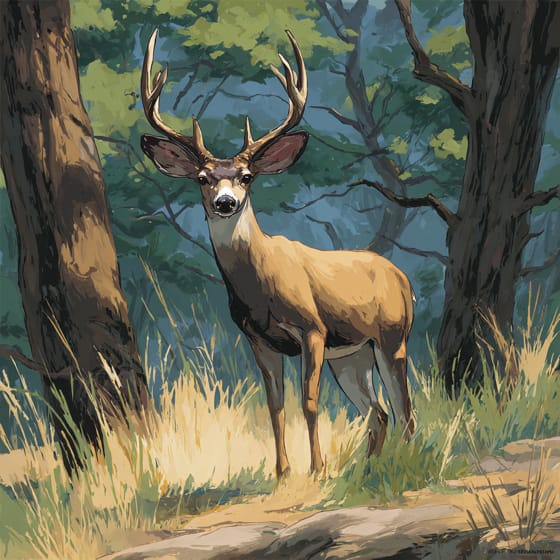
Odocoileus hemionus
Browses on young Sequoia seedlings.

Sciurus griseus
Feeds on seeds from Sequoia cones.
Strix occidentalis
Nests in the cavities of old-growth Sequoia trees.
Ursus americanus
Uses hollowed-out Sequoia trunks as dens.
Coniferous plants are typically evergreen, bearing needles or scales and reproductive cones.
Evergreen plants retain their foliage throughout the year, never shedding all their leaves at once.
This habitat trait identifies species found in mountainous regions, characterized by high elevation, steep slopes, and varying climate zones.
This trait characterizes organisms with an exceptionally long lifespan compared to others of their kind.

Describes a species whose presence and role have a disproportionately large effect on its environment.
Danger
2/5 · Low
Enjoy the beauty of sequoias from a safe distance and be careful around their large roots.
The easiest way to identify Sequoia is to use the Snappit nature identifier app.
50-95 m
10-20 m
No
600-1100 cm
2000-3200 years
Mountain regions
Cone
Zoom in to split clusters and explore where this object has been snapped.
Jun 2, 2026
Generals' Highway Stone BridgesPhoto attribution
(c) Dan Killam, some rights reserved (CC BY)
License: CC BY 4.0 ↗
Image may be shown cropped inside the card frame.
Jun 2, 2026
Giant Forest Village-Camp Kaweah Historic DistrictPhoto attribution
(c) Corin, some rights reserved (CC BY)
License: CC BY 4.0 ↗
Image may be shown cropped inside the card frame.
May 30, 2026
Generals' Highway Stone BridgesPhoto attribution
(c) Brian Finzel, some rights reserved (CC BY-SA)
License: CC BY-SA 4.0 ↗
Image may be shown cropped inside the card frame.
May 30, 2026
Generals' Highway Stone BridgesPhoto attribution
(c) Brian Finzel, some rights reserved (CC BY-SA)
License: CC BY-SA 4.0 ↗
Image may be shown cropped inside the card frame.

California, US
You might spot Sequoia, California Newt, and Pacific Dogwood.
View guide →

North Carolina, US
You might spot Pine, Sequoia, and Black Locust.
View guide →
California, US
You might spot Sequoia, Mountain Misery, and Black Bear.
View guide →

California, US
You might spot Sequoia, California Incense-Cedar, and White Fir.
View guide →
California, US
You might spot Sequoia, Whiskerbrush, and Black Bear.
View guide →

California, US
You might spot Sequoia, Mule Deer, and Black Bear.
View guide →
Take the discovery with you
Snap it with Snappit to identify it, learn what makes it special, and add the discovery to your collection.