




Striped Bass
Morone saxatilis
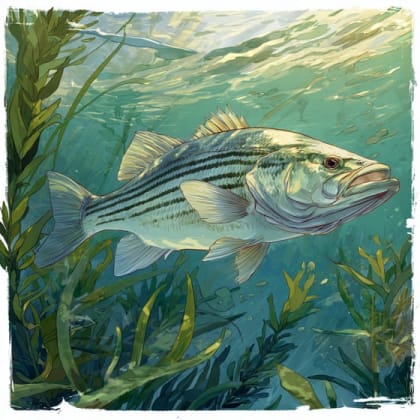
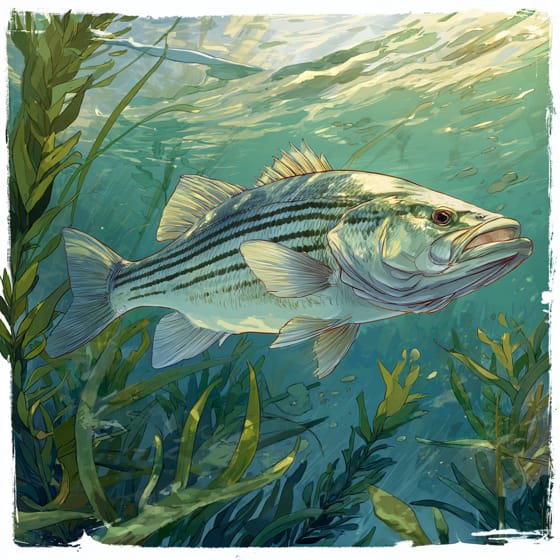
The Striped Bass is a strong swimmer with beautiful stripes along its sides. It enjoys living in both fresh and saltwater!
Habitat: Rivers and oceans
The Striped Bass has a sleek, silvery body with seven or eight prominent dark horizontal stripes running from behind its gill plate to its tail. Its sturdy, football-shaped body distinguishes it from slimmer fish.
Category
FishRarity
Common
Danger
2/5 · Low
Snaps
12
A Striped Bass can sense prey's movements in murky water without even seeing them!
Scientists can tell how old a Striped Bass is by counting rings on its ear bones, just like a tree!
Some Striped Bass travel hundreds of kilometers from rivers to the ocean and back again to spawn.
The Striped Bass is the official state fish of four different U.S. states!
Striped Bass can live in both freshwater and saltwater because their bodies adapt, helping them find food and safe places.
Striped Bass swim in large schools that help them corner and capture smaller fish, making hunting much easier.
Striped Bass have strong, muscular bodies that help them swim long distances and quickly chase down their prey.
These speedy predators gobble up smaller fish, shrimp, and crabs!
Age differences: Young bass eat invertebrates; adults primarily hunt other fish.
Brevoortia tyrannus
A key food source for Striped Bass in coastal waters.
Morone americana
Often preyed upon by larger Striped Bass in shared estuarine habitats.
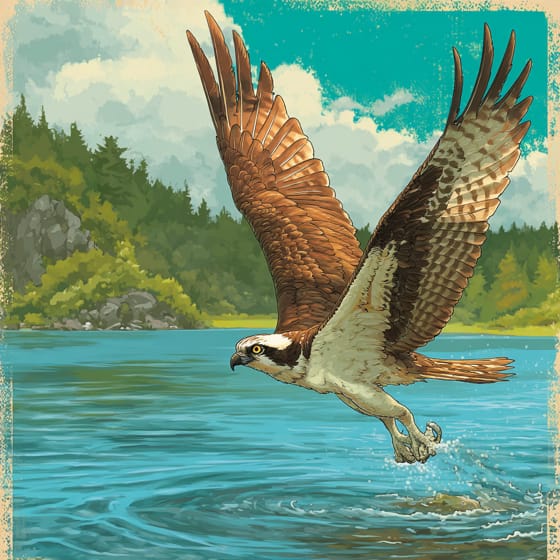
Pandion haliaetus
Often preys on juvenile Striped Bass in shallow waters.
Carcharhinus obscurus
Can prey on larger Striped Bass in offshore areas.
Wildlife encompasses all undomesticated animal and plant life existing in their natural habitats.
Marked with parallel bands or lines of color.
Piscivorous organisms are animals that primarily subsist on a diet of fish.
Freshwater habitats include non-saline aquatic environments such as rivers, lakes, ponds, and wetlands, vital for numerous species.

Aquatic habitats encompass environments where organisms live predominantly in water, including oceans, rivers, lakes, and wetlands.

Migratory animals undertake seasonal movements from one region to another, typically in response to changes in climate or food availability.
Danger
2/5 · Low
Watch quietly from a distance and never try to feed or chase wild animals.
The easiest way to identify Striped Bass is to use the Snappit nature identifier app.
50-150 cm
2-35 kg
10-30 years
These speedy predators gobble up smaller fish, shrimp, and crabs!
30 km/h
Rivers and oceans
Pursuit
Zoom in to split clusters and explore where this object has been snapped.

California, US
You might spot Monarch, Canada Goose, and Western Gull.
View guide →

US
You might spot Common Eider, American Herring Gull, and Common Periwinkle.
View guide →

Connecticut, US
You might spot Osprey, Monarch, and Common Reed.
View guide →

Alabama, US
You might spot Red Buffalo-Bur, Eastern Box Turtle, and Anole.
View guide →

Maine, US
You might spot Large-Leaved Lupine, Tree Lungwort, and Asian Bittersweet.
View guide →

Connecticut, US
You might spot Diamondback Terrapin, Canada Goose, and Osprey.
View guide →
Take the discovery with you
Snap it with Snappit to identify it, learn what makes it special, and add the discovery to your collection.