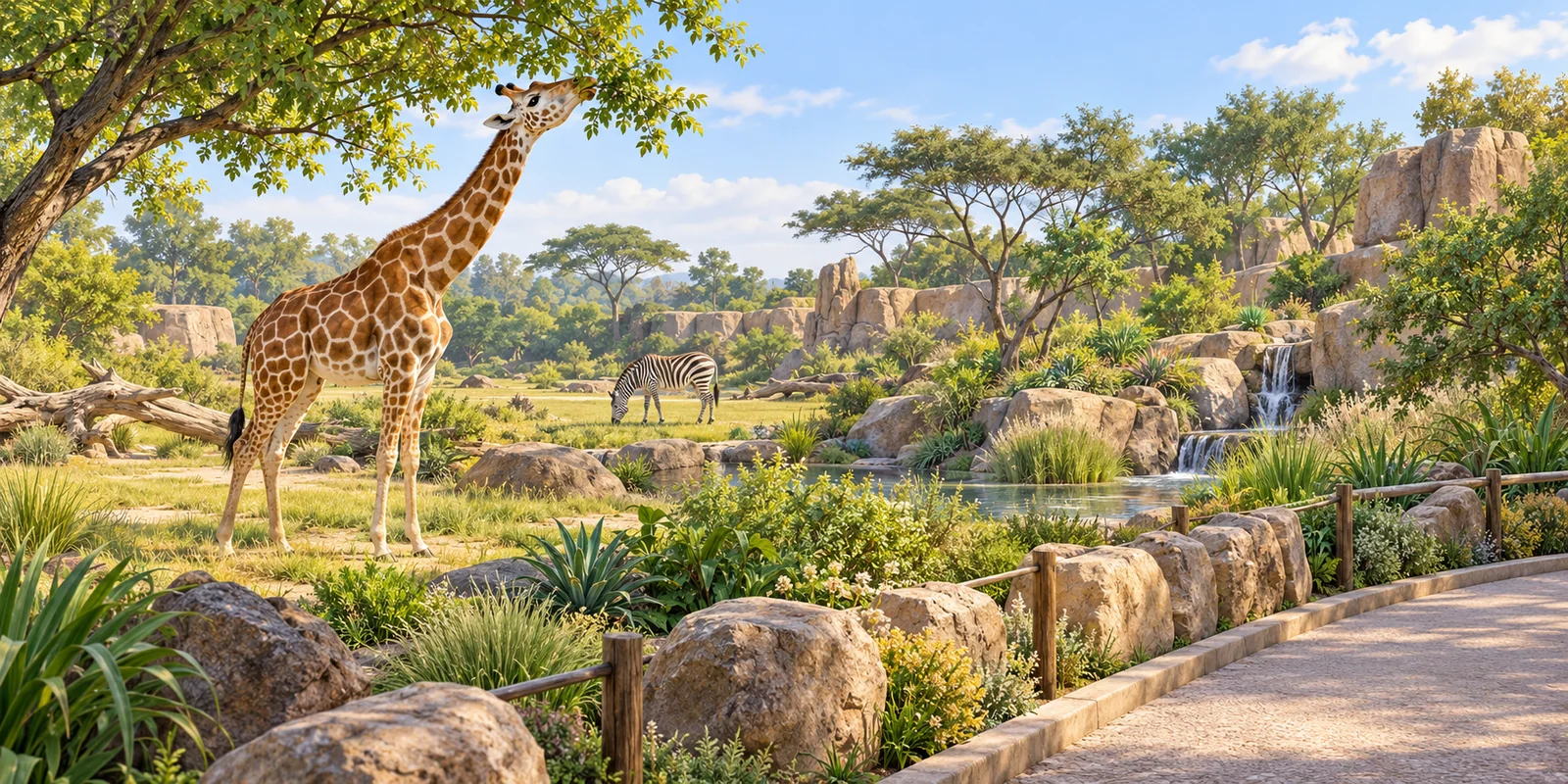
Begin with the animal areas and save time for looking twice. At the walk-through enclosure, let the sika deer choose their distance. Stay calm, leave them a way to retreat and never grab an animal or its antlers. Around the other enclosures, pause for the pumas and meerkats, then look for the less familiar bush dogs. Their short legs and rounded ears give them an unusual outline; these South American canids are strong swimmers with webbing between their toes.
The primates make another rewarding stop. Black-tufted marmosets have dark ear tufts and use their teeth to open bark for tree sap. Mantled guerezas are leaf-eating monkeys with long white hair along their sides. Give children one detail to find at each enclosure rather than a long checklist. At the guanacos, talk about their relationship to domestic llamas; at the emus, the surprise is that the male incubates the eggs and raises the chicks. Animals may be indoors or out of sight, so return later if a favourite is resting.
In the dinosaur area, pick three very different models: long-necked Brachiosaurus, plated Stegosaurus and horned Triceratops. Compare necks, tails and body shapes, then read the labels together. The display extends beyond dinosaurs to creatures such as mammoths, giant sloths and sabre-toothed cats. Ask children which belong together and which lived at different times. Use the signed visitor paths; the figures are exhibits rather than climbing equipment.
Round things off with the climbing castle, dinosaur slide or marble run. The heated indoor play hall gives you a useful break in cold or showery weather. Rides such as the bumper cars, carousel and fairy-tale railway cost extra and often operate only at weekends, during school holidays and on public holidays, weather permitting. Agree on a ride budget before the first queue.