Yellow Anaconda
Eunectes notaeus
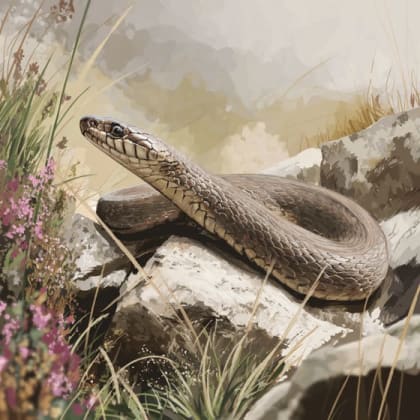
The Yellow Anaconda is a beautiful snake with yellow and black patterns. They are great at swimming and can often be found in water!
Habitat: Wetlands and rivers
The Yellow Anaconda is a thick-bodied snake with a striking yellowish-green or olive base color. It has large, irregular dark brown or black spots and saddles across its body, with smaller markings on its sides. Its head is relatively small compared to its powerful body.
Category
ReptilesRarity
Rare
Danger
4/5 · High
Snaps
Be the first to snap!
Did you know yellow anacondas can unhinge their jaws to swallow prey bigger than their head? Wow!
Female Yellow Anacondas are usually much larger and heavier than the males of their species.
Their eyes and nostrils are on top of their head, perfect for spotting prey while mostly submerged!
They are ambush predators, often waiting patiently for hours for a meal to come close to them.
Yellow Anacondas can crush prey with their powerful coils because of their muscular body, which helps them overpower large animals.
Yellow Anacondas can hunt underwater for long periods because of their unique nostrils, which helps them ambush unsuspecting prey.
Yellow Anacondas have live births, meaning babies are born fully developed, which helps ensure higher survival rates for their young.
A powerful carnivore, it feasts on mammals, birds, fish, and other reptiles it ambushes near water.
Age differences: Young anacondas start with smaller prey like rodents and frogs, moving to larger animals as they grow.
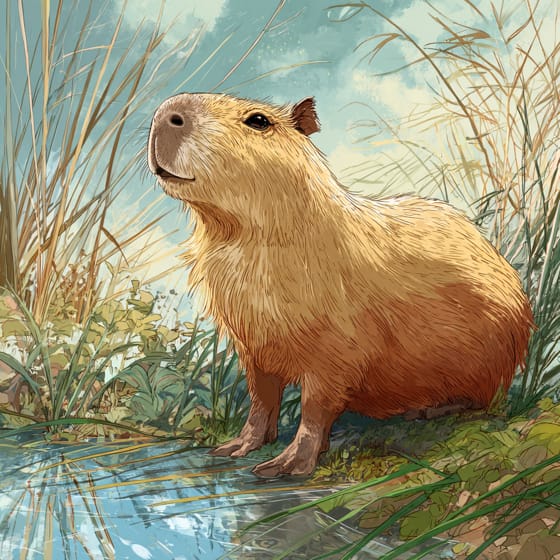
Hydrochoerus hydrochaeris
Major food source in wetland habitats.
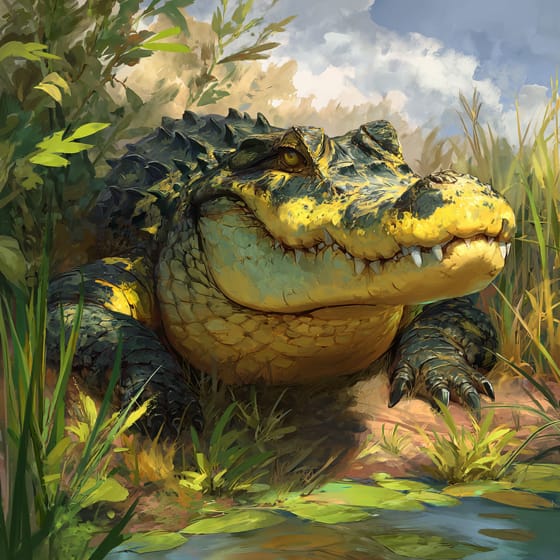
Caiman yacare
Preys on young caimans found in the water.
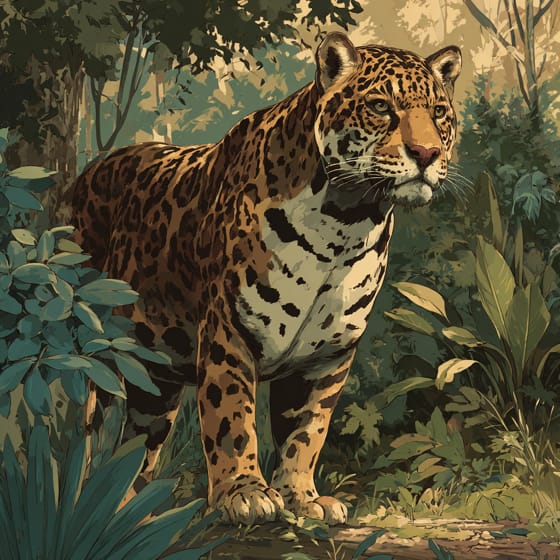
Panthera onca
Young anacondas can be preyed upon by jaguars.
Dendrocygna viduata
Feeds on various species of water birds.
Wildlife encompasses all undomesticated animal and plant life existing in their natural habitats.
An ambush predator hunts by patiently waiting and concealing itself, then launching a sudden attack when unsuspecting prey comes within range.
This habitat trait identifies species found in wetlands, which are areas of land saturated with water, either permanently or seasonally, including marshes, swamps, and bogs.
This trait identifies organisms whose diet consists entirely or primarily of animal tissue.

Nocturnal animals are primarily active during the nighttime hours, typically resting or sleeping during the day.
Danger
4/5 · High
Look but don’t touch. Keep a safe distance and wash hands after exploring.
250-450 cm
25-50 kg
10-20 years
5 km/h
A powerful carnivore, it feasts on mammals, birds, fish, and other reptiles it ambushes near water.
10 km/h
Wetlands and rivers
Ambush
Zoom in to split clusters and explore where this object has been snapped.
Recent snaps will appear here as new observations are added.