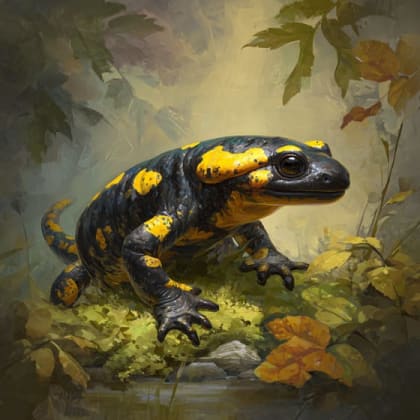
Hellbender
Cryptobranchus alleganiensis
The Hellbender is a giant salamander that loves to swim in rivers. They have a flat body and can be quite slippery!
Habitat: Clean rivers and streams
The Hellbender is a large, flattened salamander with wrinkly, olive-brown to reddish-brown skin that often has dark blotches. It has small eyes and a broad, flat head, helping it blend seamlessly with rocky riverbeds.
Category
AmphibiansRarity
Epic
Danger
2/5 · Low
Snaps
Be the first to snap!
A male Hellbender guards hundreds of eggs for months without eating, fiercely protecting them!
Hellbenders can regrow lost limbs, and even parts of their jaws, if injured!
These 'snot otters' squirt a slimy, protective mucus when threatened by predators!
They are the third-largest salamander species in the world, growing over two feet long!
Hellbenders can absorb oxygen directly through their highly wrinkled skin because of its large surface area, allowing them to breathe underwater.
Hellbenders have mottled, flattened bodies that help them blend perfectly with rocks and gravel on river bottoms, making them nearly invisible.
Hellbenders can detect vibrations in murky water using a special lateral line system that helps them find prey at night.
Hellbenders are bottom-dwelling hunters that mostly feast on crayfish and small fish.
Orconectes rusticus
Primary food source, ambushed on river bottom.
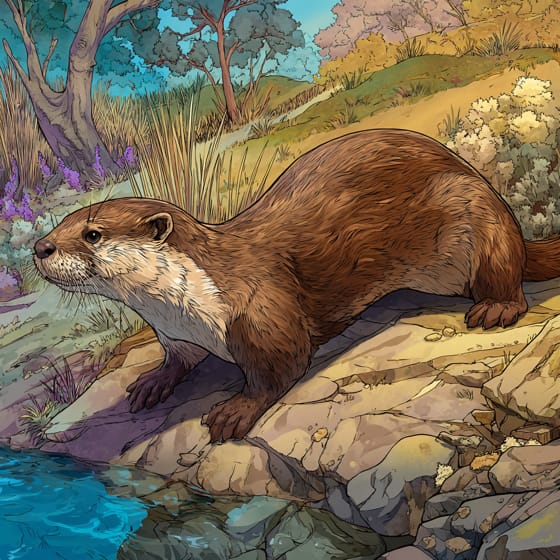
Lontra canadensis
Larger otters can prey on adult and juvenile Hellbenders.
Semotilus atromaculatus
Small fish are an important part of their carnivorous diet.
Wildlife encompasses all undomesticated animal and plant life existing in their natural habitats.
Camouflaged describes organisms that possess coloring or patterns that allow them to blend into their environment.
This trait signifies organisms belonging to a very old evolutionary group with ancestors dating back millions of years.
This trait identifies organisms whose diet consists entirely or primarily of animal tissue.

Freshwater habitats include non-saline aquatic environments such as rivers, lakes, ponds, and wetlands, vital for numerous species.

Describes a species whose presence and role have a disproportionately large effect on its environment.

Aquatic habitats encompass environments where organisms live predominantly in water, including oceans, rivers, lakes, and wetlands.

Nocturnal animals are primarily active during the nighttime hours, typically resting or sleeping during the day.
Danger
2/5 · Low
Look but don’t touch. Keep a safe distance and wash hands after exploring.
30-74 cm
1.5-2.5 kg
25-30 years
1 km/h
Hellbenders are bottom-dwelling hunters that mostly feast on crayfish and small fish.
2 km/h
Clean rivers and streams
Ambush
Zoom in to split clusters and explore where this object has been snapped.
Recent snaps will appear here as new observations are added.