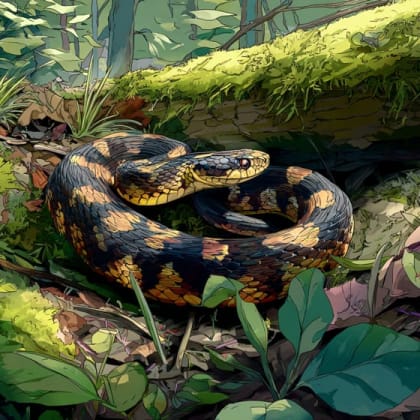
Savannah Monitor
Varanus exanthematicus
The Savannah Monitor is a strong and sturdy lizard. It has a thick tail and loves to dig in the ground.
Habitat: Grasslands and savannas.
The Savannah Monitor is a stocky lizard with a broad head and rough, keeled scales. Its dull grayish-brown to olive skin is often adorned with yellowish spots or bands, providing excellent camouflage. This coloration helps it blend seamlessly into its dry, grassy habitat.
Category
ReptilesRarity
Rare
Danger
2/5 · Low
Snaps
Be the first to snap!
Savannah Monitors are champion hibernators underground.
Their powerful jaws can crush hard insect shells!
These lizards can live for over 15 years!
They can go months without eating a single meal.
Savannah Monitors can dig extensive burrows because of their strong claws and powerful limbs, creating shelters.
Savannah Monitors have a forked tongue that helps them 'smell' their surroundings, finding hidden prey or danger.
Savannah Monitors can puff up their body and hiss loudly to make themselves look bigger and scare away predators.
Savannah Monitors have dull, patterned skin that helps them blend perfectly into dry grasses and rocky terrains.
Young Savannah Monitors munch on crunchy insects, while adults enjoy larger critters and eggs!
Age differences: Juveniles primarily consume insects, while adults expand their diet to include small rodents, other reptiles, and bird eggs.
Gryllus bimaculatus
A common insect prey item in their diet.
Arvicanthis niloticus
Adult monitors prey on these small rodents.
Terathopius ecaudatus
A powerful bird of prey in their habitat.
Acacia tortilis
Often provides shade and cover in the savanna.
Wildlife encompasses all undomesticated animal and plant life existing in their natural habitats.
Solitary animals live alone for most of their lives, only interacting with others for mating or parental care.
Burrowing animals dig tunnels and chambers in the ground, using these subterranean structures for shelter, hunting, or breeding.
Camouflaged describes organisms that possess coloring or patterns that allow them to blend into their environment.

Grassland habitats are terrestrial biomes dominated by grasses and herbaceous plants, supporting a variety of grazing animals.

This habitat trait denotes species native to savannas, which are grasslands with scattered trees, typically found in tropical or subtropical regions with distinct wet and dry seasons.

This trait identifies organisms whose diet consists entirely or primarily of animal tissue.

Nocturnal animals are primarily active during the nighttime hours, typically resting or sleeping during the day.
Danger
2/5 · Low
Look but don’t touch. Keep a safe distance and wash hands after exploring.
80-120 cm
3-8 kg
10-15 years
20 km/h
Young Savannah Monitors munch on crunchy insects, while adults enjoy larger critters and eggs!
Grasslands and savannas.
Foraging
15-40
Zoom in to split clusters and explore where this object has been snapped.
Recent snaps will appear here as new observations are added.