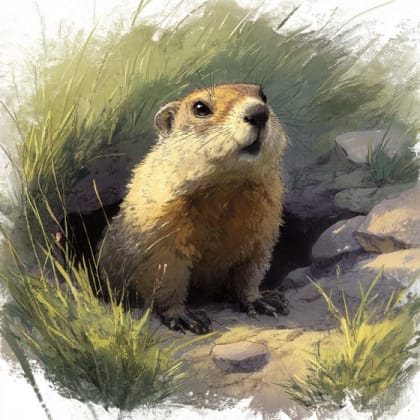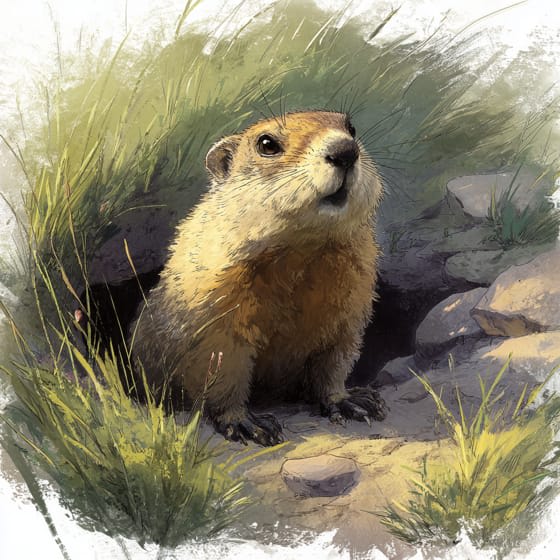





Groundhog
Marmota monax
Groundhogs are friendly, furry creatures that love to dig. They make cozy burrows underground where they sleep and stay safe.
Habitat: Fields, forests, and gardens
The Groundhog is a sturdy, medium-sized rodent with shaggy, brownish-grey fur often tipped with red or yellow. It has short legs, a bushy tail, and small, rounded ears. Its robust body and short snout distinguish it from smaller squirrels.
Category
MammalsRarity
Common
Danger
1/5 · Very low
Snaps
62
A groundhog's teeth never stop growing, so they chew constantly to keep them short!
During hibernation, a groundhog's body temperature can drop almost to freezing!
Their underground burrows can have many rooms and often an escape tunnel!
These furry animals can swim surprisingly well, sometimes crossing streams!
Groundhog can dig extensive underground tunnels because of strong claws that help them create safe homes and escape routes.
Groundhog can hibernate for months by greatly slowing its heart rate and breathing, helping it survive cold winters.
Groundhog has a loud, sharp whistle that helps them warn other groundhogs of nearby predators or danger.
Groundhogs are plant-eaters, munching on a variety of fresh greens, fruits, and flowers.
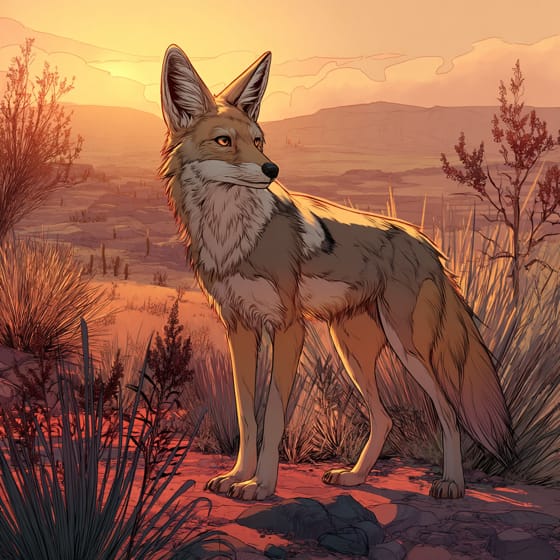
Canis latrans
Coyotes often hunt groundhogs in open areas.
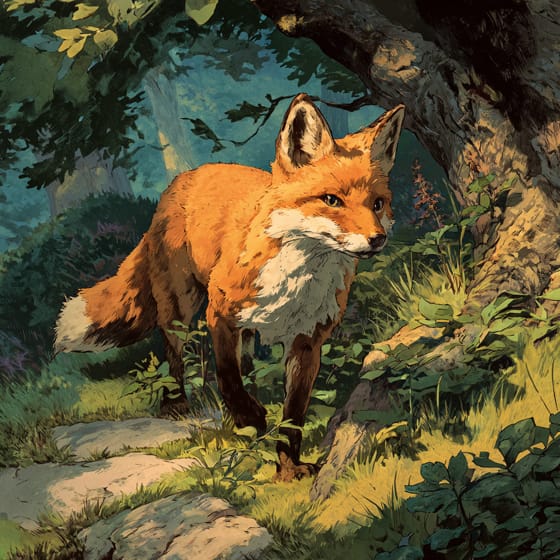
Vulpes vulpes
Red foxes prey on groundhogs, especially young ones.
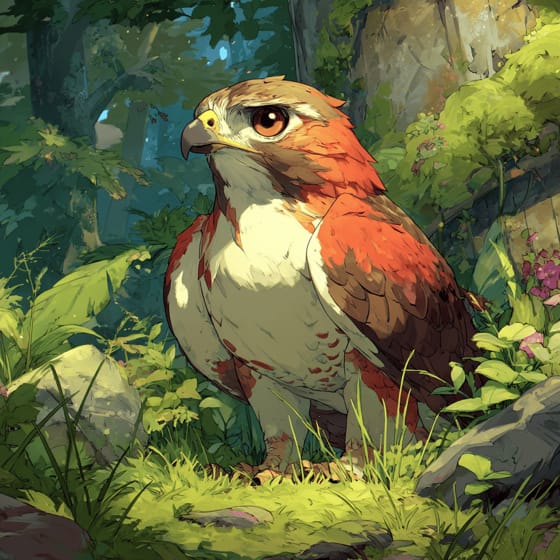
Buteo jamaicensis
Large raptors sometimes catch groundhogs from above.
Trifolium repens
Groundhogs commonly graze on clover in fields.
Wildlife encompasses all undomesticated animal and plant life existing in their natural habitats.
Furry describes animals possessing a dense covering of soft hair or fur.
Burrowing animals dig tunnels and chambers in the ground, using these subterranean structures for shelter, hunting, or breeding.
This trait characterizes organisms whose diet consists entirely or primarily of plant material.

Forest habitats are terrestrial environments dominated by dense tree cover, supporting a high diversity of plant and animal life.

Hibernating animals enter a state of metabolic depression during cold periods or when food is scarce, characterized by reduced body temperature and activity.

This trait identifies organisms whose diet consists entirely or primarily of animal tissue.

Diurnal animals are primarily active during daylight hours, typically resting or sleeping at night.
Danger
1/5 · Very low
Groundhogs are usually shy and won't bother you. Just watch them from a distance and enjoy their fun activities!
40-65 cm
2-6 kg
3-6 years
16 km/h
Groundhogs are plant-eaters, munching on a variety of fresh greens, fruits, and flowers.
Fields, forests, and gardens
Foraging
2-6
Zoom in to split clusters and explore where this object has been snapped.
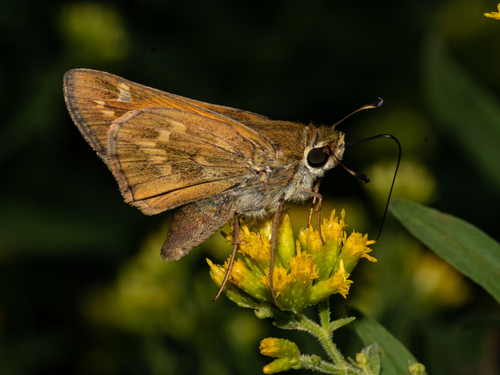
New Jersey, US
You might spot Huron Skipper, Great Blue Heron, and American Robin.
View guide →

Arkansas, US
You might spot African Lion, Red Fox, and Common Ostrich.
View guide →

Quebec, CA
You might spot Groundhog, Ring-Billed Gull, and Eastern Gray Squirrel.
View guide →

Virginia, US
You might spot Duck, Wood Duck, and Chlorosplenium Chlora.
View guide →
Oklahoma, US
You might spot African Lion, Komodo Dragon, and Giraffes.
View guide →
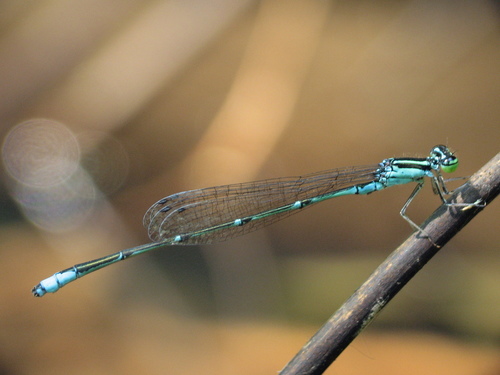
New York, US
You might spot Stream Bluet, Variable Dancer, and Eastern Pondhawk.
View guide →