





Coyote
Canis latrans
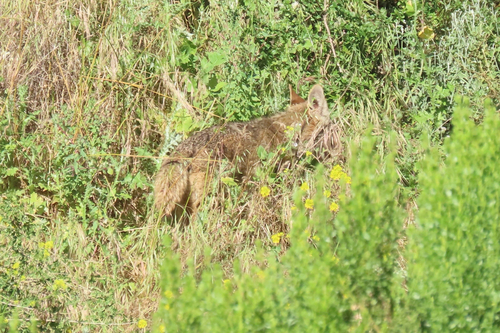
Coyotes are clever wild dogs found across North America. They are good hunters and can adapt to many habitats.
Habitat: Grasslands, forests, and urban edges.
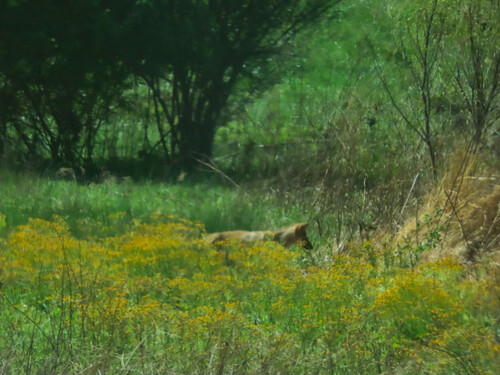
The Coyote is a medium-sized canine with a slender build, long bushy tail, and prominent pointed ears. Its fur is typically grayish-brown to yellowish-gray, often with a white throat and belly, helping it blend into diverse environments. They look like a smaller, more slender version of a wolf.
Category
MammalsRarity
Common
Danger
3/5 · Moderate
Snaps
205
A single coyote's howl can sound like many more are nearby, tricking other animals!
Coyotes have amazing night vision, helping them hunt for food in the darkest hours!
Their large, swiveling ears can pinpoint tiny sounds, like a mouse rustling, from far away!
They often team up with badgers to hunt, flushing out burrowing prey from underground!
Coyote has a complex vocal repertoire of howls, yips, and barks that helps them communicate with other coyotes across long distances.
Coyote can thrive in many different environments, from deserts to cities, because of their flexible diet and clever behavior.
Coyote can hunt small prey with incredible accuracy because of their sharp senses and quick pounces, especially for rodents.
Coyote can reach speeds up to 65 km/h (40 mph), which helps them chase down prey or escape danger quickly.
Coyotes are opportunistic omnivores, eating almost anything from small animals to fruits and trash.
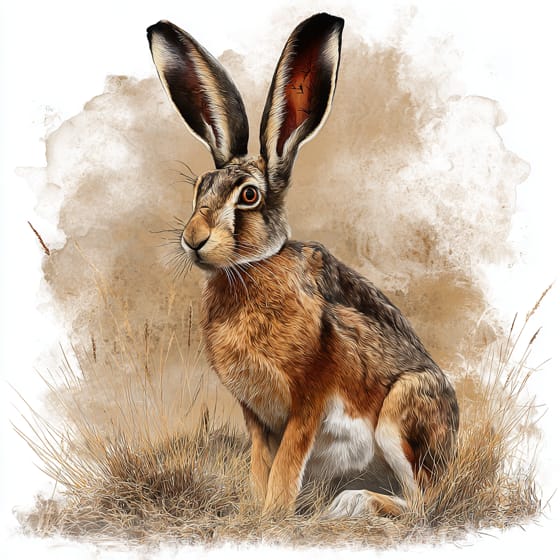
Lepus californicus
A primary prey animal in many open habitats.
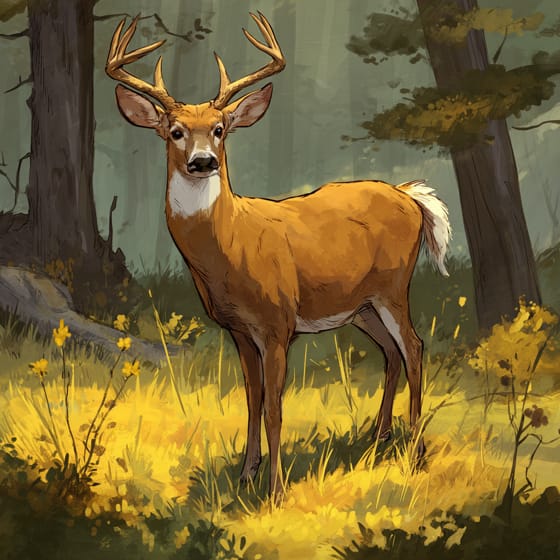
Odocoileus virginianus
Coyotes often prey on fawns, helping to control deer populations.

Taxidea taxus
They sometimes hunt together, flushing out burrowing prey from tunnels.
Microtus pennsylvanicus
Small rodents like voles are a common and important food source for coyotes.
Wildlife encompasses all undomesticated animal and plant life existing in their natural habitats.
Furry describes animals possessing a dense covering of soft hair or fur.
Social animals live in organized groups, cooperating for survival benefits such as foraging, defense, and raising offspring.
Grassland habitats are terrestrial biomes dominated by grasses and herbaceous plants, supporting a variety of grazing animals.

This trait identifies organisms whose diet consists entirely or primarily of animal tissue.

This trait identifies organisms that exhibit exceptional swiftness in movement for hunting, escape, or travel.

This habitat trait indicates species that can coexist with humans in urban and suburban environments, utilizing man-made structures and green spaces.

Nocturnal animals are primarily active during the nighttime hours, typically resting or sleeping during the day.
Danger
3/5 · Moderate
Avoid coyotes — they may see small pets as prey.
The easiest way to identify Coyote is to use the Snappit nature identifier app.
80-130 cm
7-21 kg
6-14 years
65 km/h
Coyotes are opportunistic omnivores, eating almost anything from small animals to fruits and trash.
Grasslands, forests, and urban edges.
Pursuit, Foraging, and Scavenging
Zoom in to split clusters and explore where this object has been snapped.
Apr 21, 2026
Sperryville Historic DistrictPhoto attribution
no rights reserved
License: CC0 1.0 ↗
Image may be shown cropped inside the card frame.
Apr 4, 2026
Arroyo Conejo Open SpacePhoto attribution
(c) Kat B, some rights reserved (CC BY)
License: CC BY 4.0 ↗
Image may be shown cropped inside the card frame.

California, US
You might spot Western Fence Lizard and California Brittlebush.
View guide →

Rhode Island, US
You might spot Rugosa Rose and American Herring Gull.
View guide →

Oregon, US
You might spot Duck, Pacific Trillium, and Wood Duck.
View guide →

California, US
You might spot Warrior's Plume and Purple Owl's-Clover.
View guide →
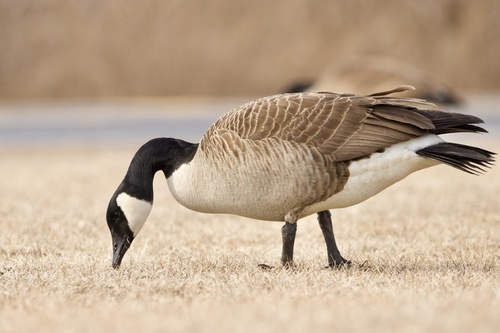
Illinois, US
You might spot Canada Goose, House Sparrow, and Rock Pigeon.
View guide →

Virginia, US
You might spot Northern Cardinal and Eastern Gray Squirrel.
View guide →
Take the discovery with you
Snap it with Snappit to identify it, learn what makes it special, and add the discovery to your collection.





.jpg&width=800)



.JPG&width=800)


.jpg&width=800)
