Golden Eagle
Aquila chrysaetos
The Golden Eagle is a beautiful bird with shiny golden feathers on its head and neck. It loves to soar high in the sky and can see very far!
Habitat: Mountains and open areas
The Golden Eagle is a majestic dark brown raptor with distinctive golden-brown feathers on its nape and hindneck. It has powerful, sharp talons and a strong, hooked beak. Its large size and broad wings differentiate it from smaller birds of prey.
Category
BirdsRarity
Common
Danger
2/5 · Low
Snaps
1
A Golden Eagle's nest, called an eyrie, can be as big as a small car!
Golden Eagles often mate for life and use the same nest site for many years.
Some ancient cultures revere Golden Eagles as symbols of power and freedom.
They can sometimes carry prey heavier than themselves short distances!
Golden Eagle has incredible eyesight that helps them spot prey from extremely high altitudes.
Golden Eagle can crush prey with powerful talons because they have incredible grip strength and sharp claws.
Golden Eagle can glide almost silently because their specialized wing feathers reduce noise, helping surprise prey.
Golden Eagle has broad, powerful wings that help them soar effortlessly for hours on rising air currents.
These powerful hunters mainly eat small to medium-sized mammals and birds.
Age differences: Young eagles learn hunting techniques from their parents for their first few months.
Marmota caligata
A primary food source in mountain regions.

Lepus californicus
Often caught in open grassland and desert areas.
Pinus ponderosa
Builds large nests high in sturdy tree branches.
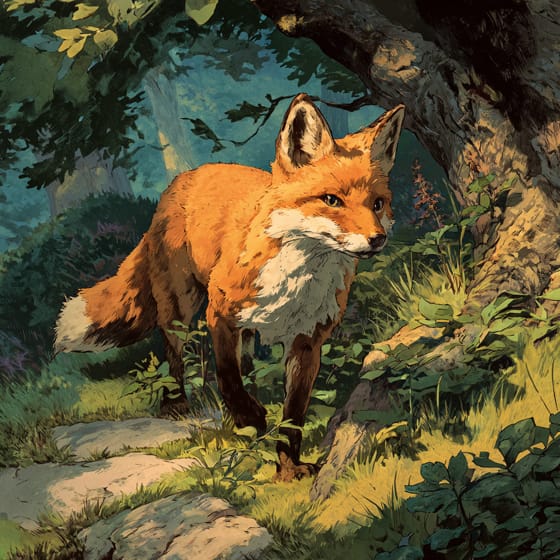
Vulpes vulpes
Occasionally preys on young kits or adults when other prey is scarce.
Feathered describes animals, primarily birds, possessing a covering of feathers.
Aerial creatures spend a significant portion of their lives airborne, utilizing flight for various activities such as hunting, migration, or nesting.
This habitat trait identifies species found in mountainous regions, characterized by high elevation, steep slopes, and varying climate zones.
This trait characterizes organisms with an exceptionally long lifespan compared to others of their kind.

This trait identifies organisms whose diet consists entirely or primarily of animal tissue.

Diurnal animals are primarily active during daylight hours, typically resting or sleeping at night.

Describes a species whose presence and role have a disproportionately large effect on its environment.

This trait identifies organisms that exhibit exceptional swiftness in movement for hunting, escape, or travel.
Danger
2/5 · Low
Golden Eagles are wild animals and should be admired from a distance. Never try to touch or feed them!
75-90 cm
180-234 cm
2.5-7 kg
20-30 years
320 km/h
These powerful hunters mainly eat small to medium-sized mammals and birds.
Mountains and open areas
Pursuit
Zoom in to split clusters and explore where this object has been snapped.

North Dakota, US
You might spot Red Fox, Gray Wolf, and Equus Africanus Asinus.
View guide →
Pennsylvania, US
You might spot Red Fox, Western Barn Owl, and Jaguar.
View guide →

Oklahoma, US
View guide →
Alaska, US
You might spot Red Fox, Wolverine, and Gray Wolf.
View guide →
California, US
You might spot Red Fox, Gray Wolf, and Duck.
View guide →

British Columbia, CA
You might spot Common Beargrass and Subalpine Larch.
View guide →