




Ostrich
Struthio camelus
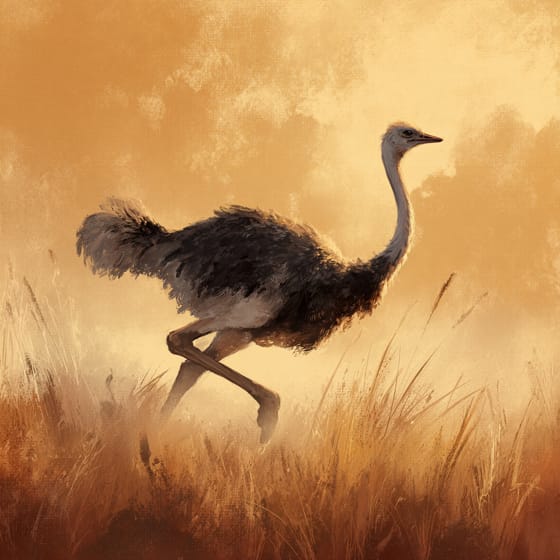
The Ostrich is the largest bird in the world! They can't fly, but they can run super fast—up to 45 miles per hour!
Habitat: Savannas and open grasslands
The Ostrich is the world's largest bird, known for its incredibly long neck and legs, and small head with huge eyes. Males have striking black feathers with white tail plumes and wingtips, while females are duller grey-brown. It is visually distinct from other large birds by its two-toed feet.
Category
BirdsRarity
Common
Danger
2/5 · Low
Snaps
Be the first to snap!
Male ostriches perform a unique dance, bowing and flapping wings, to attract a female mate.
Ostrich males and females bravely share the job of incubating their enormous eggs.
Ostriches swallow small stones, called gastroliths, to help grind up tough food in their stomachs!
Their booming call sounds exactly like a lion's roar and can be heard from far away!
Ostrich can run up to 70 km/h because its powerful, long legs help it quickly escape from predators.
Ostrich has incredibly strong legs that deliver a powerful forward kick, helping them defend against dangerous threats.
Ostrich can go many days without drinking fresh water, because it gets enough moisture from the plants it eats.
Ostrich has only two toes on each foot, which helps them run faster and gives them better balance.
Ostriches are amazing foragers, eating mostly plants but also insects, seeds, and even small lizards!
Panthera leo
Lions are major predators, often hunting adult ostriches.
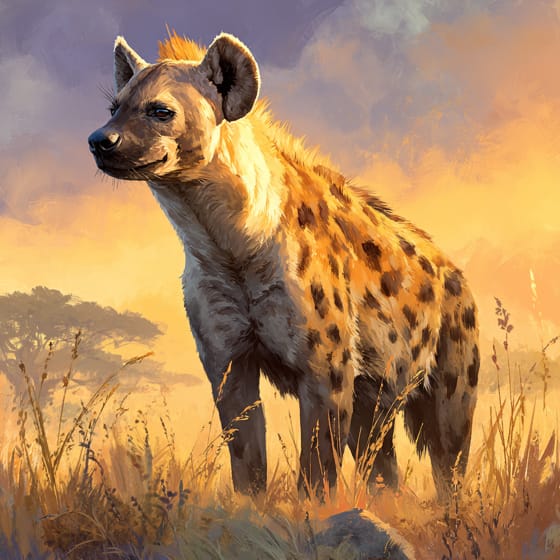
Crocuta crocuta
Hyenas frequently prey on ostrich eggs and young chicks.
Acacia tortilis
Ostriches browse on the leaves, flowers, and pods of acacia trees.
Gyps africanus
Vultures scavenge ostrich carcasses and sometimes consume unattended eggs.
Feathered describes animals, primarily birds, possessing a covering of feathers.
Social animals live in organized groups, cooperating for survival benefits such as foraging, defense, and raising offspring.
This trait characterizes organisms whose diet consists entirely or primarily of plant material.
Thermoregulating organisms maintain a stable internal body temperature despite fluctuations in the external environment.

This habitat trait denotes species native to savannas, which are grasslands with scattered trees, typically found in tropical or subtropical regions with distinct wet and dry seasons.

Diurnal animals are primarily active during daylight hours, typically resting or sleeping at night.

This trait identifies organisms that exhibit exceptional swiftness in movement for hunting, escape, or travel.

Giant describes organisms or objects of significantly larger size than average for their species or type.
No aliases listed yet.
Danger
2/5 · Low
Watch quietly from a distance and never try to feed or chase wild animals.
210-280 cm
180-200 cm
63-145 kg
30-40 years
70 km/h
Ostriches are amazing foragers, eating mostly plants but also insects, seeds, and even small lizards!
Savannas and open grasslands
Foraging
Zoom in to split clusters and explore where this object has been snapped.
Recent snaps will appear here as new observations are added.