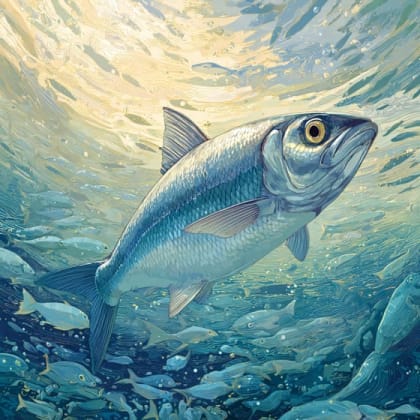

Lamprey
Petromyzon marinus
Lampreys are unique fish with long, slimy bodies and round mouths filled with sharp teeth. They don't have jaws like most fish and are excellent swimmers in rivers and oceans.
Habitat: Freshwater, Coastal areas
The Lamprey is an eel-shaped, jawless fish, typically grey, brown, or olive, with a distinctive round, tooth-lined suction mouth. It has a single nostril on top of its head and lacks paired fins, distinguishing it from most true fish.
Category
FishRarity
Common
Danger
3/5 · Moderate
Snaps
Be the first to snap!
Baby lampreys hide in riverbeds for years, filtering tiny food instead of hunting!
Lampreys don't have bones! Their skeletons are made of cartilage, just like sharks.
Lampreys have seven small gill openings on each side, looking like tiny holes!
Some adult lampreys don't eat! They use stored energy to migrate and lay eggs.
Lamprey can attach firmly to surfaces and other fish using its powerful suction disc mouth, helping them feed or hold against currents.
Lamprey injects an anticoagulant into its prey, allowing continuous feeding because it prevents blood from clotting.
Lamprey has a specialized rasping tongue covered in horny teeth that helps them scrape flesh and consume blood from their hosts.
Lamprey can navigate vast distances between saltwater and freshwater using its strong sense of smell to find ancestral spawning grounds.
Adult parasitic lampreys drink blood from fish, while young ones filter tiny bits from water.
Age differences: Larval lampreys (ammocoetes) are filter-feeders, consuming detritus and microorganisms. Parasitic adults feed on fish, while non-parasitic adults do not eat.
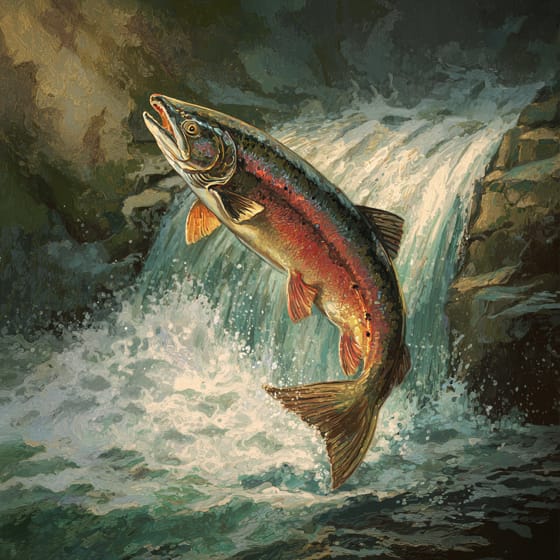
Salmo salar
Attaches to feed on blood and fluids.
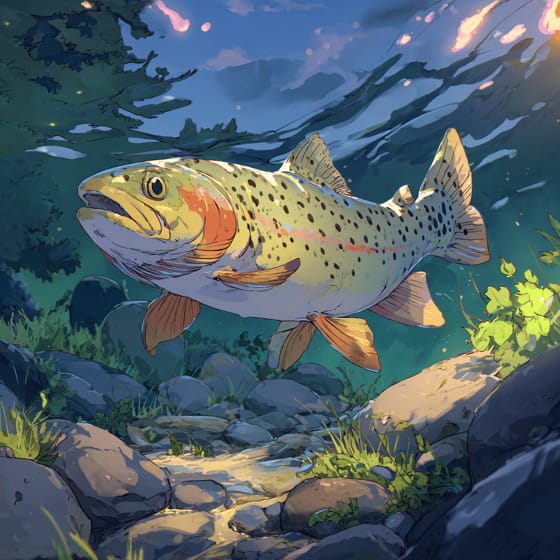
Oncorhynchus mykiss
Feeds on fluids, can injure or weaken trout.
Lutra lutra
Otters prey on lampreys during migration.
Ardea cinerea
Herons catch migrating lampreys in shallow waters.
This trait signifies organisms belonging to a very old evolutionary group with ancestors dating back millions of years.
Coastal habitats are dynamic environments located along the interface between land and sea, influenced by tides, waves, and saltwater.
Freshwater habitats include non-saline aquatic environments such as rivers, lakes, ponds, and wetlands, vital for numerous species.
Regenerative organisms possess the ability to regrow lost or damaged body parts, tissues, or organs.

Aquatic habitats encompass environments where organisms live predominantly in water, including oceans, rivers, lakes, and wetlands.

Migratory animals undertake seasonal movements from one region to another, typically in response to changes in climate or food availability.

This trait describes organisms that live on or in a host organism, obtaining nutrients at the host's expense.

Vampiric organisms are those that obtain nutrients by feeding on the blood or bodily fluids of other animals.

Nocturnal animals are primarily active during the nighttime hours, typically resting or sleeping during the day.

Venomous organisms produce toxins that are injected into another animal, typically through a bite or sting.
Danger
3/5 · Moderate
Avoid touching lampreys in the wild as they have sharp teeth and may bite if threatened.
15-100 cm
0.05-2.5 kg
3-10 years
Adult parasitic lampreys drink blood from fish, while young ones filter tiny bits from water.
25 km/h
Freshwater, Coastal areas
Pursuit
200 m
Zoom in to split clusters and explore where this object has been snapped.
Recent snaps will appear here as new observations are added.