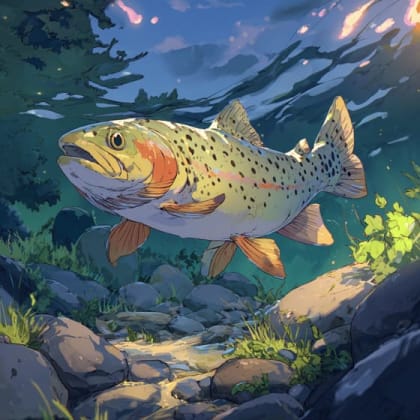




Corydoras Catfish
Corydoras condiscipulus
Corydoras Catfish are small and have a cute, whiskered face! They like to scurry around the bottom of the tank looking for food.
The Corydoras Catfish is a small, stout fish with a distinctive armored body covered in overlapping bony plates. It often has mottled brown, grey, or greenish patterns, sometimes with metallic spots or stripes. Its small downward-pointing mouth is surrounded by sensitive barbels, making it visually distinct from most other small freshwater fish.
Category
FishRarity
Common
Danger
2/5 · Low
Snaps
Be the first to snap!
Corydoras are super social, always happier when swimming in big groups of their friends!
If caught by a predator, Corydoras can lock their fins stiff to escape!
Some species can quickly change their skin color to blend in with their surroundings!
Their scientific name means 'helmeted dorado,' like a tiny armored golden fish!
Corydoras Catfish has strong bony plates that cover its body, helping them stay safe from predators in the river.
Corydoras Catfish can use its whisker-like barbels to sniff out tiny food hidden deep in the mud and sand.
Corydoras Catfish can gulp air from the water's surface using its intestines, helping them breathe when water oxygen is low.
These tiny fish are bottom-dwelling omnivores, eating all sorts of small foods found on the riverbed.
Cichla ocellaris
Larger predatory fish, like bass, hunt small Corydoras.

Ardea alba
Wading birds often feast on small fish from shallow waters.
Tubifex tubifex
Corydoras love to forage for tiny worms in the riverbed.
Daphnia pulex
Tiny crustaceans like water fleas are a snack for these catfish.
Possessing prominent sensory hairs or vibrissae, often around the snout.
Marked with spots or patches of a different color.
Social animals live in organized groups, cooperating for survival benefits such as foraging, defense, and raising offspring.
This trait identifies organisms whose diet includes both plant and animal matter.

Filter feeders obtain nutrients by straining suspended food particles and small organisms from water.

This trait characterizes organisms with an exceptionally long lifespan compared to others of their kind.

Freshwater habitats include non-saline aquatic environments such as rivers, lakes, ponds, and wetlands, vital for numerous species.

Describes a species whose presence and role have a disproportionately large effect on its environment.

Aquatic habitats encompass environments where organisms live predominantly in water, including oceans, rivers, lakes, and wetlands.
Danger
2/5 · Low
Watch quietly from a distance and never try to feed or chase wild animals.
The easiest way to identify Corydoras Catfish is to use the Snappit nature identifier app.
2-8 cm
0.001-0.015 kg
3-8 years
These tiny fish are bottom-dwelling omnivores, eating all sorts of small foods found on the riverbed.
5 km/h
Foraging
5 m
Zoom in to split clusters and explore where this object has been snapped.
Recent snaps will appear here as new observations are added.
Take the discovery with you
Snap it with Snappit to identify it, learn what makes it special, and add the discovery to your collection.