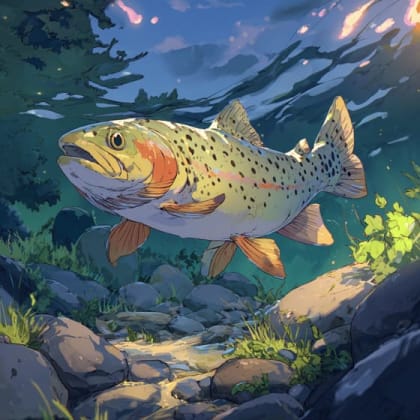

Marlin
Makaira nigricans
Marlins are fast and powerful fish that live in the open ocean. They have long, pointed bills and beautiful blue and silver bodies.
Habitat: Open ocean
The Marlin has a sleek, torpedo-shaped body, typically dark blue to black on top and silvery-white below. Its most distinctive feature is a long, pointed bill that extends from its head, along with a rigid dorsal fin running almost the length of its back.
Category
FishRarity
Common
Danger
2/5 · Low
Snaps
Be the first to snap!
Female Marlins grow much larger than males, sometimes weighing four times more!
Marlin are one of the ocean's fastest fish, often called the "cheetah of the sea!"
Marlin can change their skin color quickly to blend in or show excitement during hunting.
They are solitary hunters, spending most of their lives alone in the open ocean.
Marlin has a strong, pointed bill that helps them stun and injure schooling fish by slashing through groups at high speed.
Marlin can keep their brain and eyes warm using a special heat exchanger, helping them see clearly in cold, deep waters.
Marlin are top ocean predators, eating many kinds of fish and squid with their pointed bill.
Isurus oxyrinchus
Mako sharks can prey on juvenile marlin.
Thunnus albacares
Marlin actively hunt fast-swimming tuna.
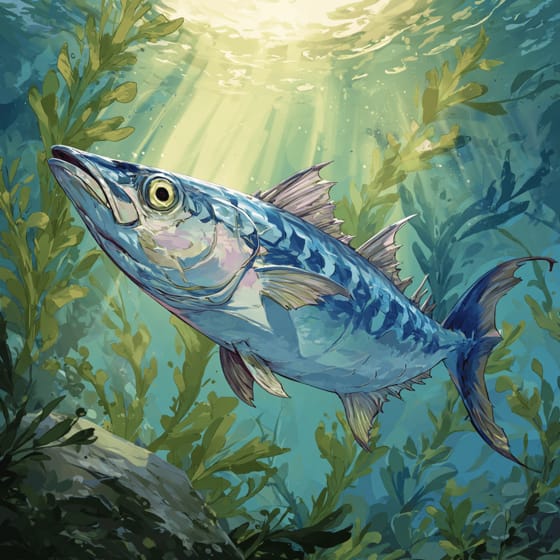
Scomber scombrus
A common prey fish for marlin.
Coryphaena hippurus
A fast-swimming prey for marlin.
Wildlife encompasses all undomesticated animal and plant life existing in their natural habitats.
Aerial creatures spend a significant portion of their lives airborne, utilizing flight for various activities such as hunting, migration, or nesting.
Piscivorous organisms are animals that primarily subsist on a diet of fish.
Thermoregulating organisms maintain a stable internal body temperature despite fluctuations in the external environment.

This trait identifies organisms whose diet consists entirely or primarily of animal tissue.

This trait identifies organisms that exhibit exceptional swiftness in movement for hunting, escape, or travel.

Aquatic habitats encompass environments where organisms live predominantly in water, including oceans, rivers, lakes, and wetlands.

Marine habitats encompass all saltwater environments of the Earth's oceans, supporting an immense diversity of aquatic life.
Danger
2/5 · Low
Admire marlins from a safe distance and never try to touch them in the wild.
The easiest way to identify Marlin is to use the Snappit nature identifier app.
100-500 cm
50-900 kg
18-27 years
Marlin are top ocean predators, eating many kinds of fish and squid with their pointed bill.
110 km/h
Open ocean
Pursuit
Zoom in to split clusters and explore where this object has been snapped.
Recent snaps will appear here as new observations are added.
Take the discovery with you
Snap it with Snappit to identify it, learn what makes it special, and add the discovery to your collection.