




Great Crested Newt
Triturus cristatus
The Great Crested Newt is known for its bumpy skin and beautiful crest. They are good swimmers and love to explore!
Habitat: Ponds and marshes
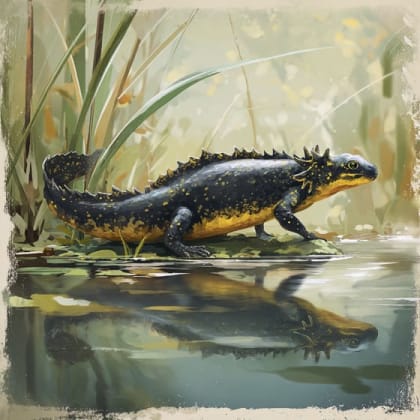
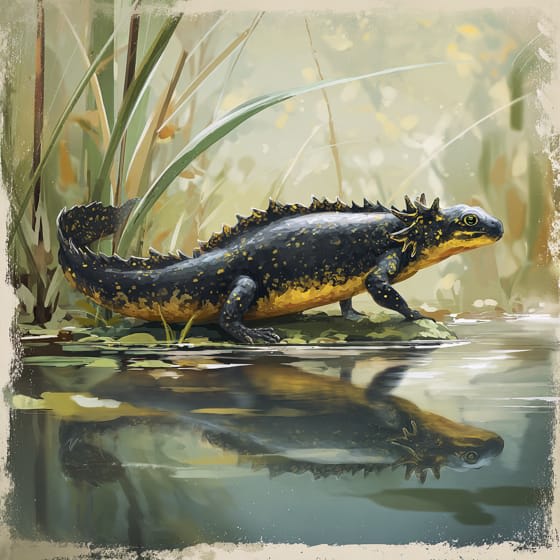
The Great Crested Newt is a large, robust newt with dark brown to black warty skin. Its belly is bright orange or yellow with irregular black spots. Males develop a spectacular jagged crest along their back during the breeding season, making them look like miniature dragons.
Category
AmphibiansRarity
Rare
Danger
2/5 · Low
Snaps
2
During breeding, males grow a spectacular jagged crest like a miniature dragon!
Their bright orange and black spotted belly is unique to each newt, like a fingerprint!
Their bumpy, warty skin helps them blend in with the muddy pond bottom or damp soil.
They wrap each tiny egg in a leaf, one by one, to keep it safe from danger!
Great Crested Newt can regrow lost limbs, tails, and even parts of their eyes because this helps them recover from injuries.
Great Crested Newt has skin that produces mild toxins because this helps protect them from predators.
Great Crested Newt can absorb oxygen directly through their skin because this helps them breathe underwater for long periods.
These newts are small predators, eating tiny insects, worms, and even other amphibian larvae.
Age differences: Larvae eat tiny aquatic organisms, while adults feast on larger insects and larvae.
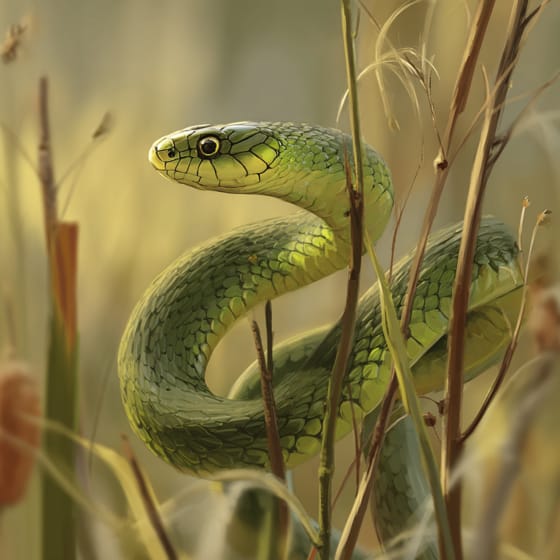
Natrix natrix
A common predator on land and near breeding ponds.
Ardea cinerea
Wading bird that preys on newts in the water.
Lymnaea stagnalis
An important food source for adult newts.
Dytiscus marginalis
Its larvae are fierce predators of newt larvae.
Wildlife encompasses all undomesticated animal and plant life existing in their natural habitats.
Characterized by having toes connected by a membrane, typically aiding in swimming.
Crested describes animals possessing a prominent tuft of feathers, hair, or skin on their head.
This trait identifies organisms whose diet primarily consists of insects and other small invertebrates.

Freshwater habitats include non-saline aquatic environments such as rivers, lakes, ponds, and wetlands, vital for numerous species.

Nocturnal animals are primarily active during the nighttime hours, typically resting or sleeping during the day.
Danger
2/5 · Low
Look but don’t touch. Keep a safe distance and wash hands after exploring.
10-17 cm
0.005-0.015 kg
6-15 years
These newts are small predators, eating tiny insects, worms, and even other amphibian larvae.
Ponds and marshes
Ambush
100-400
60-120 days
Zoom in to split clusters and explore where this object has been snapped.