





American Bullfrog
Lithobates catesbeianus
The American Bullfrog is a big, green frog that loves to jump around! They are known for their loud croaking sounds.
Habitat: Ponds, lakes, and marshes
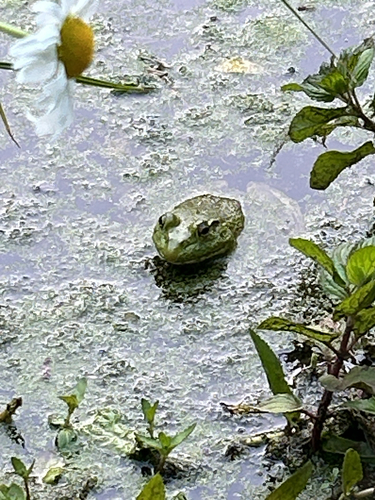
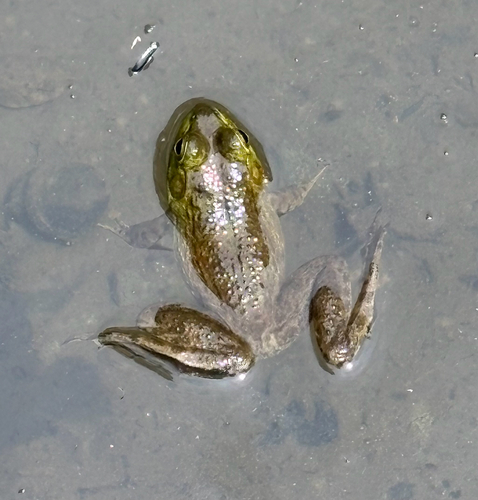
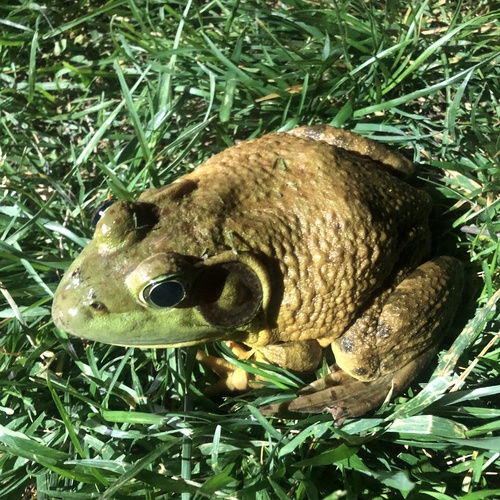
The American Bullfrog has a large, sturdy body, usually olive-green or brownish on top with a pale white belly. It features prominent large eardrums behind its eyes and lacks ridges down its back, making it appear smooth.
Category
AmphibiansRarity
Common
Danger
2/5 · Low
Snaps
306
A bullfrog's tongue acts like super glue for catching food.
Bullfrogs eat almost anything that fits in their mouth.
Their powerful croak can sometimes be heard from a mile away!
They are the largest frog in all of North America!
American Bullfrog has a deep, resonant "jug-o-rum" call that helps it attract mates and announce its territory.
American Bullfrog can perfectly blend into its aquatic surroundings because of its mottled green skin, helping it ambush prey.
American Bullfrog can flick out a long, sticky tongue with incredible speed to snatch insects and other small creatures.
These hungry amphibians eat almost anything smaller than themselves, from insects to other frogs!
Age differences: Tadpoles primarily eat algae and detritus; adults are carnivorous hunters.
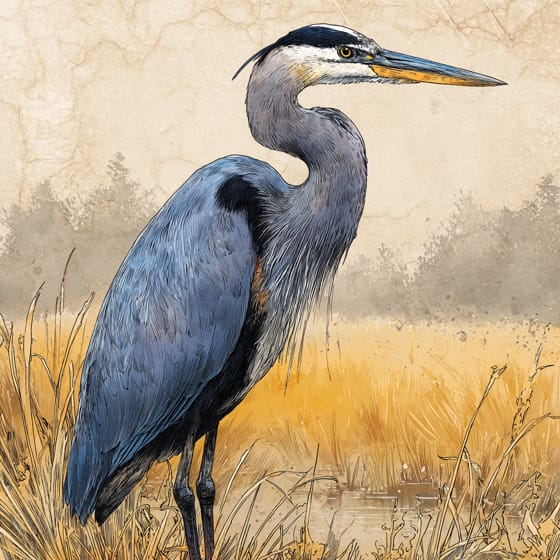
Ardea herodias
Herons hunt adult bullfrogs
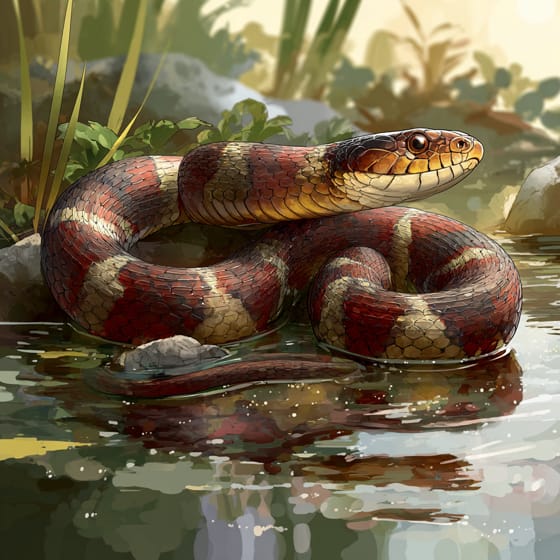
Nerodia sipedon
Water snakes prey on frogs
Anax junius
Bullfrogs snatch flying dragonflies
Gambusia affinis
Bullfrogs consume small fish
Wildlife encompasses all undomesticated animal and plant life existing in their natural habitats.
Characterized by having toes connected by a membrane, typically aiding in swimming.
This trait identifies organisms whose diet consists entirely or primarily of animal tissue.
Freshwater habitats include non-saline aquatic environments such as rivers, lakes, ponds, and wetlands, vital for numerous species.

Nocturnal animals are primarily active during the nighttime hours, typically resting or sleeping during the day.
Danger
2/5 · Low
Look but don’t touch. Keep a safe distance and wash hands after exploring.
The easiest way to identify American Bullfrog is to use the Snappit nature identifier app.
10-20 cm
0.2-0.7 kg
7-10 years
8 km/h
These hungry amphibians eat almost anything smaller than themselves, from insects to other frogs!
Ponds, lakes, and marshes
Ambush
Zoom in to split clusters and explore where this object has been snapped.
Jun 18, 2026
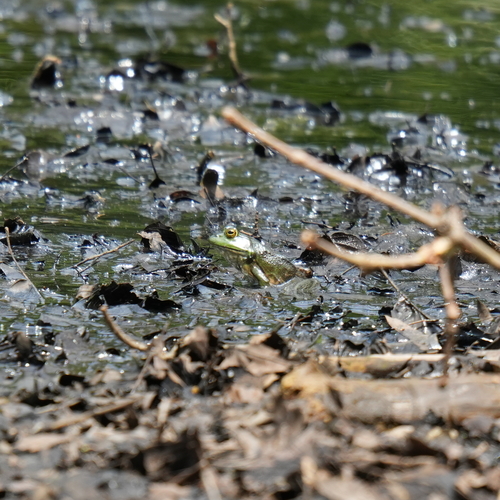
E. E. Wilson Wildlife AreaPhoto attribution
no rights reserved
License: CC0 1.0 ↗
Image may be shown cropped inside the card frame.
Jun 6, 2026
Reeves-Reed ArboretumPhoto attribution
(c) foxsu, some rights reserved (CC BY)
License: CC BY 4.0 ↗
Image may be shown cropped inside the card frame.
Jun 5, 2026
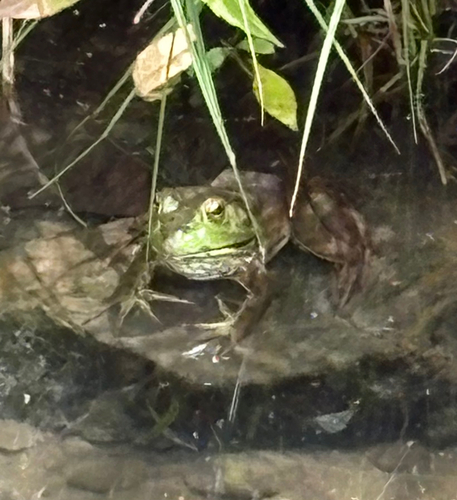
New York Botanical GardenPhoto attribution
(c) eml23, some rights reserved (CC BY)
License: CC BY 4.0 ↗
Image may be shown cropped inside the card frame.
Jun 5, 2026
New York Botanical GardenPhoto attribution
(c) eml23, some rights reserved (CC BY)
License: CC BY 4.0 ↗
Image may be shown cropped inside the card frame.
Jun 5, 2026
Curtis Hall ArboretumPhoto attribution
(c) Andrew Conboy, some rights reserved (CC BY)
License: CC BY 4.0 ↗
Image may be shown cropped inside the card frame.

New Jersey, US
You might spot Garlic Mustard, Sensitive Fern, and Common Mugwort.
View guide →

Virginia, US
You might spot Cope's Gray Tree Frog and Basilica Orbweaver.
View guide →
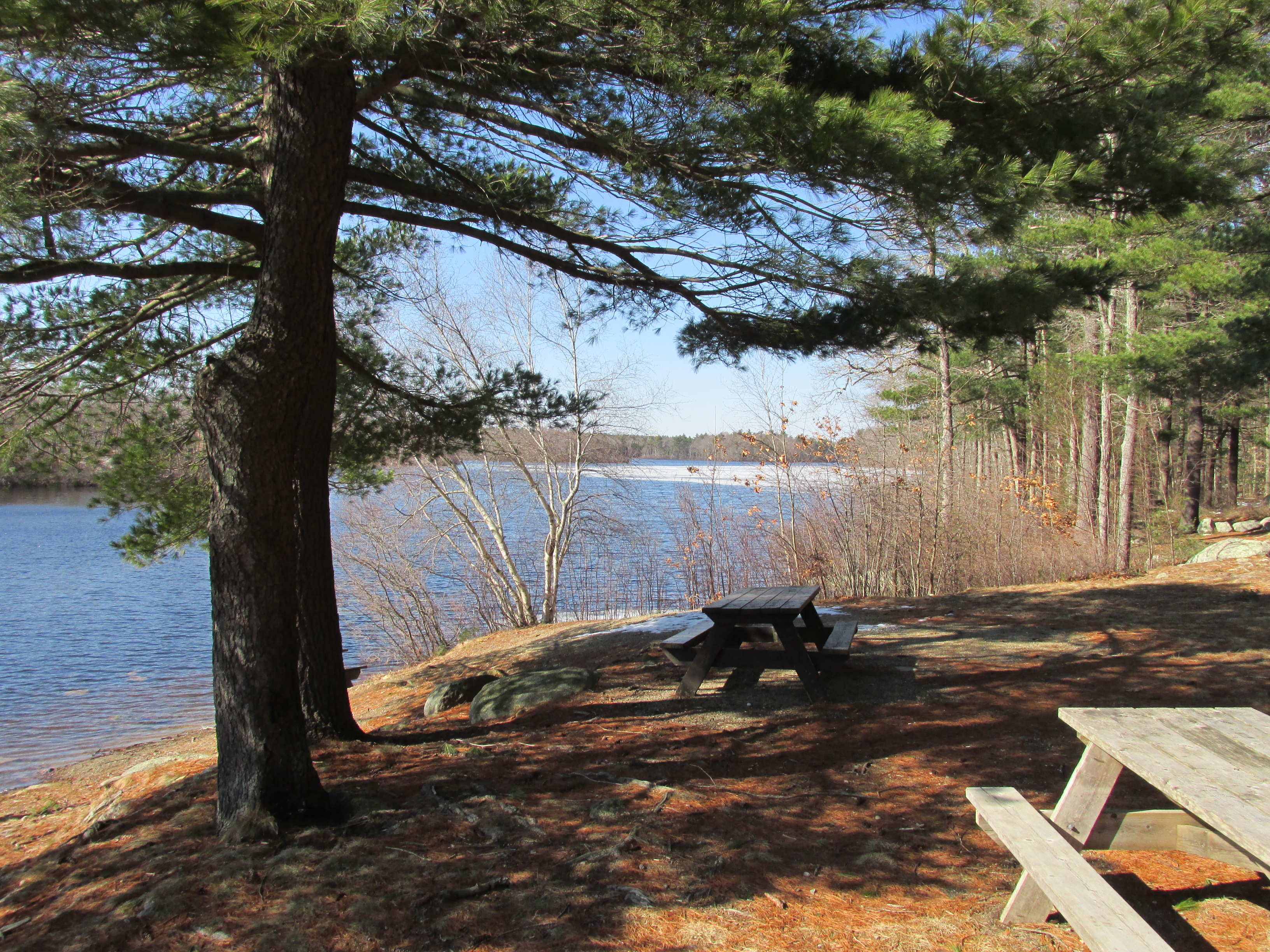
Massachusetts, US
You might spot Eastern White Pine and Common Eastern Bumble Bee.
View guide →

Rhode Island, US
You might spot Common Mugwort, Duck, and Azure Bluet.
View guide →

US
You might spot Wharf Louse, Osprey, and Ruddy Turnstone.
View guide →

Maine, US
You might spot American Bullfrog and Three-Toothed Cinquefoil.
View guide →
Take the discovery with you
Snap it with Snappit to identify it, learn what makes it special, and add the discovery to your collection.









.JPG&width=800)




.jpg&width=800)

