






Black Caiman
Melanosuchus niger
The Black Caiman is a large reptile that lives in rivers. They have a strong jaw and are excellent hunters.
Habitat: Rivers and swamps
The Black Caiman is a large crocodilian, distinguished by its dark, almost black, scaly hide and bony ridges over its eyes. Its powerful tail is vertically flattened, aiding movement. Unlike other caimans, it lacks prominent banding, appearing uniformly dark.
Category
ReptilesRarity
Rare
Danger
2/5 · Low
Snaps
Be the first to snap!
Mother caimans fiercely guard their nests for months after laying eggs.
Their eyes glow bright red when a flashlight beam hits them at night.
They are the largest predator in the Amazon rainforest's waterways!
They use their mighty tail to stun fish and propel themselves through water.
Black Caiman has an incredibly powerful bite that helps them crush the bones of their prey with ease.
Black Caiman can see clearly underwater because of a transparent third eyelid, protecting their eyes while hunting.
Black Caiman has a dark, almost black skin color that helps them blend perfectly into dark, muddy Amazonian waters at night.
As top predators, they eat almost any animal they can catch, both in and out of water!
Age differences: Juveniles eat insects and small fish; adults hunt much larger mammals and other large prey.
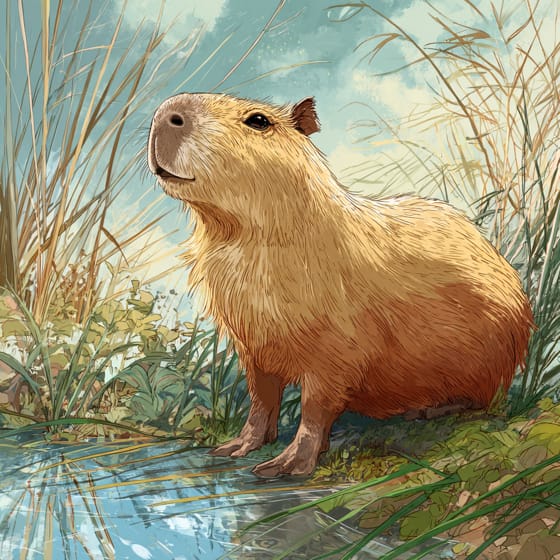
Hydrochoerus hydrochaeris
A common prey item for adult caimans.
Serrasalmus nattereri
Juveniles and sometimes adults prey on these fish.
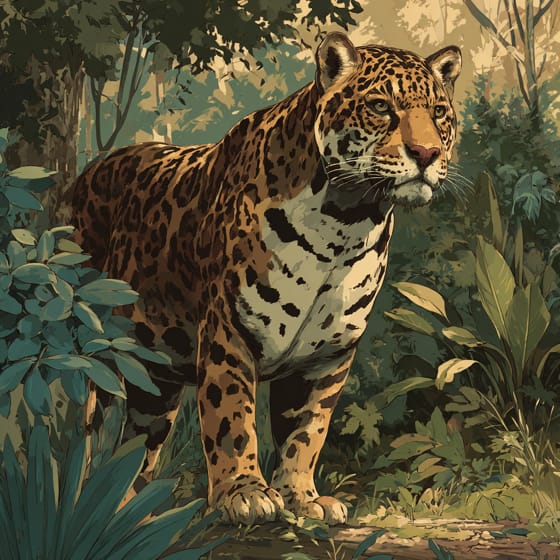
Panthera onca
Occasionally preys on smaller or vulnerable caimans.
Cuniculus paca
A medium-sized rodent often ambushed near water.
Wildlife encompasses all undomesticated animal and plant life existing in their natural habitats.
An ambush predator hunts by patiently waiting and concealing itself, then launching a sudden attack when unsuspecting prey comes within range.
This trait signifies organisms belonging to a very old evolutionary group with ancestors dating back millions of years.
This trait identifies organisms whose diet consists entirely or primarily of animal tissue.

Freshwater habitats include non-saline aquatic environments such as rivers, lakes, ponds, and wetlands, vital for numerous species.

Aquatic habitats encompass environments where organisms live predominantly in water, including oceans, rivers, lakes, and wetlands.

Nocturnal animals are primarily active during the nighttime hours, typically resting or sleeping during the day.
Danger
2/5 · Low
Look but don’t touch. Keep a safe distance and wash hands after exploring.
300-550 cm
300-700 kg
50-80 years
20 km/h
As top predators, they eat almost any animal they can catch, both in and out of water!
25 km/h
Rivers and swamps
Ambush
Zoom in to split clusters and explore where this object has been snapped.
Recent snaps will appear here as new observations are added.


















