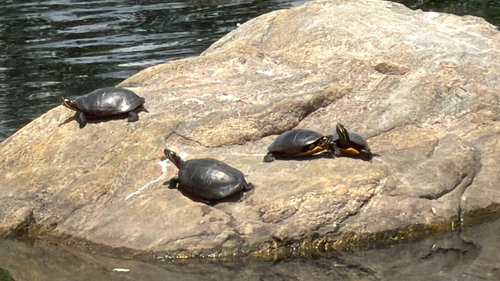




Painted Turtle
Chrysemys picta
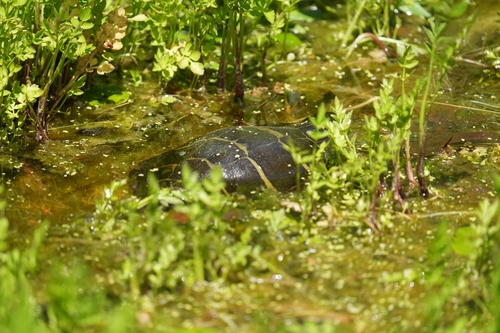
The Painted Turtle is a colorful turtle with beautiful markings on its shell. It loves to swim and bask in the sun.
Habitat: Ponds, lakes, and rivers.
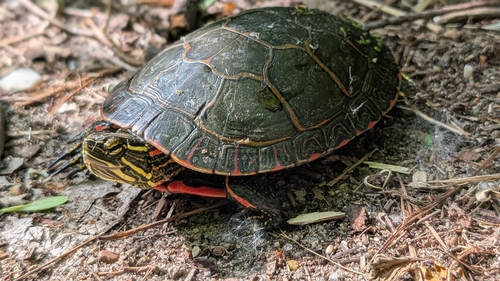
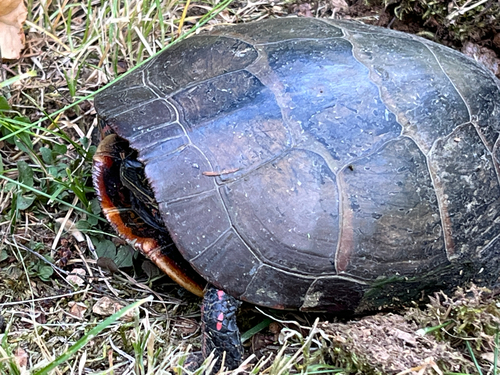
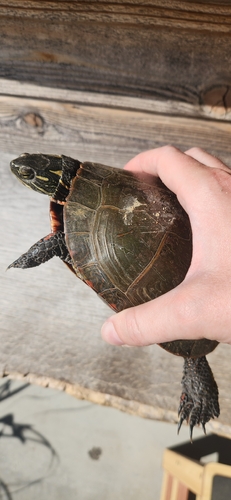
The Painted Turtle has a smooth, dark olive to black shell with bright red or orange markings along the edges. Its skin is dark with distinctive yellow and red stripes on its head, neck, legs, and tail, making it one of the most colorful North American turtles.
Category
ReptilesRarity
Common
Danger
2/5 · Low
Snaps
361
A painted turtle can live longer than most household pets, up to 30 years!
Baby painted turtles decide if they'll be male or female based on nest temperature!
Their unique shell patterns are like human fingerprints – no two are exactly alike!
They can spend entire winters buried in mud at the bottom of a pond.
Painted Turtles can survive being frozen solid for weeks because their body produces a special anti-freeze that protects cells.
Painted Turtles have a strong instinct to bask in the sun, which helps them warm up and fight off parasites.
Painted Turtles can absorb oxygen through their skin and throat lining underwater, helping them stay submerged longer.
Painted Turtles are omnivores, munching on both plants and small creatures in their watery homes.
Age differences: Younger turtles eat more animal matter, while adults eat mostly plants.

Procyon lotor
Opportunistically preys on eggs and hatchlings.
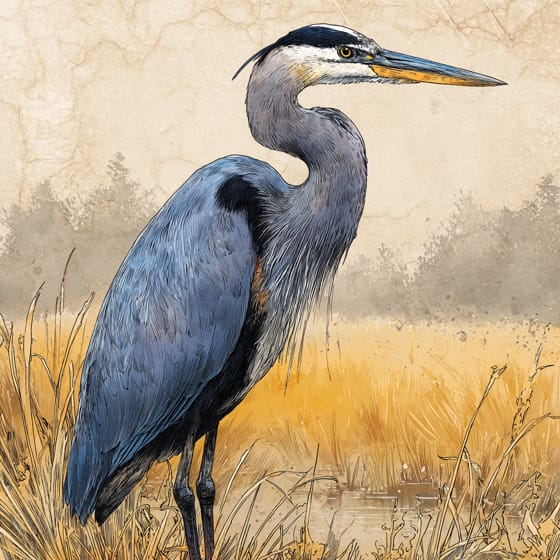
Ardea herodias
Preys on small, young turtles.
Gasterosteus aculeatus
Adult turtles may prey on small fish.
Nymphaea odorata
Turtles feed on leaves and stems.

Lestes congener
Turtles consume aquatic insect larvae.
Characterized by having toes connected by a membrane, typically aiding in swimming.
Social animals live in organized groups, cooperating for survival benefits such as foraging, defense, and raising offspring.
This trait identifies organisms whose diet includes both plant and animal matter.
Colorful describes organisms or objects displaying a wide range of bright and distinct colors.

This trait characterizes organisms with an exceptionally long lifespan compared to others of their kind.

Armored describes animals protected by a hard, external covering or shell for defense.

Diurnal animals are primarily active during daylight hours, typically resting or sleeping at night.

Freshwater habitats include non-saline aquatic environments such as rivers, lakes, ponds, and wetlands, vital for numerous species.
Danger
2/5 · Low
Look but don’t touch. Keep a safe distance and wash hands after exploring.
The easiest way to identify Painted Turtle is to use the Snappit nature identifier app.
10-25 cm
0.3-1 kg
10-20 years
0.5 km/h
Painted Turtles are omnivores, munching on both plants and small creatures in their watery homes.
3 km/h
Ponds, lakes, and rivers.
Zoom in to split clusters and explore where this object has been snapped.
Jun 7, 2026
Henry Vilas ZooPhoto attribution
no rights reserved
License: CC0 1.0 ↗
Image may be shown cropped inside the card frame.
Jun 6, 2026
Coker ArboretumPhoto attribution
no rights reserved
License: CC0 1.0 ↗
Image may be shown cropped inside the card frame.
Jun 3, 2026
Busse WoodsPhoto attribution
(c) Chris, some rights reserved (CC BY-SA)
License: CC BY-SA 4.0 ↗
Image may be shown cropped inside the card frame.
May 31, 2026
Wellfleet Bay Wildlife SanctuaryPhoto attribution
(c) Cody Schafer, some rights reserved (CC BY-SA)
License: CC BY-SA 4.0 ↗
Image may be shown cropped inside the card frame.
May 31, 2026
Burnett's CornerPhoto attribution
(c) Sawyer Baran, some rights reserved (CC BY)
License: CC BY 4.0 ↗
Image may be shown cropped inside the card frame.

New York, US
You might spot Sundial Lupine, Spotted Horsemint, and New Jersey Tea.
View guide →
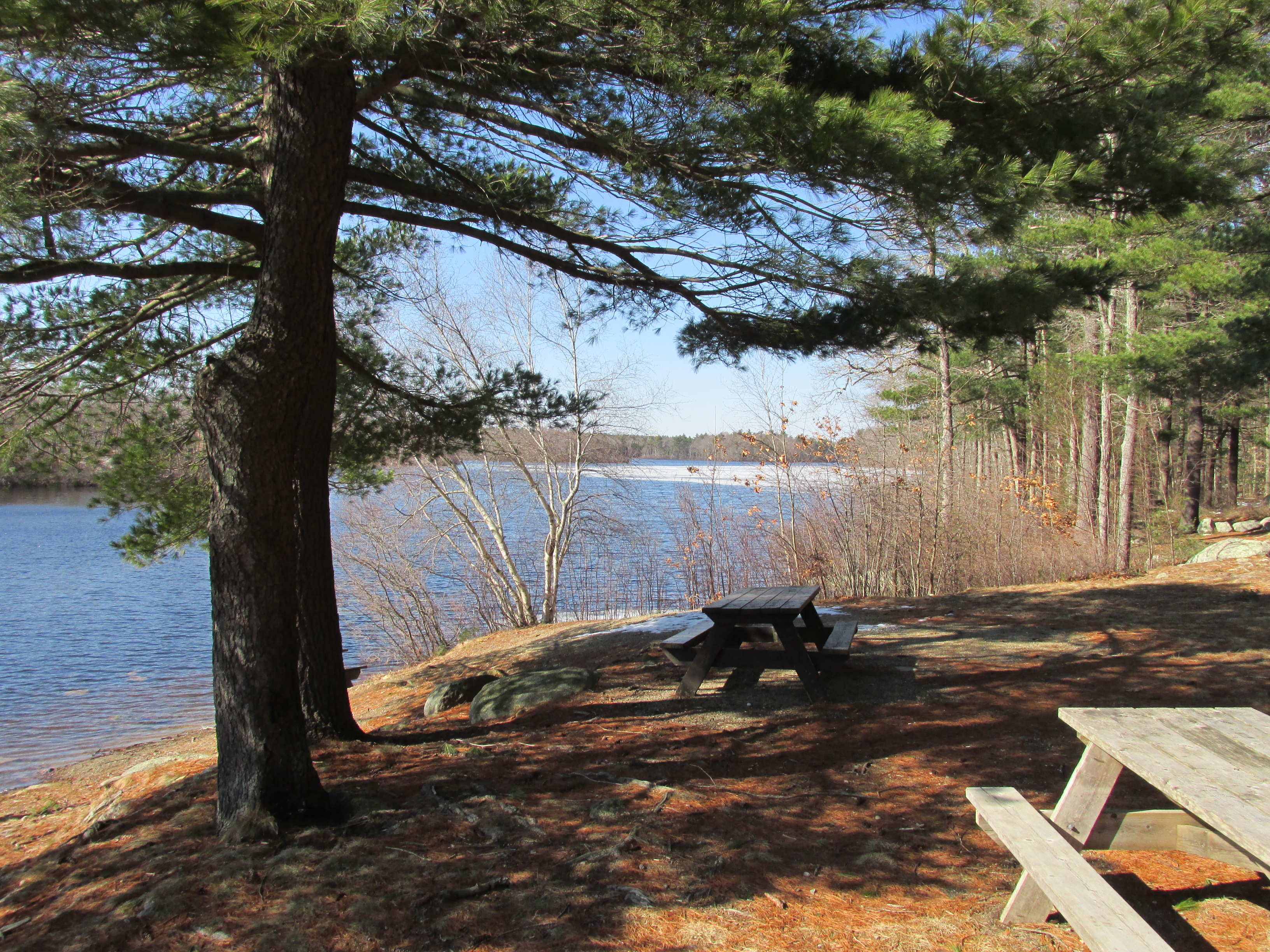
Massachusetts, US
You might spot Eastern White Pine and Common Eastern Bumble Bee.
View guide →

Rhode Island, US
You might spot Common Mugwort, Duck, and Azure Bluet.
View guide →

Rhode Island, US
You might spot Common Eastern Bumble Bee and Osprey.
View guide →

Pennsylvania, US
You might spot Pinesap, Great Rhododendron, and Mountain Laurel.
View guide →

Massachusetts, US
You might spot Eastern Newt, Purple Pitcher Plant, and Hobblebush.
View guide →
Take the discovery with you
Snap it with Snappit to identify it, learn what makes it special, and add the discovery to your collection.