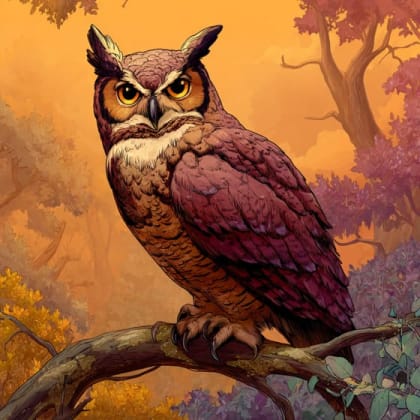
Eurasian Eagle-Owl
Bubo bubo
The Eurasian Eagle-Owl is one of the largest owls in the world! It has striking orange eyes and can be found in various habitats across Europe and Asia.
Habitat: Forests, mountains, and rocky areas
The Eurasian Eagle-Owl is a very large owl distinguished by its prominent, dark ear tufts and piercing orange eyes. Its plumage is a beautiful mix of streaky dark browns, tawny, and rust colors, providing excellent camouflage against trees and rocks.
Category
BirdsRarity
Rare
Danger
2/5 · Low
Snaps
Be the first to snap!
An eagle-owl’s huge, fixed eyes are as big as human eyes!
Their famous 'ear' tufts are just feathers, showing mood!
These powerful owls can catch prey bigger than themselves!
They can turn their head almost 270 degrees in either direction!
Eurasian Eagle-Owls can fly almost silently because their specialized feather edges dampen sound, helping them surprise prey.
Eurasian Eagle-Owls have huge, fixed eyes packed with rod cells that help them see tiny movements in very low light.
Eurasian Eagle-Owls possess incredibly strong talons that can instantly subdue large prey, preventing escape.
Eurasian Eagle-Owls use their asymmetrical ear openings to precisely locate prey in complete darkness by sound.
This large owl is a skilled nocturnal hunter, feasting on small to medium-sized mammals and birds.

Oryctolagus cuniculus
A primary food source in many parts of its range.

Lepus europaeus
Targets larger hares with its powerful talons.

Erinaceus europaeus
Can overcome the hedgehog's spiky defenses.
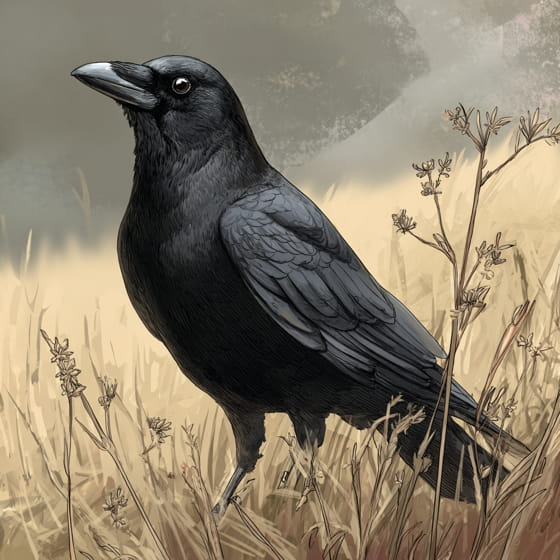
Corvus corone
Often preys on sleeping crows at night.
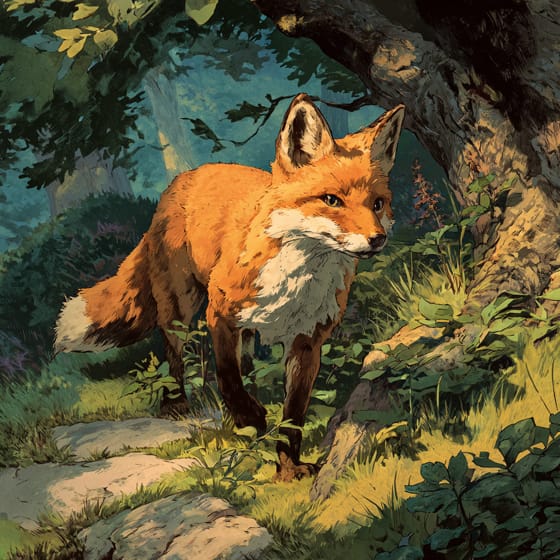
Vulpes vulpes
May prey on eagle-owl eggs or owlets in nests.
Wildlife encompasses all undomesticated animal and plant life existing in their natural habitats.
Feathered describes animals, primarily birds, possessing a covering of feathers.
This habitat trait identifies species found in mountainous regions, characterized by high elevation, steep slopes, and varying climate zones.
Forest habitats are terrestrial environments dominated by dense tree cover, supporting a high diversity of plant and animal life.

This trait identifies organisms whose diet consists entirely or primarily of animal tissue.

Describes a species whose presence and role have a disproportionately large effect on its environment.

Nocturnal animals are primarily active during the nighttime hours, typically resting or sleeping during the day.
Danger
2/5 · Low
Watch quietly from a distance and never try to feed or chase wild animals.
58-75 cm
138-190 cm
1.5-4.2 kg
20-60 years
80 km/h
This large owl is a skilled nocturnal hunter, feasting on small to medium-sized mammals and birds.
Forests, mountains, and rocky areas
Ambush
Zoom in to split clusters and explore where this object has been snapped.
Recent snaps will appear here as new observations are added.