





Song Sparrow
Melospiza melodia
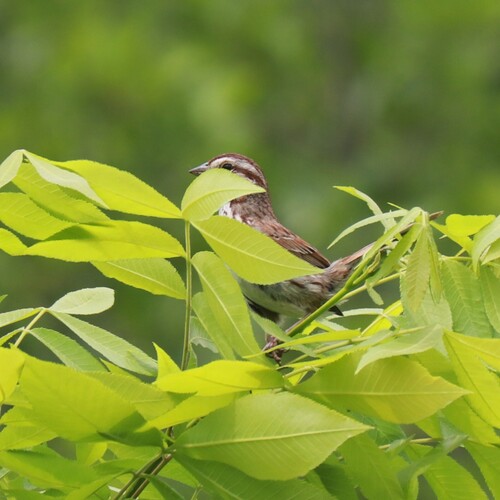
The Song Sparrow is a friendly little bird known for its cheerful singing. They have brown feathers with lovely stripes that help them blend in with nature.
Habitat: Fields, wetlands, and gardens
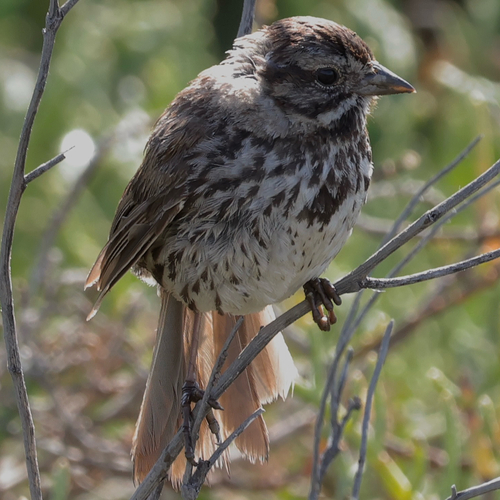
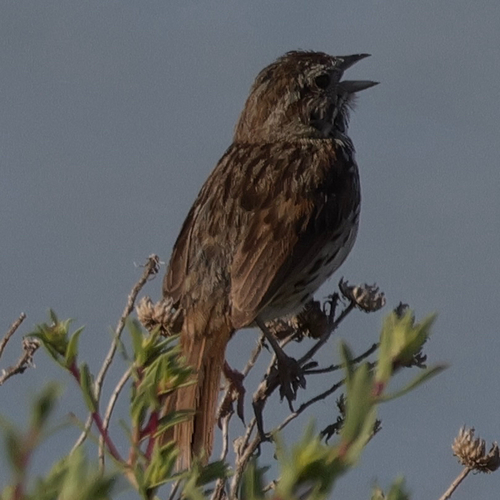
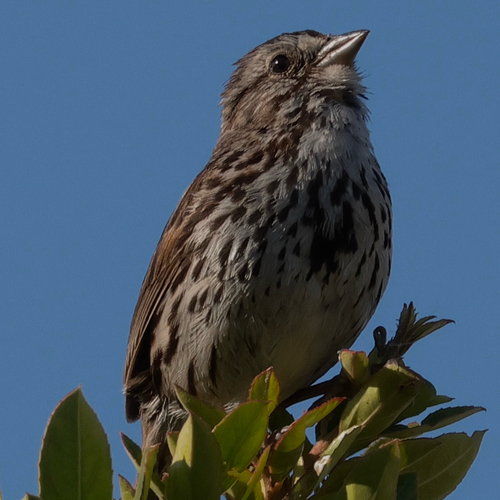
The Song Sparrow has streaky brown upperparts and lighter underparts with bold dark streaks, often converging into a distinct central breast spot. Its head features a grey face with a dark eye-stripe and a reddish-brown cap. This medium-sized sparrow has a relatively long, rounded tail.
Category
BirdsRarity
Common
Danger
1/5 · Very low
Snaps
384
Song Sparrows often run or hop along the ground instead of flying!
The oldest Song Sparrow found lived over 11 years!
Their speckled eggs can be blue-green with brown spots!
They use their strong bills like tiny shovels to dig for food!
Song Sparrows can learn and combine over a dozen different song patterns, creating unique melodies to defend territory.
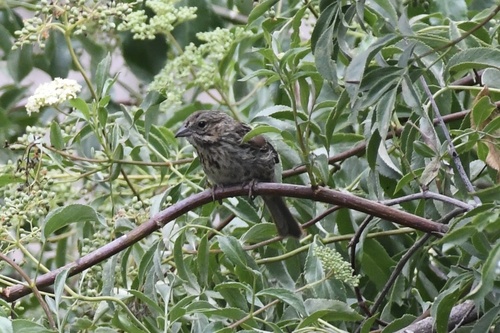
Its streaky brown feathers provide excellent camouflage, helping them blend perfectly into bushes and tall grasses from predators.
Song Sparrows can swiftly scratch and hop on the ground, uncovering hidden seeds and insects with nimble movements.
Song Sparrows eat small insects and spiders in summer, switching to a diet rich in seeds during the colder months.
Age differences: Young birds are fed mostly insects for protein until they can forage for seeds.

Accipiter striatus
Sharp-shinned Hawks are agile predators of small birds, including sparrows.
.jpg&width=800)
Molothrus ater
Cowbirds lay eggs in sparrow nests, forcing them to raise cowbird chicks.
Melanoplus femurrubrum
Song Sparrows actively hunt various insect species like grasshoppers for food.

Ambrosia artemisiifolia
They consume the seeds of many weed species, such as common ragweed.
Wildlife encompasses all undomesticated animal and plant life existing in their natural habitats.
Feathered describes animals, primarily birds, possessing a covering of feathers.
Social animals live in organized groups, cooperating for survival benefits such as foraging, defense, and raising offspring.
Singing animals produce complex vocalizations, often for purposes of attracting mates, defending territory, or communicating within their species.

Grassland habitats are terrestrial biomes dominated by grasses and herbaceous plants, supporting a variety of grazing animals.

This trait identifies organisms whose diet primarily consists of insects and other small invertebrates.

Diurnal animals are primarily active during daylight hours, typically resting or sleeping at night.
Danger
1/5 · Very low
Song Sparrows are safe to observe in nature. Just remember to enjoy them from a distance, so they feel comfortable.
The easiest way to identify Song Sparrow is to use the Snappit nature identifier app.
12-17 cm
18-23 cm
0.012-0.029 kg
2-7 years
40 km/h
Song Sparrows eat small insects and spiders in summer, switching to a diet rich in seeds during the colder months.
Fields, wetlands, and gardens
Zoom in to split clusters and explore where this object has been snapped.
Jun 19, 2026
Palo Alto Baylands Nature PreservePhoto attribution
no rights reserved
License: CC0 1.0 ↗
Image may be shown cropped inside the card frame.
Jun 19, 2026
Palo Alto Baylands Nature PreservePhoto attribution
no rights reserved
License: CC0 1.0 ↗
Image may be shown cropped inside the card frame.
Jun 19, 2026
Palo Alto Baylands Nature PreservePhoto attribution
no rights reserved
License: CC0 1.0 ↗
Image may be shown cropped inside the card frame.
Jun 6, 2026
Mount EcclesiaPhoto attribution
(c) zr217, some rights reserved (CC BY)
License: CC BY 4.0 ↗
Image may be shown cropped inside the card frame.
Jun 6, 2026
East Windsor Hill Historic DistrictPhoto attribution
(c) Mark Apgar, some rights reserved (CC BY)
License: CC BY 4.0 ↗
Image may be shown cropped inside the card frame.

California, US
You might spot Acorn Woodpecker and Western Fence Lizard.
View guide →

Tennessee, US
You might spot Black Bear, Yellow Wakerobin, and Pipevine Swallowtail.
View guide →

Rhode Island, US
You might spot Common Eastern Bumble Bee and Osprey.
View guide →

Rhode Island, US
You might spot Spotted Lanternfly, Duck, and American Robin.
View guide →

Vermont, US
You might spot Japanese Knotweed and Red-Bellied Woodpecker.
View guide →

Rhode Island, US
You might spot Spotted Lanternfly, Duck, and American Robin.
View guide →
Take the discovery with you
Snap it with Snappit to identify it, learn what makes it special, and add the discovery to your collection.




.jpg&width=800)









