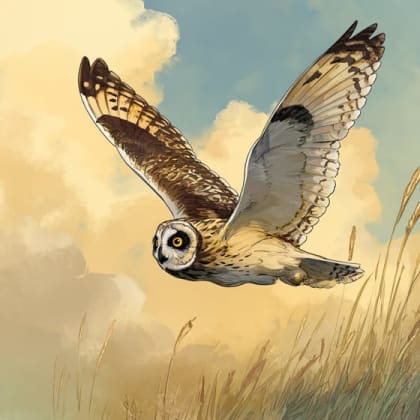
Short-eared Owl
Asio flammeus
The Short-eared Owl is a small, round owl that loves to hunt in open fields at dusk and dawn! It has beautiful golden-brown feathers that help it blend in.
Habitat: Grasslands and marshes
The Short-eared Owl has streaky brown and buff plumage with a pale underside, bright yellow eyes, and subtle, tiny ear tufts. Its long, slender wings and buoyant flight make it look distinct from other owls when hunting low over open fields.
Category
BirdsRarity
Common
Danger
2/5 · Low
Snaps
1
Short-eared Owls make their nests right on the ground, hidden in thick grass!
Sometimes, many owls gather in large groups, called 'parliaments,' especially in winter!
Their actual ears are hidden, and the 'short ears' are just tiny feather tufts!
These owls often hunt during the daytime, unlike many other owl species!
Short-eared Owls have specialized fringed feathers that help them fly almost silently, allowing them to surprise prey.
They possess asymmetrical ear openings, helping them pinpoint the exact location of prey even under dense cover.
Their large, forward-facing yellow eyes are packed with rod cells, giving them incredible vision for hunting at dawn and dusk.
Short-eared Owls can rotate their heads up to 270 degrees, giving them a wide field of view without moving.
They are fierce hunters that mainly eat small rodents, helping to control their populations.
Microtus pennsylvanicus
primary prey species
Sorex cinereus
eats small mammals
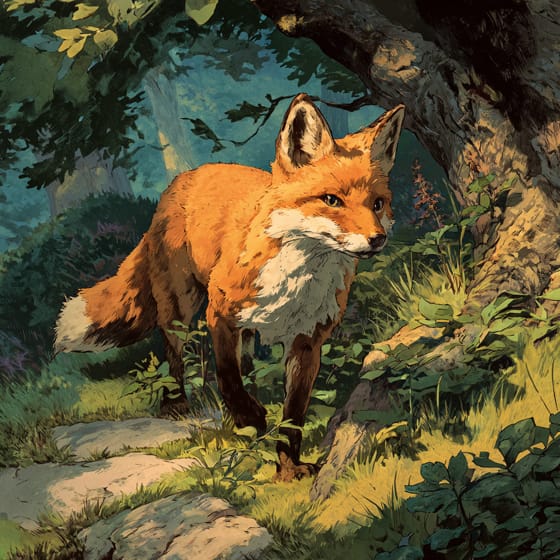
Vulpes vulpes
preys on nests and young
Spartina patens
nests hidden in marsh grass
Wildlife encompasses all undomesticated animal and plant life existing in their natural habitats.
Feathered describes animals, primarily birds, possessing a covering of feathers.
Social animals live in organized groups, cooperating for survival benefits such as foraging, defense, and raising offspring.
Aerial creatures spend a significant portion of their lives airborne, utilizing flight for various activities such as hunting, migration, or nesting.

Grassland habitats are terrestrial biomes dominated by grasses and herbaceous plants, supporting a variety of grazing animals.

Forest habitats are terrestrial environments dominated by dense tree cover, supporting a high diversity of plant and animal life.

This trait identifies organisms whose diet consists entirely or primarily of animal tissue.

Nocturnal animals are primarily active during the nighttime hours, typically resting or sleeping during the day.
Danger
2/5 · Low
Watch quietly from a distance and never try to feed or chase wild animals.
34-43 cm
90-110 cm
0.2-0.5 kg
4-7 years
60 km/h
They are fierce hunters that mainly eat small rodents, helping to control their populations.
Grasslands and marshes
Pursuit
Zoom in to split clusters and explore where this object has been snapped.